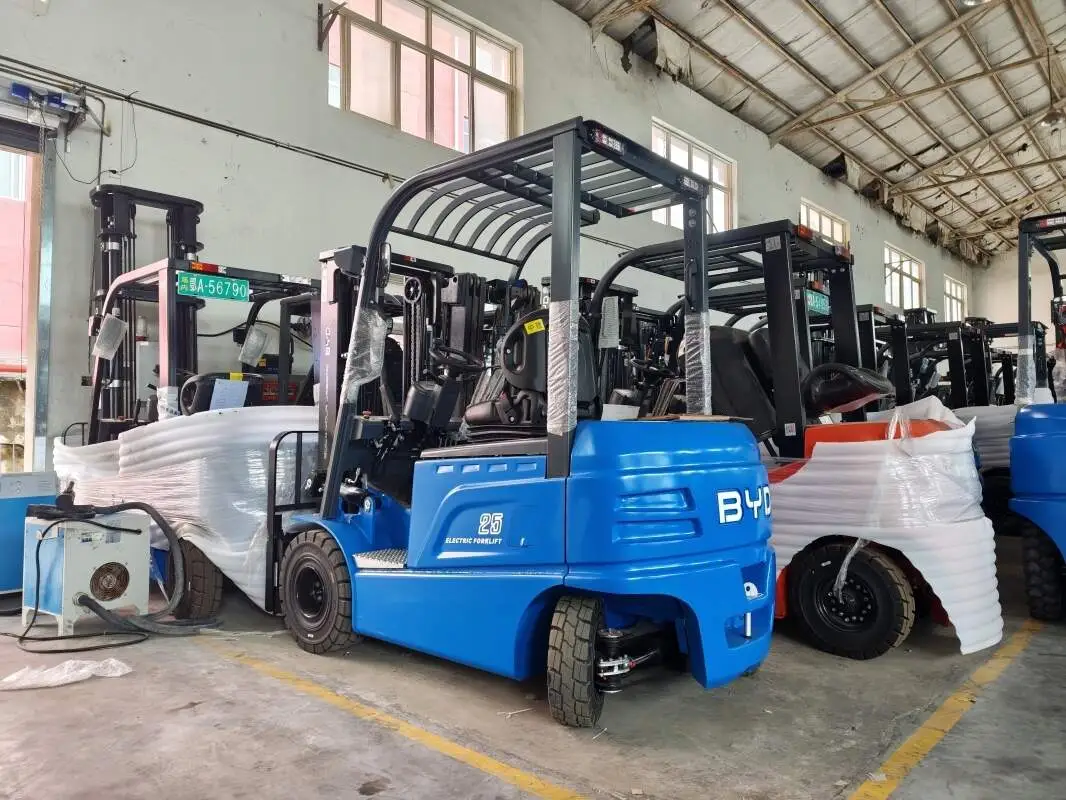
The demand for electric warehouse forklifts has been steadily rising in recent years, driven by growing focus on sustainability, operational efficiency, and reduced carbon footprints in logistics and warehousing operations. Understanding the market price landscape is critical for businesses looking to invest in this equipment, as prices can vary significantly based on multiple factors.
First, core forklift specifications play a key role in determining pricing. Models with higher load capacities—typically ranging from 1 to 5 tons—and greater lifting heights, which can reach 8 meters or more, tend to carry higher price tags. This is because larger capacities and taller lifts require more robust structural components, stronger motors, and enhanced stability systems to ensure safe, reliable operation in warehouse settings.
Another major cost driver is battery technology. Traditional lead-acid batteries are more affordable upfront, but they come with higher long-term costs due to shorter lifespans, longer charging times, and regular maintenance needs like water refills. In contrast, lithium-ion batteries have a higher initial price but offer longer lifespans, faster charging cycles, and lower maintenance requirements, making them a cost-effective choice for businesses with high daily operational demands.
Additional features and configurations also impact pricing. Basic models designed for standard indoor warehouse tasks, such as pallet moving in narrow aisles, are more budget-friendly. Forklifts equipped with advanced features like side-shift attachments, automatic pallet detection, or semi-autonomous navigation systems will command a premium. These features can boost operational efficiency but add to manufacturing and development costs.
When examining the current market, electric warehouse forklift prices span a wide range. Entry-level models with a 1-ton load capacity and basic features start from approximately $15,000 to $20,000. Mid-range options, offering 2-3 ton load capacities and improved battery performance, typically fall between $25,000 and $40,000. High-end models, built for heavy-duty operations or with advanced automation features, can cost $50,000 or more, depending on customization needs.
For businesses evaluating purchases, balancing upfront costs with long-term operational expenses is essential. Assessing daily usage patterns, required load capacities, and warehouse layout can help narrow down suitable options. Additionally, considering total cost of ownership—including battery replacement, maintenance, and energy costs—provides a more accurate picture than focusing solely on initial price tags.
By understanding these key factors and current market price ranges, businesses can make informed decisions aligned with their operational needs and budget constraints, ensuring they invest in equipment that delivers long-term value and efficiency.