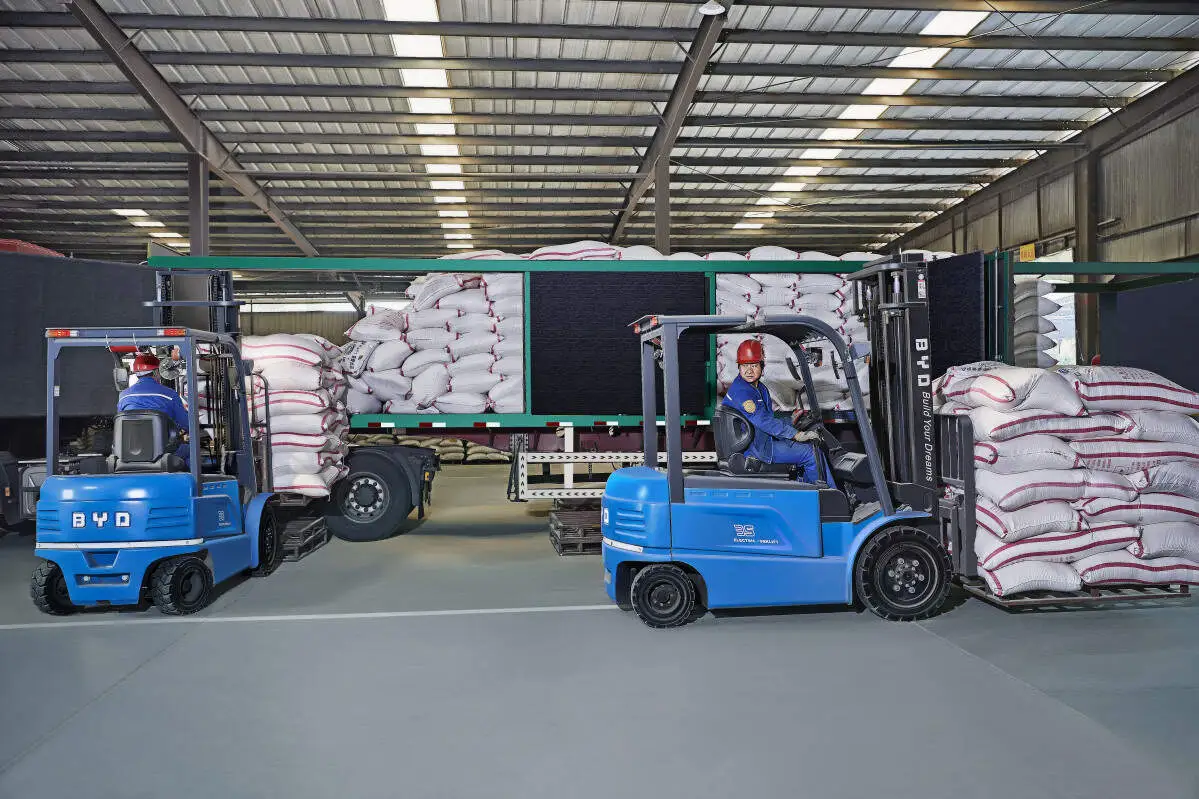
electric forklifts support flexible material handling across warehousing, logistics, and manufacturing sites. Interchangeable attachments expand their functional range for specialized, non-palletized loads, but proper matching between attachments and load limits is foundational for safe operation. Mismatched setups can cause load falls, vehicle instability, or equipment damage, making adherence to clear matching standards essential.
First, all load matching must reference the forklift’s official capacity chart, not just the base rating for standard fork setups. Every attachment adds its own weight to the truck’s front end, and most shift the load center forward, both reducing maximum safe carrying capacity. Teams must deduct the attachment’s weight from available capacity, and adjust load limits to match the new load center defined by attachment design, rather than using unadjusted base load values.
Second, attachment load ratings must align with the forklift’s adjusted capacity to meet universal industrial safety rules. After installation, updated, clear load limit labels must be posted in the operator’s line of sight, listing the new maximum load, adjusted load center, and operational restrictions.
Third, routine checks maintain compliant matching across equipment service life. Operators must confirm secure attachment installation with no loose fasteners or wear during pre-shift inspections, and cross-check planned load weights against posted limits before lifting. Unapproved modifications altering weight distribution or load center are prohibited, as these invalidate capacity calculations and create safety risks.
Following these standards helps teams leverage attachment flexibility while upholding workplace safety, reducing risk and supporting consistent, efficient material handling operations.