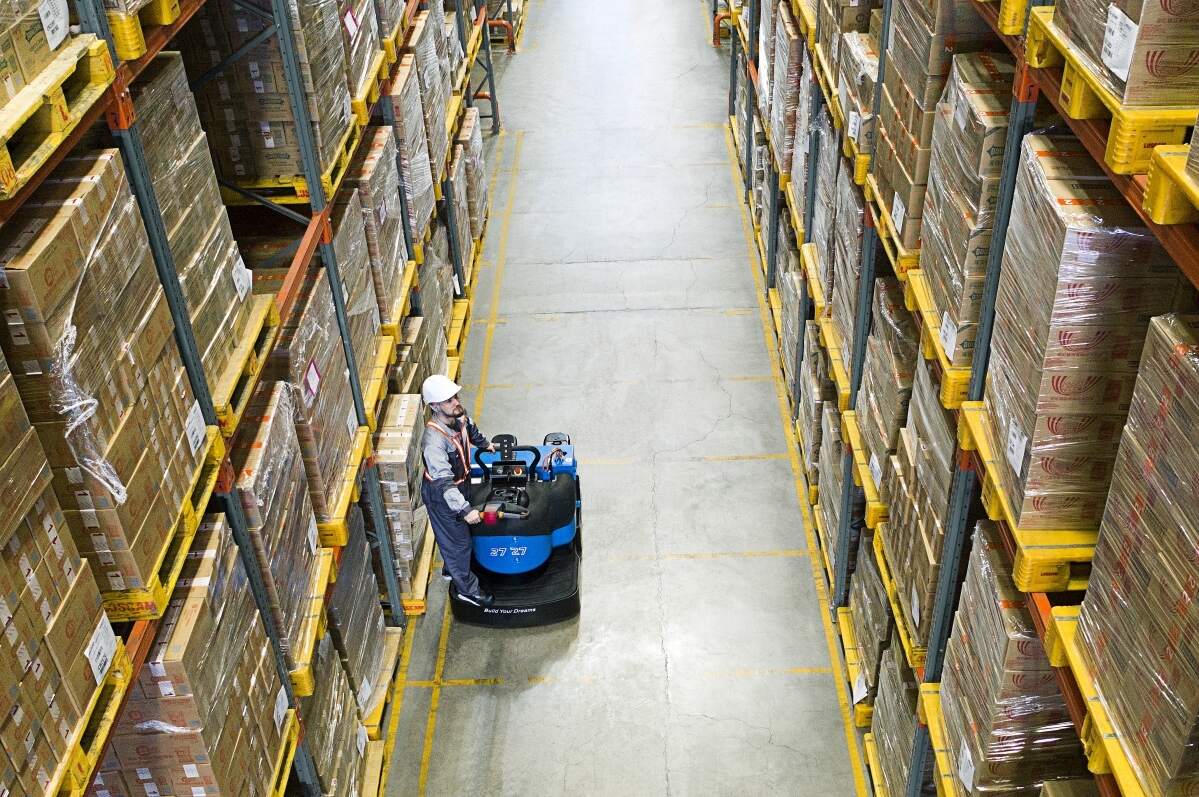
Warehouse simulation projects play a critical role in training new staff, optimizing operational workflows, and testing layout designs without disrupting real-world warehouse activities. A mini remote control forklift serves as a core component of these simulations, replicating the functions of full-sized forklifts in a scaled environment. To choose the right model for your project, consider the following key factors.
First, prioritize size and compactness. Most warehouse simulation setups operate in limited spaces, with scaled-down shelves and narrow aisles designed to mimic real warehouse layouts. The mini remote control forklift should match the scale of your simulation—common ratios include 1:10 or 1:20—to ensure it can navigate through simulated aisles smoothly and interact with scaled inventory units. Oversized models may restrict movement, while undersized ones might not accurately replicate real forklift operations.
Second, focus on control precision and responsiveness. The remote control system should offer precise adjustments for fork height, tilting, and steering to mirror the fine movements required in real forklift operations. Responsive controls help trainees develop accurate operational skills, as delayed or imprecise feedback can lead to bad habits. Additionally, ensure the wireless control range is sufficient to cover the entire simulation area, preventing signal loss during operations.
Third, check compatibility with your simulation systems. Some advanced warehouse simulation projects integrate data tracking to analyze trainee performance or test workflow efficiency. Look for mini remote control forklifts that support basic data transmission features, such as logging movement paths or fork operation times. This compatibility allows you to sync the forklift’s actions with your simulation software, providing valuable insights into operational effectiveness.
Fourth, evaluate durability and build quality. Simulation projects often involve frequent, repeated use as trainees practice and workflows are tested. The forklift should be constructed with sturdy materials, including wear-resistant tires and reinforced fork arms, to withstand continuous operation without frequent breakdowns. A durable model reduces maintenance costs and ensures consistent performance throughout the project’s lifespan.
Finally, balance cost-effectiveness with your project needs. Determine your budget based on the complexity of your simulation—basic models work well for simple training scenarios, while more advanced models with system compatibility and enhanced controls are suitable for complex workflow testing. Avoid overinvesting in features that do not align with your project’s objectives, but ensure the forklift meets all core requirements to deliver meaningful simulation results.
By carefully considering these factors, you can select a mini remote control forklift that enhances the accuracy and value of your warehouse simulation project, helping you train skilled staff and optimize warehouse operations efficiently.