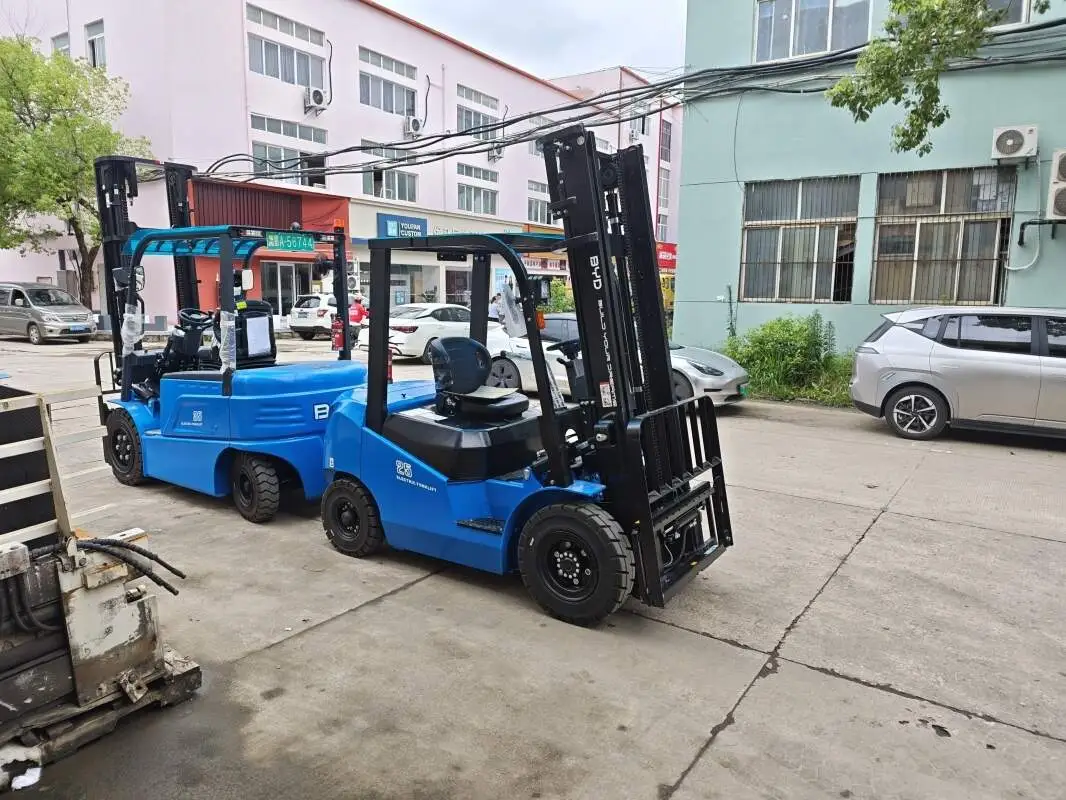
In many industrial settings, restricted work zones—such as narrow warehouse aisles, crowded manufacturing floors, and tight loading docks—present significant challenges for material handling equipment. Traditional forklifts often struggle to navigate these spaces efficiently, leading to reduced productivity and increased risk of collisions with infrastructure or inventory. This is where omni wheel forklifts come into play, offering a specialized solution designed to excel in environments where maneuverability is non-negotiable.
Unlike standard forklifts that rely on conventional wheels for forward, backward, and turning movement, omni wheel forklifts are equipped with wheels featuring multiple rollers positioned at angles to the main wheel axis. This unique design allows the forklift to move in any direction—forward, backward, side-to-side, and even diagonally—without the need for wide turns. This capability eliminates the need for extra space to maneuver, making it ideal for areas where every inch of space counts.
The high maneuverability of omni wheel forklifts translates into several practical benefits. For warehouse operations, it means operators can navigate narrow aisles with ease, accessing inventory stored in tight spaces without having to reposition the forklift repeatedly. This not only speeds up order picking and stock replenishment processes but also reduces the likelihood of damage to racks, shelves, and goods. In manufacturing facilities, these forklifts can move between tightly packed production lines, transporting materials to workstations without disrupting ongoing operations.
Beyond warehouses and manufacturing plants, omni wheel forklifts are also well-suited for other restricted work zones. For example, in shipyards and port terminals where space is limited around cargo containers, these forklifts can efficiently load and unload materials in confined areas. They are also useful in retail distribution centers, where rapid movement of goods through narrow corridors is essential to meet tight delivery schedules.
Operators of omni wheel forklifts require specialized training to fully utilize the equipment’s capabilities, as the control systems differ from those of traditional forklifts. However, once trained, they can leverage the forklift’s precise movement to perform tasks with greater accuracy. Additionally, many models come equipped with safety features such as proximity sensors and cameras, which enhance visibility and reduce the risk of accidents in crowded spaces.
As industries continue to optimize their space usage to maximize efficiency, the demand for high-maneuverability material handling equipment like omni wheel forklifts is on the rise. Their ability to navigate restricted work zones with precision and ease makes them a valuable asset for any operation looking to improve productivity, reduce operational risks, and make the most of limited space.