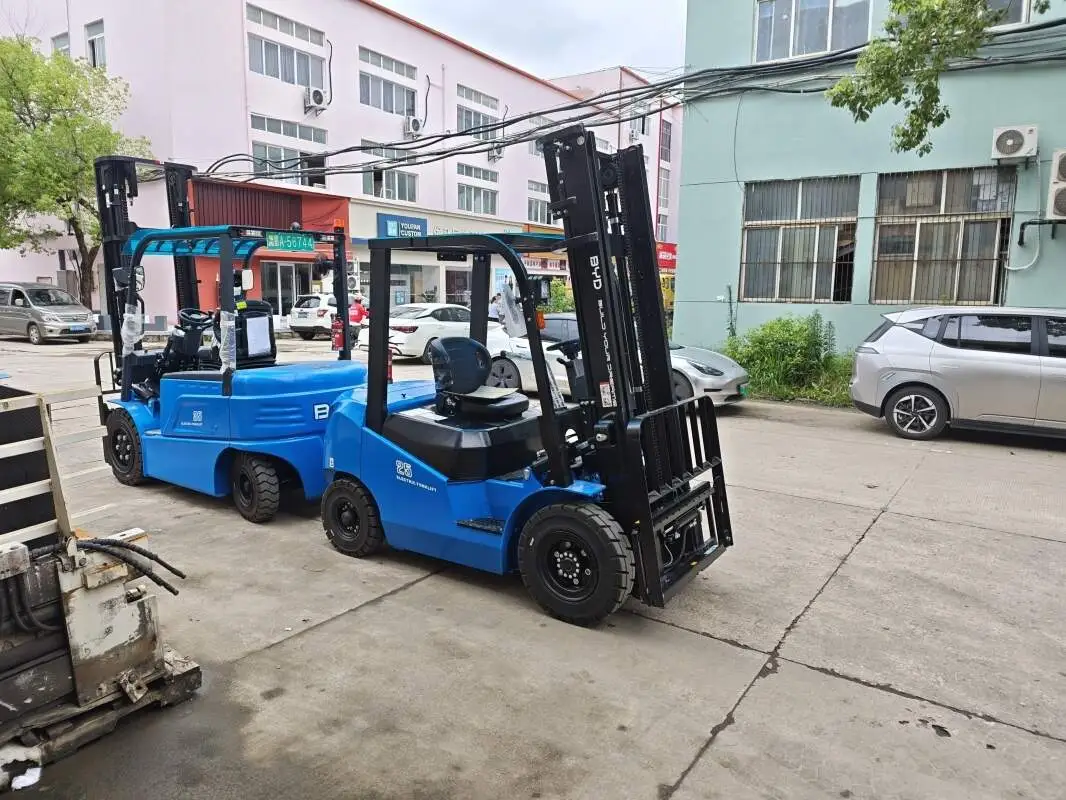
4X4 rough-terrain forklifts are indispensable for material handling in construction, agriculture, and forestry, where uneven, unpaved surfaces are standard. Operating these specialized machines demands targeted best practices to ensure safety, minimize equipment wear, and boost efficiency.
Start with a rigorous pre-operation inspection. Check fluid levels (engine oil, hydraulic fluid, coolant) to prevent mid-task failures. Inspect tires for tread depth and proper pressure—worn or underinflated tires reduce traction on slippery ground. Test brakes, steering, and hydraulic functions to confirm smooth operation. Verify the load capacity plate is visible, and never exceed rated limits. Ensure lights, horns, and warning signals work for visibility to others.
When navigating rough terrain, adapt your speed and technique. Slow down on gravel, mud, or rocky surfaces to maintain control. Engage 4-wheel drive for enhanced traction on steep slopes or soft soil. Avoid sudden turns, accelerations, or stops—these can cause tipping or load loss. Traverse slopes straight up or down; never drive sideways, as this raises rollover risk. Stay clear of ditches, embankments, and overhead obstacles.
For load handling, center loads on forks and adjust fork width to fit the load base evenly. Lift loads only as high as needed—keeping them low stabilizes the forklift during transport. Drive at a steady speed, avoiding sudden maneuvers. Never travel with a raised load over rough terrain; bumps can disrupt balance. Use a spotter if loads block visibility.
Post-operation, park on flat ground, lower forks, engage the parking brake, and turn off the engine. Remove the key and set controls to neutral. Conduct a quick inspection for damage or leaks, reporting issues to maintenance promptly. Clean debris from forks and undercarriage to prevent corrosion.
Prioritize safety: only certified operators should use these forklifts, with regular training refreshers. Wear PPE (hard hats, steel-toe boots, high-visibility vests) to protect against hazards. Stay alert, avoid distractions like phones, and communicate clearly with worksite colleagues to prevent accidents.