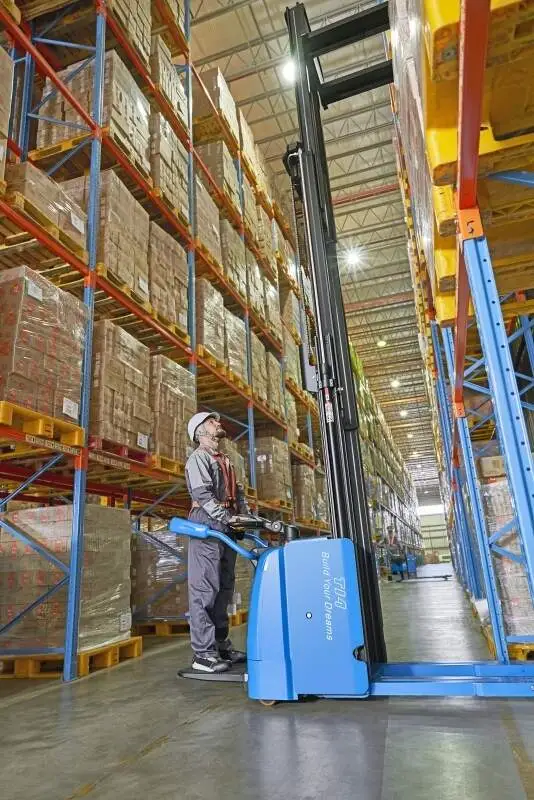
High reach forklift equipment plays a critical role in modern warehouse and logistics operations, enabling efficient access to high storage racks. To ensure safe and reliable performance, operators must adhere to strict operation notes tailored to this specialized machinery.
Before initiating any operation, a comprehensive pre-operation inspection is mandatory. Start by examining the forklift’s exterior for visible damage, such as cracked frames or worn components. Check tire pressure and condition to ensure stable mobility, as uneven tires can compromise balance during high lifts. Verify the functionality of brake systems, including foot brakes and parking brakes, to prevent unexpected movement. Inspect hydraulic lines for leaks and confirm that lifting mechanisms operate smoothly without unusual noises. Additionally, test safety features like seat belts, overhead guards, and proximity alarms to ensure they are in proper working order. Finally, survey the work area to identify potential hazards, such as low ceilings, uneven floors, or obstacles that could interfere with lifting maneuvers.
During operation, maintain a steady and controlled approach at all times. When starting the forklift, ensure the area around the vehicle is clear of personnel and obstacles. Operate at a speed appropriate for the environment—reduce speed in narrow aisles or crowded spaces to avoid collisions. When lifting loads, keep the mast as vertical as possible to maintain stability. Avoid sudden acceleration, deceleration, or sharp turns, especially when carrying elevated loads, as these actions can shift the center of gravity and lead to tipping. Always keep a clear line of sight to the load and the path ahead; if visibility is obstructed, use a spotter or reposition the forklift to ensure safe navigation. Be mindful of overhead obstacles, such as light fixtures or rack supports, and never lift loads higher than necessary for the task at hand.
Proper load handling is another key aspect of safe high reach forklift operation. Before lifting, confirm that the load weight does not exceed the forklift’s rated capacity, which is specified in the equipment manual. Ensure the load is evenly distributed on the forks and secured to prevent shifting during transport. When lifting the load, raise it slowly and smoothly to avoid sudden jolts that could destabilize the vehicle. Once the load is at the desired height, avoid moving the forklift unnecessarily; if movement is required, travel at a reduced speed and keep the load as low as possible to maintain balance. Never allow personnel to stand on the forks or under elevated loads, as this poses a severe safety risk.
After completing operations, follow post-operation procedures to preserve the forklift’s condition and prepare it for future use. Park the forklift on a flat, level surface and engage the parking brake. Lower the forks to the ground and turn off the engine. Conduct a quick inspection to identify any new damage or issues that may have occurred during operation, and document these findings in the equipment’s maintenance log. Clean the forklift to remove dirt, debris, or spilled materials that could affect performance. Ensure the vehicle is stored in a designated area away from traffic or hazards.
By following these operation notes, operators can minimize the risk of accidents, extend the lifespan of high reach forklift equipment, and maintain efficient operations in warehouse and logistics settings. Adherence to these guidelines is not only a regulatory requirement but also a fundamental responsibility to protect personnel and valuable assets.