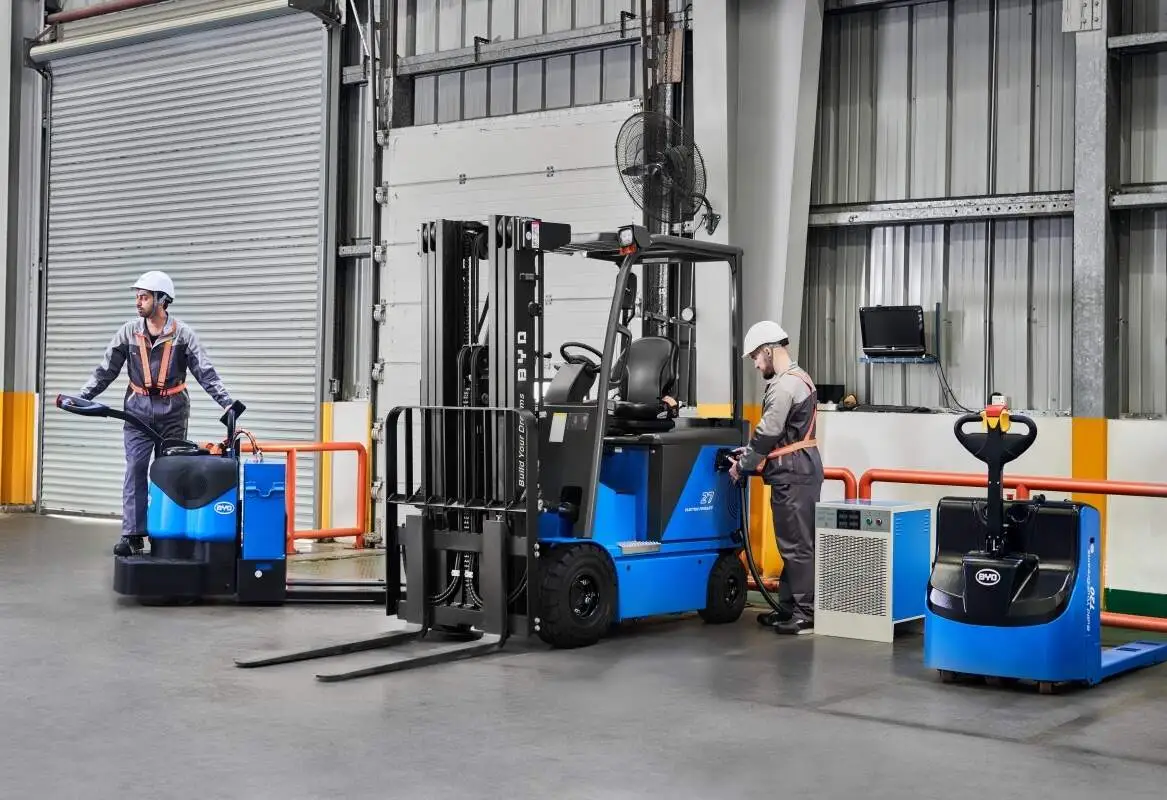
The forklift horn is a critical safety communication tool in warehouse and industrial settings, designed to alert pedestrians, other operators, and nearby personnel of the forklift’s presence and movements. Adhering to proper operation rules for the forklift horn is essential to prevent accidents, maintain a safe workplace, and comply with occupational safety regulations.
Pre-Operation Inspection
Before operating an electric forklift, always inspect the horn to ensure it is in good working condition. Press the horn button firmly to verify it produces a clear, audible sound that can be heard across typical work areas. If the horn is muffled, weak, or non-functional, do not operate the forklift until the issue is resolved by a qualified maintenance technician. This pre-use check lays the foundation for safe horn usage throughout the shift.
Scenarios Requiring Horn Usage
Use the forklift horn in specific situations to communicate intent and minimize collision risks:
- Crossing Intersections or Blind Spots: When approaching a warehouse intersection, aisle junction, or any area with limited visibility, press the horn once to alert others of your presence. Repeat if necessary, especially in high-traffic zones.
- Approaching Personnel or Equipment: When moving toward pedestrians, stationary vehicles, or fixed machinery, sound the horn in advance to give others time to react. Maintain a safe distance while doing so to avoid startling individuals unnecessarily.
- Starting or Changing Direction: Before initiating movement from a stationary position, or when changing direction suddenly, use the horn to signal your intent to nearby workers and operators.
- Emergency Situations: In cases where an immediate hazard is identified, such as a pedestrian stepping into the forklift’s path, sound the horn continuously until the danger is averted.
Prohibited Horn Usage
Avoid misusing the forklift horn, as this can desensitize personnel to important alerts and create a disruptive work environment:
- Do not use the horn for non-safety purposes, such as signaling to colleagues, expressing frustration, or as a playful gesture.
- Refrain from prolonged or excessive horn blowing, as this can cause noise pollution and distract other workers from their tasks.
Regular Maintenance and Training
Schedule regular maintenance checks for the forklift horn to ensure its functionality is preserved over time. Additionally, all forklift operators should receive formal training on proper horn usage, including recognizing when to use it and when to avoid unnecessary noise. This training helps reinforce safe practices and ensures consistency across all operators in the workplace.
By following these operation rules, electric forklift operators can contribute to a safer, more efficient work environment, reducing the risk of accidents and ensuring compliance with safety standards.