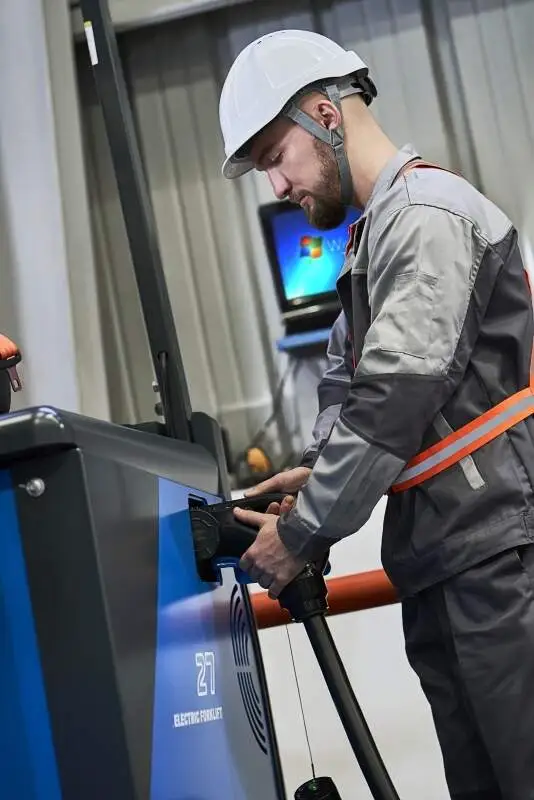
In modern material handling operations, selecting the appropriate forklift model directly influences efficiency, safety, and long-term operational costs. Rear-wheel steering electric forklifts have become a trusted choice across various industrial and warehouse settings, offering distinct advantages that address common challenges in material movement.
A core operational strength of rear-wheel steering forklifts lies in their exceptional maneuverability within tight spaces. Unlike front-wheel steering alternatives, rear-wheel steering enables the forklift to pivot with a smaller turning radius, making it perfectly suited for navigating narrow warehouse aisles, crowded loading docks, and confined storage areas. This agility translates to faster material handling cycles, as operators can precisely position the forklift to pick up or drop off loads without repeated repositioning, minimizing downtime and boosting overall productivity.
Another critical benefit is enhanced load stability during travel and lifting operations. Rear-wheel steering distributes the vehicle’s weight and the load’s weight more evenly across the chassis, reducing the risk of tipping when carrying heavy loads or traversing uneven surfaces. This stability not only safeguards valuable inventory from damage but also elevates operator safety, decreasing the likelihood of workplace accidents related to load imbalance.
Rear-wheel steering forklifts also offer reduced tire wear compared to front-wheel steering models. In front-wheel steering systems, front tires bear most of the steering forces and frequent turning stress, leading to accelerated degradation. With rear-wheel steering, rear tires handle steering movements while front tires maintain consistent ground contact, resulting in slower tire wear and lower long-term maintenance costs. This advantage is especially valuable for high-usage operations, as it cuts down on tire replacement frequency and associated downtime.
For operations involving heavy loads, rear-wheel steering models deliver enhanced control and precision. The steering mechanism is engineered to manage the additional weight of heavy loads without sacrificing responsiveness, allowing operators to navigate confidently even when handling maximum capacity. This level of control is essential in industries like manufacturing, logistics, and construction, where safe and efficient movement of heavy materials is a top priority.
If you’re seeking to upgrade your material handling equipment with rear-wheel steering electric forklifts, Jianshu New Energy specializes in high-quality electric forklift solutions tailored to your unique operational needs. For more details and personalized consultation, please reach out to us at 17399989919@163.com.