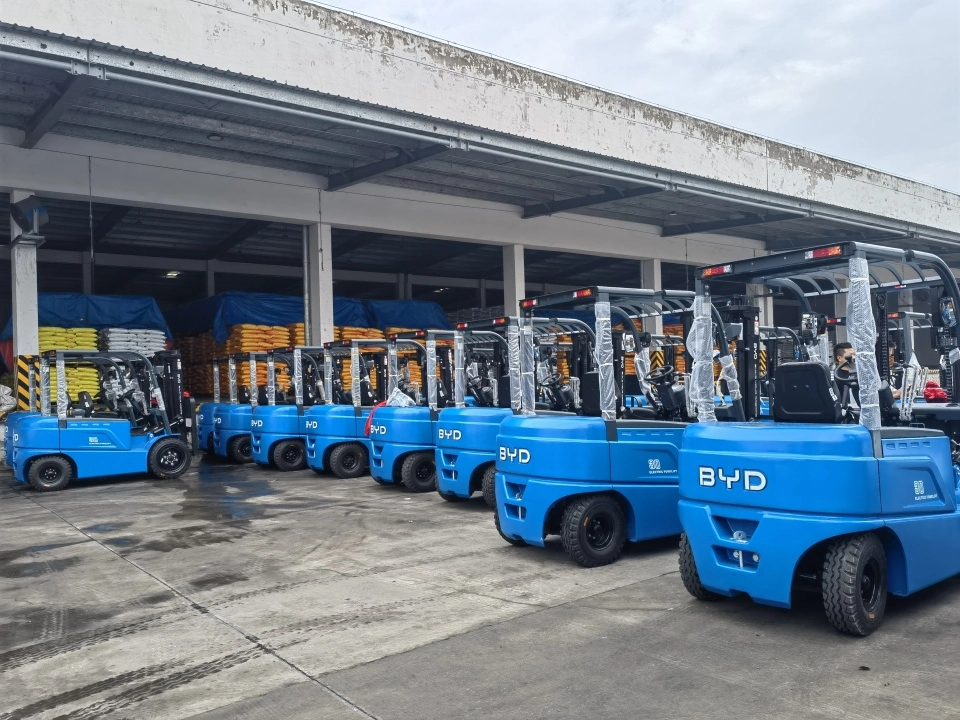
In today’s large-scale industrial operations, the need for efficient heavy-duty material handling has driven the development of extra large capacity industrial forklifts. These specialized vehicles are engineered to handle loads that far exceed the capabilities of standard forklift models, addressing the demands of industries where bulky, heavy cargo is a daily requirement.
Key features of extra large capacity forklift models center around structural robustness and functional efficiency. Their frames are constructed with high-strength materials to withstand constant heavy load stress, while powertrains are designed to deliver sufficient torque for smooth movement even under maximum load. Stability is a critical design element; many models incorporate widened wheelbases and counterweight systems tailored to maintain balance when lifting and transporting heavy items. Additionally, specialized attachments such as extended forks, clamp arms, and container handlers can be integrated to accommodate different cargo types, from steel beams to shipping containers.
These forklifts find extensive application across diverse industrial sectors. In port and intermodal facilities, they play a vital role in loading and unloading shipping containers, streamlining the transfer of goods between vessels and land transport. Heavy manufacturing plants rely on them to move raw materials like steel ingots or large automotive components, supporting continuous production workflows. Construction sites also utilize these forklifts to transport precast concrete structures, building materials, and heavy machinery across job sites, reducing manual labor and accelerating project timelines.
Beyond load capacity, safety and operational efficiency are core considerations in the design of these models. Advanced braking systems, 360-degree visibility aids, and operator monitoring technologies help minimize accident risks in busy industrial environments. From an efficiency standpoint, their ability to handle larger loads in single trips reduces the number of movements required, optimizing workflow and cutting down on operational time. As industries continue to scale their operations, extra large capacity industrial forklifts remain essential tools for supporting reliable, safe, and efficient heavy material handling.