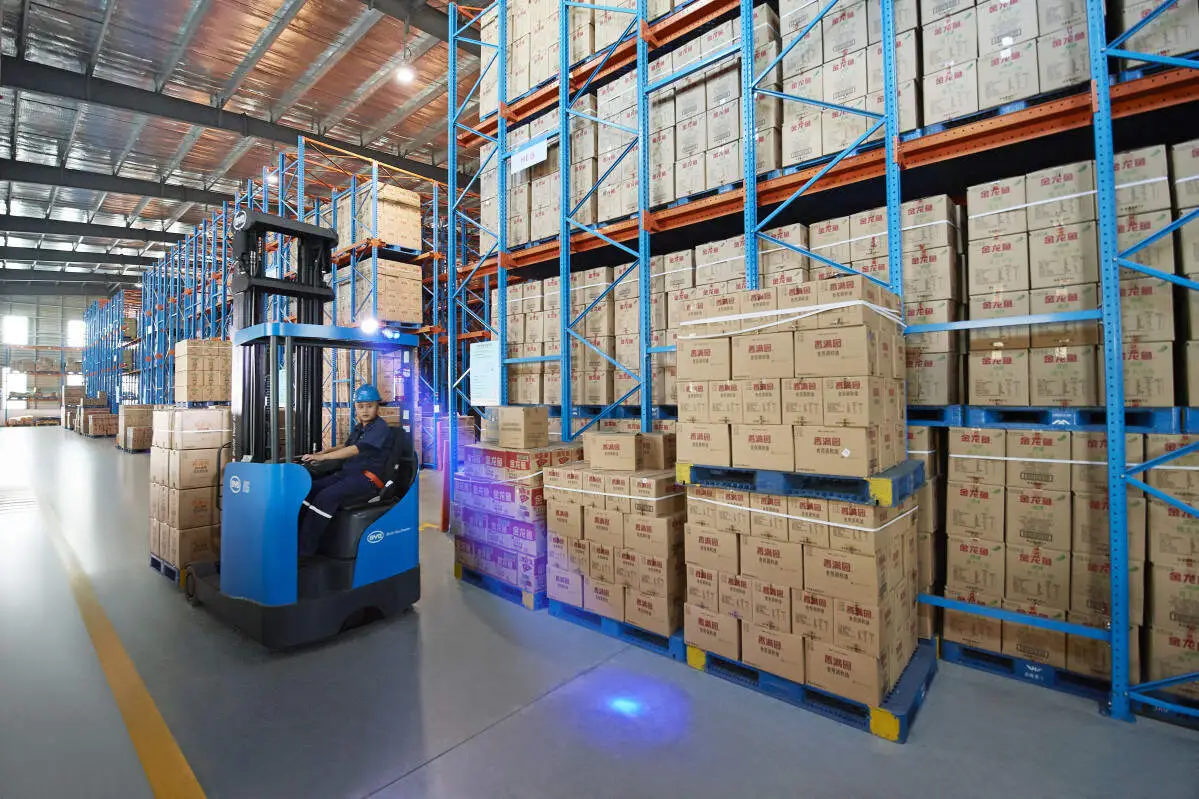
In the realm of warehouse and industrial material handling, selecting the right equipment is critical to maintaining steady operational efficiency and workplace safety. Two widely utilized tools—walkie stackers and counterbalance forklifts—each cater to distinct operational needs, and understanding their performance differences helps facility managers make targeted decisions aligned with their workspace and tasks.
Load capacity and lift height represent core performance distinctions. Walkie stackers are engineered for lighter-duty applications, with load capacities typically ranging from 1,500 to 4,500 pounds. Their lift heights generally peak between 12 and 20 feet, making them well-suited for stacking pallets on lower to mid-level storage racks. Counterbalance forklifts, by contrast, are built for heavy loads, with capacities spanning from 3,000 to over 50,000 pounds. They can reach lift heights of up to 30 feet or more, enabling access to high-level storage systems in large-scale warehouses.
Maneuverability and space requirements further set the two apart. Walkie stackers feature a compact, narrow footprint that grants exceptional agility, allowing them to navigate tight spaces, narrow aisles, and crowded work areas with ease. This makes them ideal for small to mid-sized warehouses where floor space is limited. Counterbalance forklifts, with their larger frame and rear counterweight, require wider turning radii and more open space to operate safely. They are better suited for facilities with broad aisles and ample room for maneuvering.
Operational efficiency and ergonomics also vary significantly. Walkie stackers are often preferred for short-distance material movement and low-level stacking tasks. Their user-friendly design lets operators walk alongside the equipment, reducing fatigue during extended shifts. Counterbalance forklifts excel in long-distance transport and heavy-duty stacking, as their seated operation provides greater comfort for operators during prolonged use. However, they demand more extensive training to operate safely due to their size and weight distribution.
When it comes to ideal applications, walkie stackers thrive in environments like retail backrooms, small distribution centers, and facilities with narrow aisles. They are also useful for loading and unloading light to medium-weight pallets from delivery trucks. Counterbalance forklifts are the primary choice for large-scale warehouses, manufacturing facilities, and outdoor loading docks where heavy loads and high stacking are routine. Outdoor models can even handle rough terrain, adding to their versatility.
In conclusion, the choice between walkie stackers and counterbalance forklifts depends on factors including load size, workspace dimensions, task type, and operator comfort. By evaluating these performance characteristics, facility managers can select equipment that aligns with their specific operational requirements, ultimately enhancing productivity and safety in the workplace.