As the material handling industry shifts toward sustainable solutions, electric forklifts have become a staple in warehouses and distribution centers. Choosing the right battery is critical to maximizing operational efficiency, reducing downtime, and controlling long-term costs. Two primary battery options dominate the market today, each with distinct performance characteristics that cater to different operational needs.
Lead-acid batteries have been a long-standing choice for electric forklifts. They are known for their initial lower cost, making them accessible for small to medium-sized operations with limited upfront budgets. However, their performance comes with trade-offs. Lead-acid batteries require regular maintenance, including checking water levels and ensuring proper ventilation to prevent acid buildup. Their charging time is relatively long, often requiring 8-10 hours of charge plus a cool-down period, which can disrupt continuous shift operations. Additionally, their lifespan is typically shorter compared to newer alternatives, averaging around 1,500 to 2,000 charge cycles. While they can handle heavy loads in short bursts, their energy density is lower, meaning they may require more frequent recharges during extended use.
Lithium-ion batteries represent a more modern alternative, offering several performance advantages. Their higher energy density translates to longer run times per charge, allowing forklifts to operate through entire shifts without needing a recharge. Charging is also faster, with many lithium-ion batteries reaching 80% charge in just 1-2 hours, enabling quick top-ups during breaks. Maintenance requirements are minimal, as there is no need for water checks or acid handling, reducing labor and safety concerns. Lithium-ion batteries also have a longer lifespan, often exceeding 5,000 charge cycles, which can offset their higher initial cost over time. They perform consistently across different temperature ranges, making them suitable for both indoor and outdoor operations.
When comparing the two, lead-acid batteries are ideal for operations with low to moderate usage, where upfront cost is a priority and downtime can be scheduled around charging. Lithium-ion batteries are better suited for high-demand environments with continuous shift operations, where maximizing uptime and reducing maintenance are key. It’s important to evaluate factors like operational intensity, available charging infrastructure, and long-term budget when selecting the right battery option.
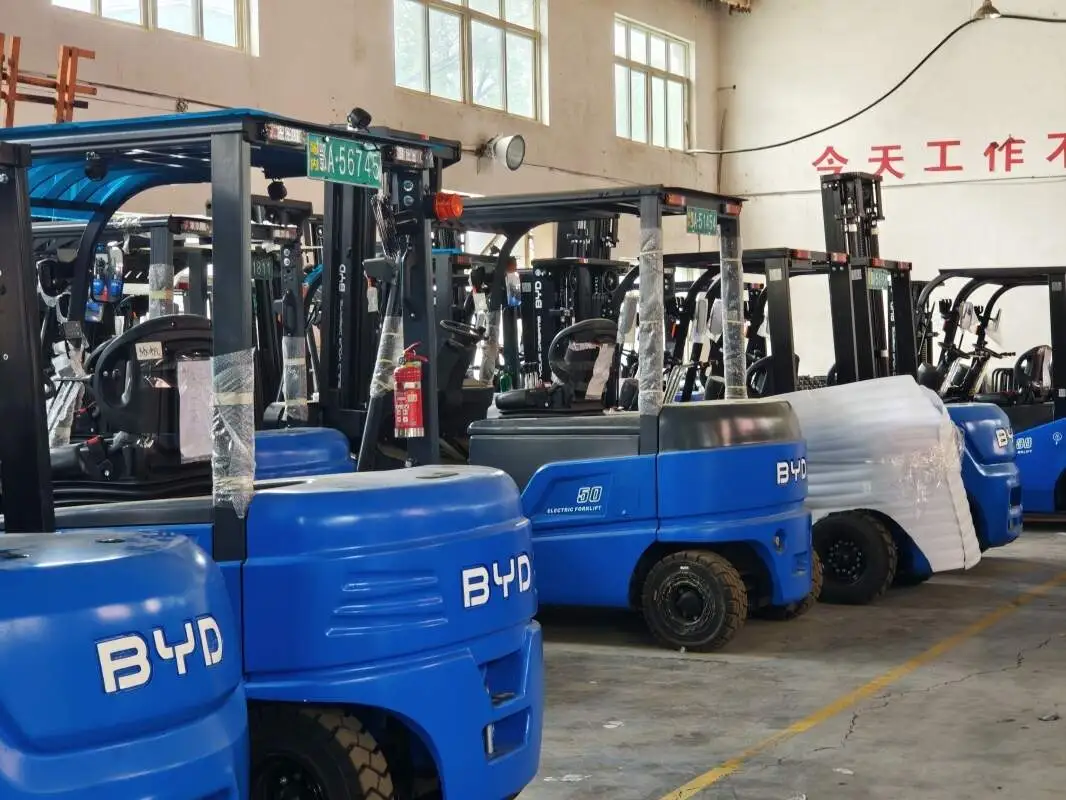
At Jianshu New Energy, we specialize in BYD electric forklifts, offering tailored battery solutions to meet your specific operational needs. Whether you’re looking for cost-effective lead-acid options or high-performance lithium-ion systems, our team can provide expert guidance to help you make the right choice. For more information, feel free to contact us at 17399989919@163.com.