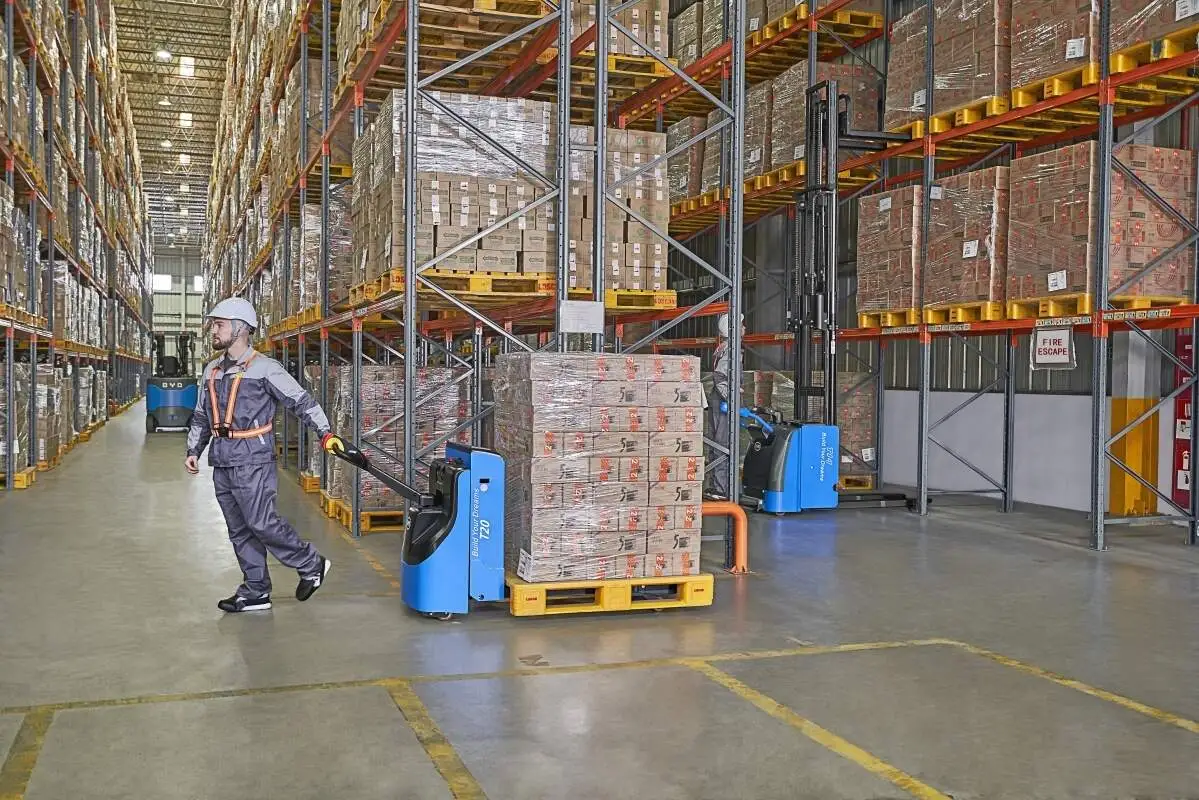
In today’s fast-paced material handling industry, optimizing space and operational efficiency is a top priority for warehouses and distribution centers. All direction forklifts have emerged as a versatile solution, designed to address the limitations of traditional forklifts in tight or complex environments. Understanding their core performance features helps businesses make informed decisions about integrating these tools into their daily operations.
One of the most notable performance features of all direction forklifts is their exceptional maneuverability. Unlike standard forklifts that can only move forward, backward, and turn within a wide radius, these models can travel in any direction—forward, backward, sideways, and even diagonally. This capability is particularly valuable in narrow aisles, where space is limited. Operators can navigate around obstacles with ease, reducing the need for extensive aisle space and maximizing storage capacity. The tight turning radius allows for precise positioning, minimizing the risk of damage to goods or warehouse infrastructure.
All direction forklifts are engineered to handle a range of load sizes and weights efficiently. Equipped with robust lifting mechanisms, they can lift heavy loads to significant heights while maintaining stability. The design of these forklifts distributes weight evenly, ensuring that loads remain balanced during movement, even when traveling sideways. This stability is crucial for preventing load shifts and potential accidents, especially when transporting fragile or high-value items. Additionally, many models offer adjustable fork positions, allowing operators to accommodate different load shapes and sizes without additional equipment.
The ability to move in all directions directly contributes to improved operational efficiency. Operators can complete tasks in less time compared to traditional forklifts, as they do not need to reposition the vehicle repeatedly to access different storage areas. For example, when retrieving goods from racking systems in narrow aisles, an all direction forklift can move sideways to align with the rack, eliminating the need to turn around. This reduces cycle times for loading and unloading, leading to higher productivity throughout the warehouse. The intuitive control systems also make it easier for operators to master, reducing training time and minimizing errors.
Safety is a critical aspect of any material handling equipment, and all direction forklifts incorporate several features to ensure safe operation. Many models come with stability control systems that monitor the vehicle’s position and adjust power distribution to prevent tipping, especially when carrying heavy loads or navigating uneven surfaces. Anti-slip tires provide enhanced traction, reducing the risk of skidding on wet or slippery floors. Additionally, visibility enhancements such as wide-angle mirrors and camera systems help operators navigate blind spots, ensuring they can see obstacles or personnel in their path.
All direction forklifts are designed to perform well in a variety of environments, from enclosed warehouses to outdoor loading docks. Their durable construction can withstand different weather conditions, including rain and mild temperature fluctuations. Some models are also equipped with specialized tires for outdoor use, providing better grip on gravel or uneven pavement. This adaptability makes them a versatile choice for businesses that operate across multiple settings, eliminating the need for separate equipment for indoor and outdoor tasks.
In summary, the performance features of all direction forklifts make them a valuable asset for modern material handling operations. Their superior maneuverability, enhanced load handling, improved efficiency, reliable safety features, and adaptability address key challenges in warehouse management, helping businesses optimize space, increase productivity, and maintain a safe working environment.