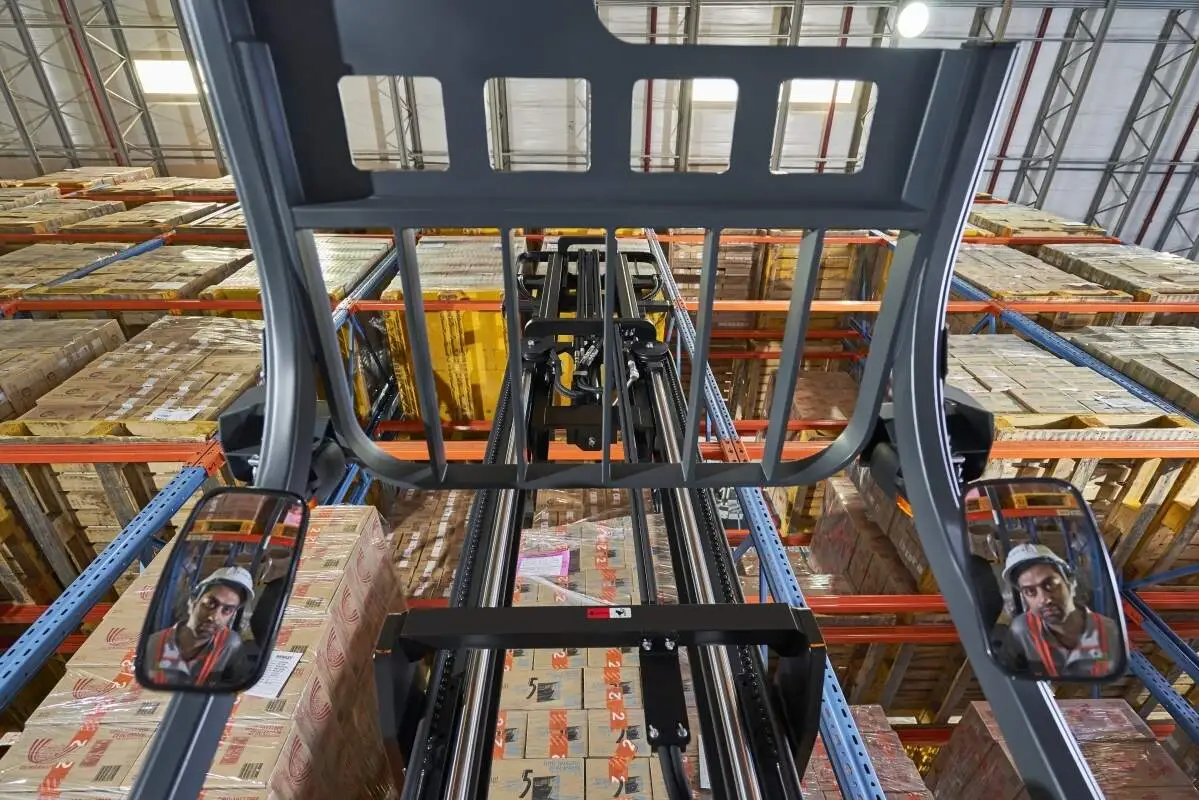
In modern material handling operations, especially in high-density warehouse environments, the demand for specialized forklifts that balance maneuverability and load capacity continues to grow. The Jungheinrich multi directional forklift stands out as a purpose-built solution designed to address the challenges of narrow aisles and complex storage layouts. This article delves into its key performance attributes, focusing on real-world operational value without overstated claims.
First, maneuverability is a cornerstone of this forklift’s performance. Unlike standard forklifts limited to forward and reverse movement, the multi directional model enables seamless travel in all directions—forward, reverse, sideward, and diagonal. This capability is particularly critical in narrow aisle warehouses where space is at a premium. With its advanced steering system, the forklift can navigate tight turns and shift direction without repositioning the entire vehicle, reducing the risk of rack damage and improving overall operational flow. Operators can efficiently move loads between storage bays that would be inaccessible to traditional forklifts, minimizing unnecessary travel time.
Next, reliable load handling contributes to its practical performance. The forklift is engineered to handle a range of load weights, tailored to meet typical warehouse and industrial requirements. Its stable chassis design ensures that loads are supported securely during movement, even when traveling sideways or navigating uneven floor surfaces. This stability helps maintain consistent operational safety, reducing the likelihood of load shifts that could lead to accidents or product damage. Additionally, the forklift’s lift mechanism is designed for smooth and controlled elevation, allowing operators to place loads precisely on high racks with ease, which supports efficient vertical storage utilization.
Energy efficiency is another key performance aspect, especially for electric-powered models. The forklift incorporates energy-saving technologies that optimize power consumption during operation. Regenerative braking systems capture and reuse energy that would otherwise be lost during deceleration, extending battery life between charges. This not only reduces operational costs associated with battery replacement and charging but also minimizes downtime, as the forklift can operate for longer periods without needing to recharge. The efficient electric motor delivers consistent power while producing zero emissions, making it suitable for indoor operations where air quality is a priority.
Finally, operator-centric design enhances overall performance by boosting productivity. The ergonomic cabin layout provides operators with comfortable seating, intuitive controls, and clear visibility of the load and surrounding environment. This reduces operator fatigue during long shifts, ensuring that performance remains consistent throughout the workday. The responsive controls allow for precise operation, enabling operators to handle loads quickly and accurately without compromising safety. By combining these features, the forklift supports a more efficient workflow, helping businesses meet material handling deadlines with greater reliability.
In conclusion, the Jungheinrich multi directional forklift offers a balanced set of performance features that address the evolving needs of modern material handling operations. Its maneuverability, reliable load handling, energy efficiency, and operator-focused design work together to enhance productivity and safety in challenging warehouse environments. While no single piece of equipment is a universal solution, this forklift provides a specialized option that delivers tangible value for businesses operating in space-constrained settings.