

2026-08-03

Technical Specifications for Class 3 Forklift Forks

Class 3 forklifts, also known as electric warehouse forklifts including pallet jacks, stackers, and order pickers, play a vital role in material handling across warehouses, distribution centers, and manufacturing facilities. Among their most critical components are the forks, as they directly interact with loads and impact operational safety and efficiency. Understanding the technical specifications of Class 3 forklift forks is essential for selecting the right components, ensuring compliance with industry standards, and preventing equipment failure or workplace incidents.

First, material specifications form the foundation of reliable forklift forks. Most high-quality Class 3 forklift forks are constructed from high-strength carbon steel, typically Grade 50 or Grade 80, which offers excellent tensile strength and yield resistance. Grade 50 steel, with a minimum tensile strength of 65,000 psi and yield strength of 50,000 psi, is suitable for moderate load applications, while Grade 80 steel, boasting a tensile strength of 90,000 psi and yield strength of 80,000 psi, is ideal for heavy-duty operations. The steel must undergo proper heat treatment during manufacturing to enhance hardness and reduce brittleness, ensuring the forks can withstand repeated load cycles without cracking or bending.

Next, dimensional specifications are tailored to the specific Class 3 forklift model and intended use. Fork length is a key consideration, as it must align with the size of standard pallets or loads handled. Common lengths range from 36 inches to 72 inches, with shorter forks suited for narrow aisle operations and longer forks for larger pallets. Fork thickness and width also impact load-bearing capacity: thicker forks provide greater rigidity, while wider forks distribute weight more evenly across the load base. Additionally, the fork tip features a rounded design to minimize damage to pallet boards, and the upper surface of the fork (known as the blade) must have a smooth, flat profile to ensure stable load placement. Forks must maintain precise parallelism, with no more than a 3mm difference in height between the two fork tips to prevent load tilting.

Load capacity specifications are closely linked to both the forklift’s rated capacity and the fork’s design. Each set of Class 3 forklift forks has a designated maximum load capacity, which must not exceed the forklift’s own rated capacity at the specified load center. The load center, typically 24 inches from the face of the fork carriage, is the point where the load’s weight is concentrated. Forks must be rated to handle this weight without permanent deformation. It’s important to note that exceeding the rated load capacity can lead to fork failure, forklift tipping, or damage to the load, so operators must adhere strictly to these specifications.

Durability and maintenance-related specifications also contribute to the long-term performance of Class 3 forklift forks. To resist corrosion, forks are often coated with a protective layer of paint or galvanized, especially if used in humid or outdoor environments. Regular inspection is required to check for signs of wear, such as thinning of the fork blade, cracks at the base of the fork, or bending. Industry standards recommend replacing forks when the blade thickness wears down by 10% or more, as this reduces their load-bearing capacity significantly. Additionally, forks should be checked for proper alignment with the forklift carriage to ensure smooth operation during lifting and lowering.

Finally, safety-related specifications are non-negotiable for Class 3 forklift forks. Forks must be marked with clear, legible labels indicating their rated load capacity and load center, so operators can easily reference this information. The fork carriage mounting system must be designed to securely attach the forks, with locking pins or bolts that meet industry safety standards to prevent accidental detachment during operation. Regular load testing may be required to verify that the forks can still handle their rated capacity, ensuring ongoing safety for both operators and the workplace.

In summary, the technical specifications of Class 3 forklift forks encompass material quality, dimensional accuracy, load capacity, durability features, and safety requirements. By understanding and adhering to these specifications, warehouse managers and operators can select the right forks for their equipment, maintain operational efficiency, and minimize the risk of accidents or equipment failure. Investing in forks that meet these standards not only supports smooth material handling operations but also extends the lifespan of both the forks and the forklift itself.
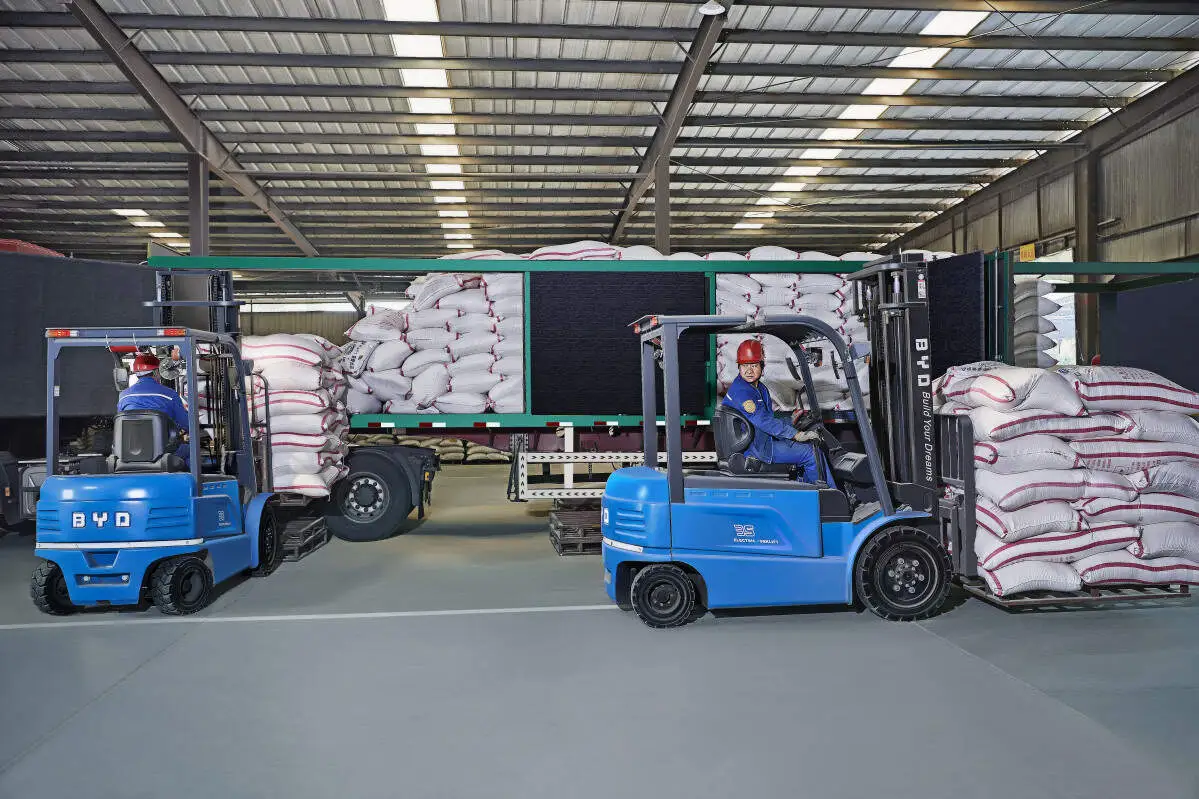


Technical Specifications for Class 3 Forklift Forks(Image1)


Telephone

WeChat

Whatsapp

E-mail address

We use cookie to improve your online experience. By continuing to browse this website, you agree to our use of cookie.

Cookies

Please read our Terms and Conditions and this Privacy & Cookie Policy before accessing or using our Services. If you cannot agree with this Policy or the Terms and Conditions, please do not access or use our Services.
If you are located within the European Economic Area (EEA), the United Kingdom or Switzerland (collectively “European Countries”), all processing of your personal data shall be governed by the General Data Protection Regulation (GDPR). If you are located in a jurisdiction outside European Countries, by using our Services, you accept the Terms and Conditions and accept our privacy practices described in this Policy.
As a resident of European Countries, you hold full statutory rights under GDPR: the right to access, rectify and erase your personal data, the right to data portability, the right to object to marketing tracking, the right to withdraw cookie consent at any time, and the right to lodge a complaint with your local data protection authority (DPA).
Your personal data collected via this website will be transferred and stored in China. We execute Standard Contractual Clauses (SCCs) approved by the European Commission to guarantee adequate data protection for European users regarding cross-border personal data transfer.
We may modify this Policy at any time. Minor adjustments will be updated with a new effective date displayed at the top of this document. If we make material changes to how we collect, use or disclose your Personal Information that limit your rights under GDPR, we will provide you with advance notice and obtain your separate explicit consent before implementing such revisions. Updated policy terms will not be retroactively applied to Personal Information collected prior to notification without your written approval.
In addition, we may provide you with real-time pop-up disclosures or supplementary information about the Personal Information handling practices of specific modules of our Services. Such notices shall supplement this Policy and offer you extra choices about how we process your Personal Information.

Cookies & Related Tracking Technologies

Cookies are small text files stored on your device when you access most websites on the internet or open certain marketing emails. For the purpose of this Policy, the term “Cookie” covers all equivalent tracking technologies with identical functions, including HTML tags, tracking pixels, web beacons, local storage and session storage.
Cookies enable our website to recognize your device and record your browsing history when you revisit our site. Typical data collected via Cookies includes your browser type, referral website address, IP address and clickstream behavior (pages viewed, links clicked).
We only automatically load Strictly Necessary Cookies upon your first site visit. All non-necessary Cookies (Functional, Performance, Targeting Cookies) will NOT be activated unless you submit your explicit, affirmative consent via our website cookie banner. You can adjust, restrict or fully withdraw your cookie preferences at any time via the fixed "Cookie Settings" button placed in our website footer, with immediate effect.
We deploy Cookies to simplify website navigation, deliver personalized user experience, supply matched industrial logistics equipment information, analyze website operation data, and deliver targeted BYD electric forklift advertisements across third-party platforms via our authorized marketing partners.
We classify Cookies into four standard categories as required by European ePrivacy regulations:
●  Strictly Necessary Cookies
●  Performance Cookies
●  Functional Cookies
●  Targeting Cookies

Detailed Introduction of Each Cookie Category

Strictly Necessary Cookies

These cookies are indispensable for basic website operation and cannot be fully disabled within our site system. They are only set in response to your voluntary service requests, such as saving your cookie privacy preferences, logging into accounts or filling in inquiry forms. You can configure your browser to block or alert you about these cookies, but core functions of the website will fail to work normally after blocking. These cookies only store temporary session data and do not record any personally identifiable information.

Functional Cookies

These cookies support enhanced personalized website functions, such as remembering your language preference, saved product browsing records and quote information. They may be set by us or trusted third-party service providers embedded on our pages. If you decline these cookies, partial or all personalized service modules cannot operate properly. Functional cookies will be automatically cleared after a maximum storage period of 12 months.

Performance Cookies

We use performance cookies (mainly from Google Analytics) to count visitor volumes and traffic sources, measure and optimize our website operating performance. These cookies help us identify the most and least popular product pages and track visitors’ browsing paths on our site. All data collected by performance cookies is fully aggregated and anonymized without linking to your individual identity, and tracking data will be retained for up to 26 months. If you reject these cookies, we cannot track website operation data or continuously upgrade our service experience for global warehouse and manufacturing clients.

Targeting Cookies

These third-party cookies are deployed through our website by our official advertising partners (Google Ads). The partners may use such cookies to build anonymized interest profiles based on your forklift browsing behavior and push relevant electric forklift promotional adverts on other websites. They do not directly store your personal identifiable information, but rely on unique identifiers of your browser and network device. Targeting cookies are stored for a maximum of 12 months. If you do not allow these cookies, you will only receive generic, non-industry targeted online advertisements. We will never share your complete browsing records with unrelated third parties for irrelevant commercial marketing.

How To Turn Off & Manage Cookies

  1. Adjust consent on our official website: Click the permanent "Cookie Settings" button in the website footer to check, modify or completely withdraw your consent for non-necessary cookies at any time.

  2. Browser privacy control: You can restrict, block or delete all Cookies permanently through your web browser’s privacy settings. Please note that clearing all existing Cookies will reset all your saved preferences on our website.

Restricting or blocking non-necessary Cookies will not stop you from browsing our forklift product catalog, but personalized content and targeted industrial equipment ads will be disabled. If you block Strictly Necessary Cookies, core website functions including inquiry form submission and privacy preference saving will be unavailable.

Cookies within Mobile Applications

We only adopt Strictly Necessary Cookies on our mobile applications. These Cookies are critical to guarantee basic operation of our apps; blocking or deleting them may make you unable to use core app functions. No personal identifiable information will be stored via mobile app Cookies, and app Cookie data will never be shared with other third-party applications installed on your mobile device.

Contact Information

If you have any questions, requests or concerns regarding any clauses in this Privacy & Cookie Policy or the processing of your personal data, please contact our dedicated data handler by email: 17399989919@163.com. You can also reach our professional customer service team via the online contact form available on our official website.