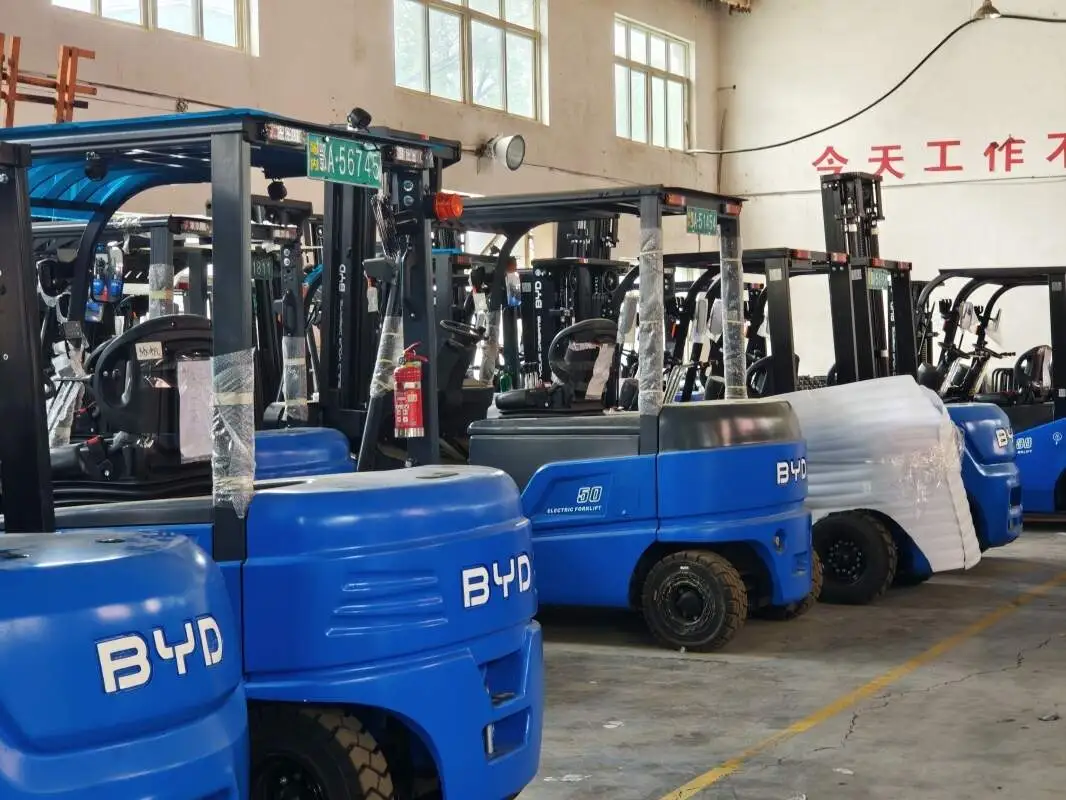
When it comes to material handling in warehouses, distribution centers, or industrial facilities, a 4-stage forklift stands out for its ability to reach greater heights compared to standard models. If you’re in the market for a 4-stage forklift for sale, taking a systematic approach to evaluate your needs and the forklift’s specifications will help you make a cost-effective and reliable choice. Below are key points to consider during your shopping process.
First and foremost, evaluate your load capacity requirements. Start by analyzing the average weight of the goods you handle daily, as well as any occasional peak loads you may encounter. It’s critical to select a forklift with a rated load capacity that matches or slightly exceeds your maximum typical load, but avoid over-sizing unnecessarily, as this can lead to higher upfront costs and reduced maneuverability. Additionally, pay attention to the load center specification—this refers to the distance from the forklift’s front face to the center of the load, and mismatched load centers can compromise stability and safety during operation.
Next, verify the lift height specifications of the 4-stage forklift. The primary advantage of a 4-stage mast is its ability to reach elevated storage racks, so you need to align the forklift’s maximum lift height with the tallest shelf you need to access. Remember to leave a small safety margin of at least 12 to 18 inches between the forklift’s maximum lift height and the top of the rack to accommodate for load placement and movement. Also, note that a forklift’s load capacity may decrease as the lift height increases, so ensure the model can handle your required weight at the highest operating height you’ll use.
Assess the compatibility of the forklift with your operating environment. If your operations take place primarily indoors on smooth concrete floors, a standard electric 4-stage forklift may suffice. However, if you work outdoors on uneven terrain or in rainy conditions, look for models with enhanced traction and weather-resistant components. For narrow warehouse aisles, prioritize forklifts with a tight turning radius to navigate efficiently. If your facility operates in cold storage or dusty environments, opt for models with sealed electrical components and corrosion-resistant materials to extend the equipment’s lifespan.
Factor in long-term maintenance costs alongside the upfront purchase price. While a lower-priced forklift may seem appealing initially, it could lead to higher expenses down the line due to frequent repairs or costly replacement parts. Research the availability of maintenance services and replacement components in your area, and consider the expected lifespan of critical parts like the battery (for electric models) or engine (for internal combustion models). Calculating the total cost of ownership, including maintenance, fuel or charging costs, and downtime, will give you a clearer picture of the forklift’s true value.
Finally, prioritize essential safety features to protect your operators and reduce workplace risks. Look for forklifts equipped with standard safety features such as seat belts, overhead guard systems, and anti-tip stability controls. For operations in low-light environments, ensure the forklift has adequate lighting, including headlights and taillights. Emergency stop buttons and visible warning signals are also crucial to quickly halt operations if a hazard arises. Additionally, consider features that enhance operator visibility, such as a well-designed cab layout and transparent mast sections, to minimize blind spots during lifting and maneuvering.
By carefully considering these factors—load capacity, lift height, operating environment, maintenance costs, and safety features—you can narrow down your options and select a 4-stage forklift that meets your specific operational needs. Taking the time to evaluate each point will not only ensure a wise investment but also contribute to improved efficiency and safety in your material handling operations.