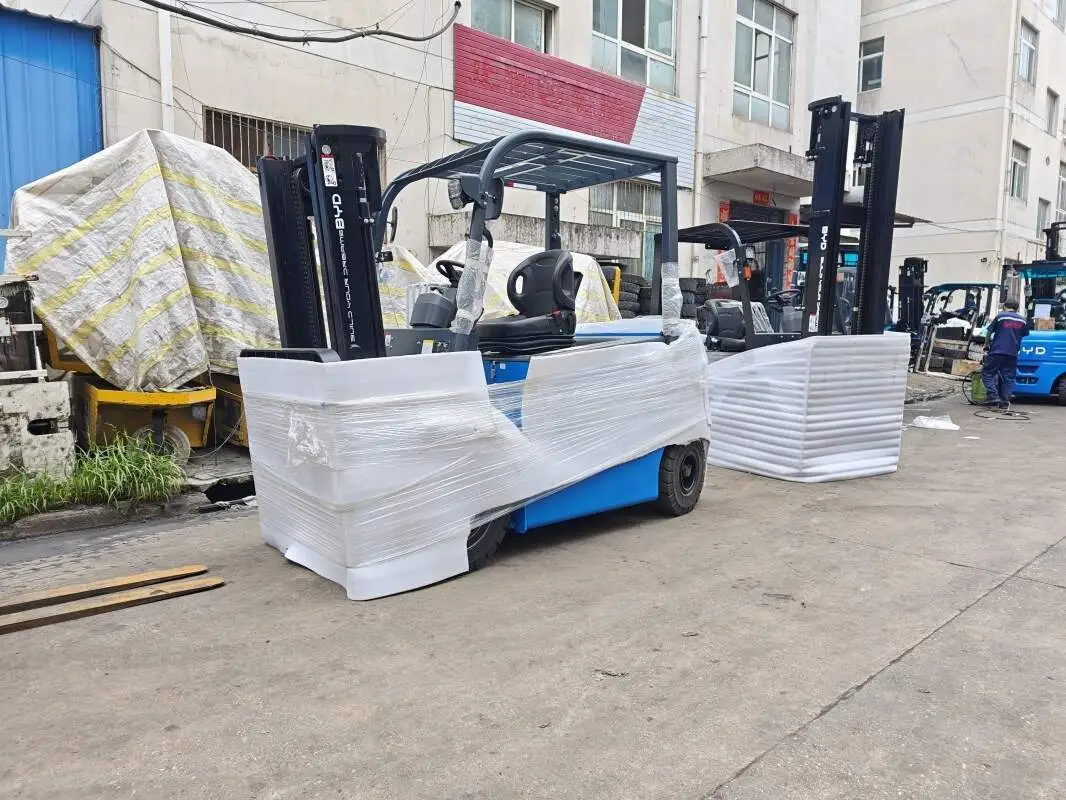
Before putting a newly delivered electric forklift into formal use, a comprehensive trial run is critical to verify its performance, safety features and overall functionality. This process helps identify potential issues early, ensuring smooth and reliable operations in daily tasks.
1. Pre-Operation Inspection
Before initiating the trial run, conduct a thorough visual and functional check. Start with the battery system: confirm it is properly installed, fully charged, and free of any leaks or damage. Inspect the exterior of the forklift for dents, loose components or signs of transit damage. Check key operational parts, including the steering wheel, control levers, pedals and tires, to ensure they are in good condition and move smoothly without unusual resistance. Don’t forget to verify that all safety devices, such as horn, warning lights and seat belt, are functioning correctly.
2. No-Load Trial Run
Begin the trial run with a no-load test to assess basic operational performance. Operate the forklift in an open, obstacle-free area. Test the steering system to ensure it responds accurately and smoothly, with no excessive play. Evaluate the brake system by performing gradual and emergency stops to confirm it can bring the forklift to a stable halt. Test the lift and tilt functions repeatedly, checking for any unusual noises, slow movements or jamming in the hydraulic system. Monitor the instrument panel throughout the run to ensure all indicators show normal readings, such as battery voltage and system temperature.
3. Load Trial Run
After confirming the no-load performance is satisfactory, proceed with load testing. Start with a light load, gradually increasing to the forklift’s rated capacity. During this phase, observe how the forklift handles the load: check for stable lifting, no excessive sway when moving, and smooth tilt operations. Pay attention to the battery’s performance under load, ensuring it maintains consistent power without sudden voltage drops. Also, test the forklift’s ability to navigate slight ramps or uneven surfaces with the load to verify its stability and traction.
4. Post-Run Inspection
Once the trial run is completed, conduct a post-operation check. Inspect the battery for any overheating or abnormal temperature, and check the battery terminals for tightness. Examine the hydraulic system for leaks and the tires for any signs of wear or damage. Review all operational parts to identify any loose components or unusual wear patterns. Document any issues or abnormalities observed during the trial run, and communicate them to the relevant technical support team for timely resolution.
By following these key points during the trial run, you can ensure your newly delivered electric forklift meets operational standards and is ready for safe, efficient use. For professional guidance and quality electric forklifts, contact Jianshu New Energy, a specialist in electric forklifts. You can reach us at 17399989919@163.com for more information and support.