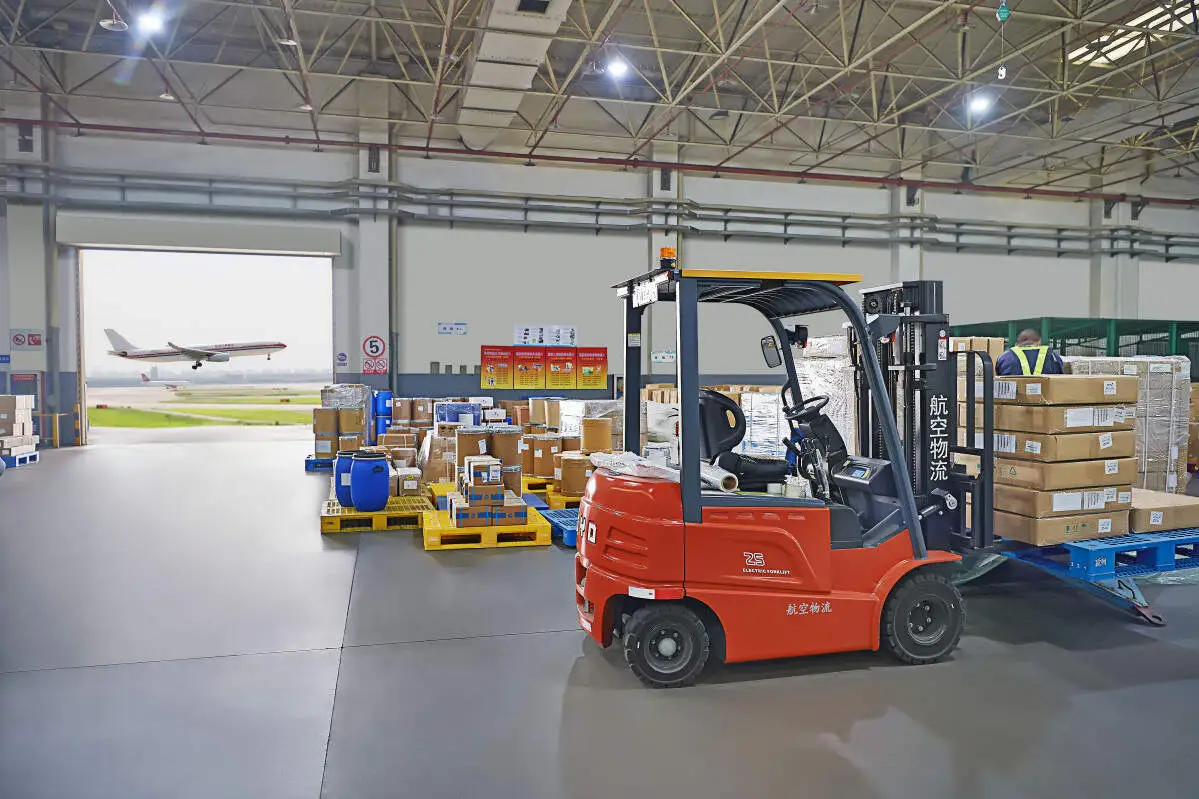
In today’s dynamic work environments—from crowded warehouses to remote construction sites—flexibility and efficiency in material handling are more critical than ever. Traditional forklifts, with their bulky frames and limited maneuverability, often struggle to navigate tight spaces or adapt to variable terrain, leaving gaps in workflow efficiency. Enter the portable self-loading forklift, a compact piece of equipment engineered to address these challenges and meet the diverse needs of modern work sites.
Designed with compactness at its core, this forklift features a streamlined frame that allows it to move easily through narrow aisles, between stacked pallets, or across uneven ground where larger machinery cannot reach. Its self-loading capability eliminates the need for additional equipment or manual labor to lift and position loads, reducing operational time and minimizing physical strain on workers. Constructed from durable yet lightweight materials, it balances strength with portability, making it suitable for both indoor and outdoor use without sacrificing load-bearing capacity.
One of the key advantages of the portable self-loading forklift is its versatility across multiple work-site scenarios. In warehouse settings, it excels at moving small to medium-sized loads between storage shelves and loading docks, optimizing space utilization and speeding up order fulfillment processes. On construction sites, it can transport building materials like bricks, pipes, or drywall to upper floors or tight corners, supporting on-time project completion. For logistics and delivery operations, it simplifies loading and unloading tasks in small distribution centers or even directly on delivery trucks, enhancing last-mile efficiency. Additionally, in small manufacturing facilities, it aids in moving components between production stations without disrupting workflow or occupying valuable floor space.
Operating this compact equipment is intuitive, with user-friendly controls that require minimal training, allowing workers to quickly master its functions. Safety features such as stable support legs, anti-slip handles, and load capacity indicators ensure that operations remain secure even in challenging conditions. Maintenance requirements are also streamlined, with accessible components and simple servicing procedures, reducing downtime and long-term operational costs.
As work sites continue to evolve with changing space constraints and operational demands, the portable self-loading forklift stands out as a practical solution that combines compact design with reliable performance. By addressing the limitations of traditional forklifts, it enables businesses to enhance productivity, reduce labor costs, and adapt to a wide range of material handling needs—proving that size does not have to compromise efficiency in the modern workplace.