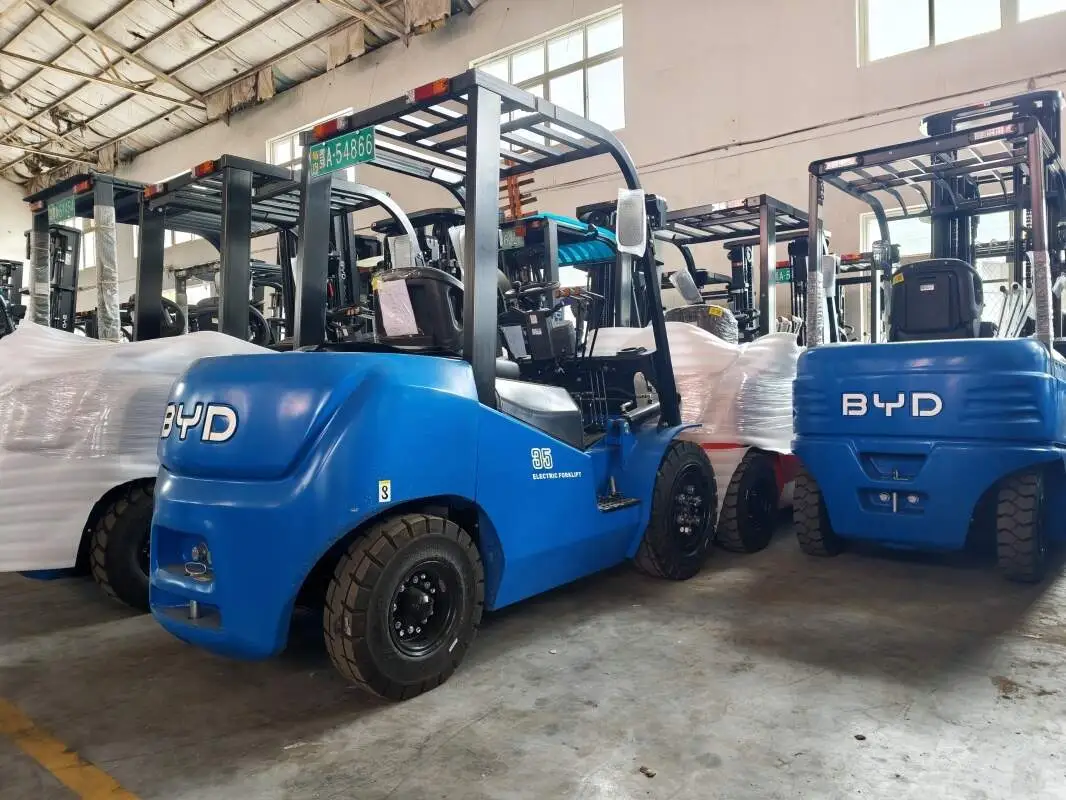
In material handling operations, the forklift mast serves as the core component enabling vertical load movement, directly influencing a vehicle’s lifting capabilities and operational versatility. Among specialized mast designs, the TT mast stands out for its tailored structure that addresses unique workplace demands.
A TT mast, short for tandem telescopic mast, features a dual-section telescopic structure consisting of an inner and outer mast assembly. Unlike standard single-stage masts, this design uses synchronized hydraulic cylinders and heavy-duty chain systems to extend the inner mast vertically from the outer frame. When fully retracted, the TT mast maintains a compact profile, allowing forklifts to navigate narrow aisles and low-clearance areas with ease. When extended, it achieves significantly greater lifting heights compared to traditional masts, making it ideal for high-storage environments.
The primary functions of a TT mast revolve around balancing compactness and vertical reach. First, its telescopic design enables extended lifting heights, supporting efficient access to upper-level warehouse shelves or storage racks. This is particularly valuable in facilities utilizing vertical space to maximize storage capacity. Second, the retracted compact size ensures maneuverability in confined spaces, such as tight manufacturing lines or small retail warehouses where space is at a premium. Third, the tandem structure enhances load stability during lifting; the dual mast sections distribute weight evenly, reducing sway and minimizing the risk of load damage or operational accidents.
Practical applications of TT mast forklifts span across various industries. In large-scale warehouses, they are used to retrieve and place pallets on high-rise storage systems, optimizing space utilization. In manufacturing plants, they support the movement of heavy components between production lines, even in areas with limited overhead clearance. Additionally, in logistics hubs and distribution centers, these forklifts streamline the loading and unloading of goods from trucks and containers, adapting to both ground-level and elevated tasks.
To maintain optimal performance, regular maintenance of the TT mast is essential. Operators should conduct routine inspections of hydraulic lines for leaks, chain tension, and pulley functionality. Keeping mast components properly lubricated reduces friction and extends the lifespan of moving parts, while adhering to recommended load limits prevents structural strain and ensures safe operation.
Overall, the TT mast’s specialized design fills a critical niche in material handling, offering a blend of high vertical reach and compact maneuverability that standard masts cannot match. For operations requiring efficient use of vertical space without sacrificing agility, this mast design remains a reliable and practical solution.