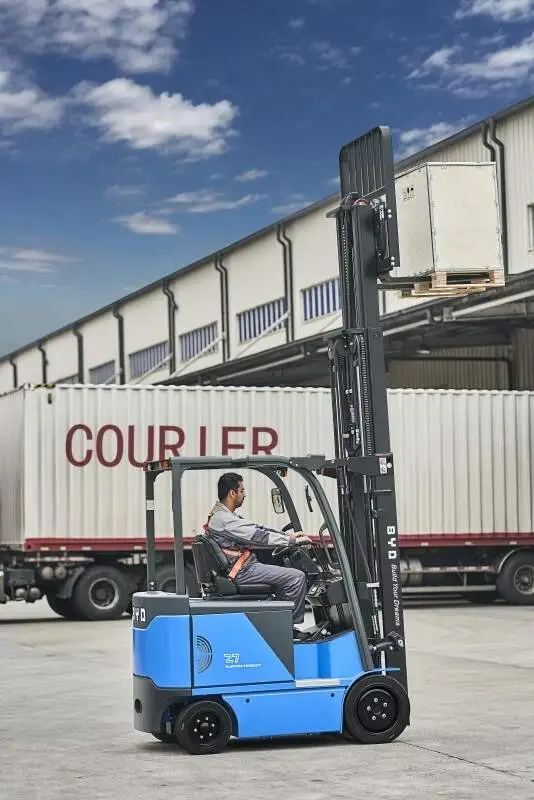
In compact workspaces—such as narrow warehouse aisles, small retail backrooms, or cramped construction zones—forklifts often prove too bulky to maneuver, making heavy item movement a logistical challenge. Relying on improper lifting methods not only risks workplace injuries but also slows down operations. Fortunately, there are practical, safe alternatives designed to handle heavy loads efficiently without relying on forklifts, tailored to fit tight spaces.
Manual material handling tools are foundational solutions for compact space needs. Hand trucks, with their narrow frames and swivel casters, glide through doorways and tight corridors, making them ideal for transporting boxes, barrels, or small machinery. Furniture dollies, equipped with four rotating wheels, distribute weight evenly across flat-based items, reducing strain while allowing easy navigation around obstacles. Lever bars offer a simple way to lift heavy objects just enough to slide a dolly underneath; their compact size fits into gaps where larger equipment can’t reach. Always secure loads with straps to prevent shifting during movement.
Ergonomic lifting techniques further enhance safety and efficiency. The power lift method—bending at the knees, keeping the back straight, and engaging leg muscles to lift—minimizes back injury risks. For awkwardly shaped or oversized items, breaking the load into smaller, manageable parts (when feasible) simplifies movement in tight quarters. Sliding pads or furniture sliders reduce friction between heavy items and floors, letting you push or pull loads with less force while protecting surfaces from scratches or damage.
Portable lifting devices offer another layer of support for heavier loads. Small hydraulic jacks, designed for tight spaces, can raise items several inches, enabling you to slide a dolly under them. Foldable lift tables are space-saving options; they can be stored when not in use and unfolded to provide a stable platform for lifting or stacking heavy crates, machinery components, or large containers. These tools eliminate the need for bulky forklifts while maintaining the ability to handle substantial weight.
For extremely heavy items that require multiple people, coordinated team lifting is a reliable strategy. Assign clear roles—one team member to guide the load, others to lift or push—and use simple, consistent signals to communicate movements. The "lift and shift" approach, where the team moves the load in small increments, ensures better control in tight spaces than attempting to move it all at once. All team members should be trained in proper lifting techniques to minimize injury risks and ensure smooth operations.
By combining these tools, techniques, and coordination strategies, you can safely and efficiently move heavy items in compact workspaces without a forklift. These alternatives address the limitations of bulky equipment, promote a safer work environment, and boost operational efficiency in confined areas.