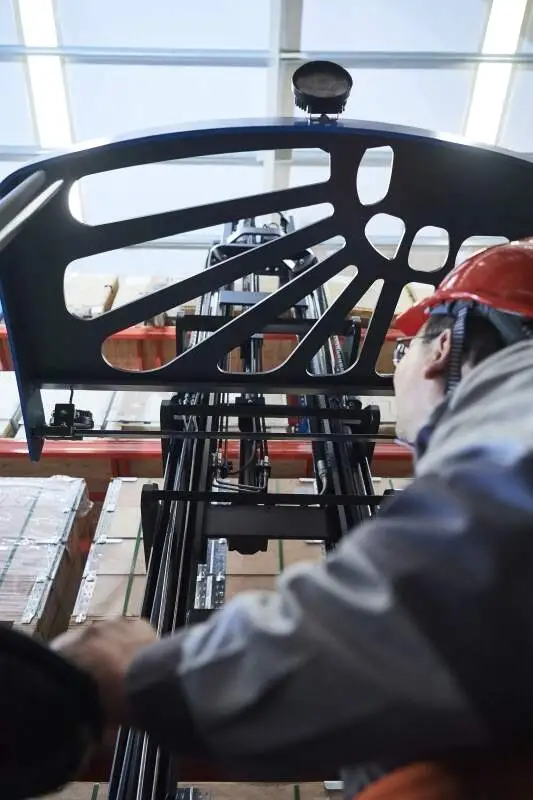
In warehouses and industrial workplaces, electric forklifts are essential for efficient material handling, but safe and productive operations depend entirely on clear, consistent team communication. forklift hand signals serve as a reliable, language-free communication tool, especially in noisy environments or areas with limited visibility where verbal instructions may be missed.
Essential Forklift Hand Signals for Daily Operations
#Movement Signals
For forward movement, the signaler extends one arm straight ahead with the palm facing upward, making slow, forward-and-backward motions. To indicate reverse, the arm is raised behind the body with the palm facing forward, repeating the same swinging motion. For left or right turns, the signaler points directly to the desired direction with one arm, palm facing down, and moves the arm up and down in short, deliberate motions. These signals help guide forklifts safely through narrow aisles and busy work zones.
#Load Handling Signals
To lift the forks, the signaler extends one arm straight upward, makes a fist, and moves the thumb upward in repeated motions. For lowering the forks, the arm is extended straight down, fist closed, with the thumb pointing downward and moved in repeated motions. To tilt the forks forward or backward, the signaler bends one arm at the elbow, palm facing forward, and swings the arm upward for backward tilt or downward for forward tilt. These precise gestures ensure accurate fork positioning, reducing the risk of load damage or collisions.
#Emergency & Special Signals
In case of an emergency stop, the signaler raises both arms straight above the head, palms facing forward, and moves them rapidly from side to side. To signal a pause in operations, one arm is held straight out to the side with the palm facing down, held steady until the pause is no longer needed. To request assistance, the signaler extends one arm upward, palm facing forward, and swings it slowly from side to side. These signals allow for immediate communication of critical instructions to prevent accidents.
Best Practices for Consistent Signal Use
All on-site team members, including forklift operators and signalers, should complete standardized training on these hand signals to ensure everyone understands and uses the same cues. Signalers should position themselves in the operator’s clear line of sight, avoiding obstacles that might block visibility. In loud environments, gestures can be paired with verbal alerts, but hand signals should remain the primary method to ensure clarity. Regular refreshers and practice sessions help reinforce these signals, ensuring they are used correctly even under high-pressure conditions.
By following this reference guide, on-site teams can establish a unified communication system that minimizes misunderstandings, reduces workplace risks, and improves overall operational efficiency. Whether training new staff or refreshing existing team members, this guide serves as a reliable resource to maintain safe and consistent forklift operations.