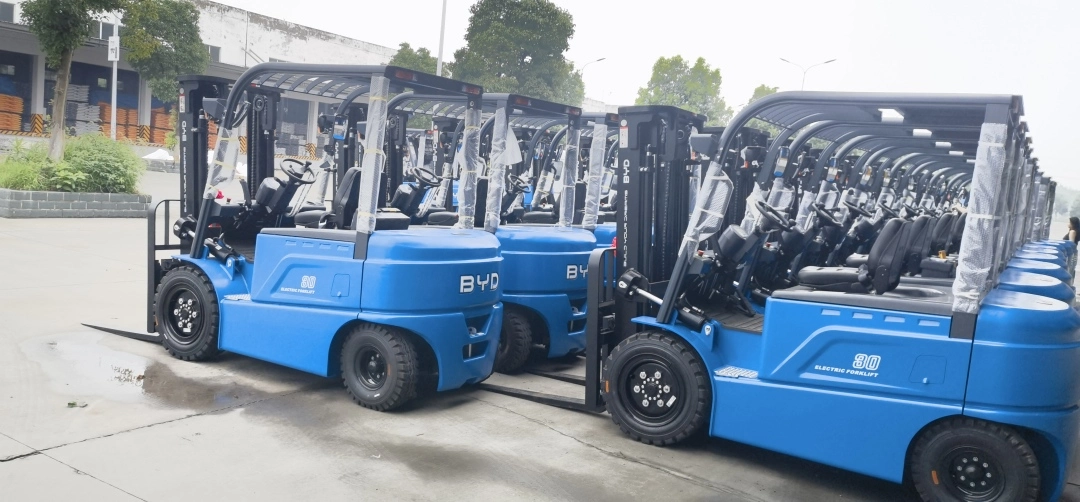
As industries increasingly prioritize sustainability and operational efficiency, transitioning from internal combustion (IC) forklifts to electric models has become a strategic move for many businesses. While the shift offers long-term benefits like reduced emissions and lower operational costs, it requires careful planning to ensure minimal disruption to daily operations. Here are practical, step-by-step suggestions to guide your transition process.
First, conduct a comprehensive site and operational assessment. Before investing in electric forklifts, analyze your daily workflow, including average load weights, operating hours, travel distances within your facility, and peak usage periods. This assessment will help determine the right electric forklift specifications, such as battery capacity and lift power, to match your operational needs. For example, if your facility runs multiple shifts, you may need forklifts with swappable batteries or access to fast-charging stations to avoid downtime.
Next, plan and invest in appropriate charging infrastructure. Unlike IC forklifts that rely on fuel stations, electric forklifts require dedicated charging setups. Evaluate your facility’s available power capacity to avoid overloading the electrical system. Consider a mix of slow-charging stations for overnight use and fast-charging options for mid-shift top-ups. Position charging stations in convenient, safe areas away from high-traffic zones to minimize workflow interruptions and ensure employee safety.
Investing in targeted staff training is another critical step. Electric forklifts operate differently from IC models, with distinct controls, charging procedures, and safety protocols. Train your operators on how to handle electric forklifts safely, including battery handling, charging best practices, and troubleshooting common minor issues. Additionally, educate maintenance teams on the specific maintenance requirements of electric forklifts, such as battery health monitoring and electrical system inspections, to extend the lifespan of your equipment.
Establish a tailored maintenance schedule. Electric forklifts have fewer moving parts compared to IC models, but they still require regular upkeep to maintain optimal performance. Focus on battery maintenance, such as keeping terminals clean, monitoring charge levels, and ensuring proper storage for unused batteries. Schedule periodic inspections of motors, brakes, and electrical components to catch potential issues early and prevent costly breakdowns.
Consider a phased transition approach to minimize operational disruption. Instead of replacing all IC forklifts at once, start with a small fleet of electric forklifts for specific tasks or shifts. This allows your team to adapt to the new equipment gradually and helps you identify any unforeseen challenges in your facility’s setup. As your team becomes more comfortable and you refine your infrastructure, you can expand the electric fleet incrementally.
For businesses looking to streamline this transition, Jianshu New Energy specializes in BYD electric forklifts, offering tailored solutions to meet your operational needs. Whether you need guidance on selecting the right model, planning charging infrastructure, or training your team, our experts are here to help. Reach out to us at 17399989919@163.com to learn more about how we can support your shift to electric forklifts.