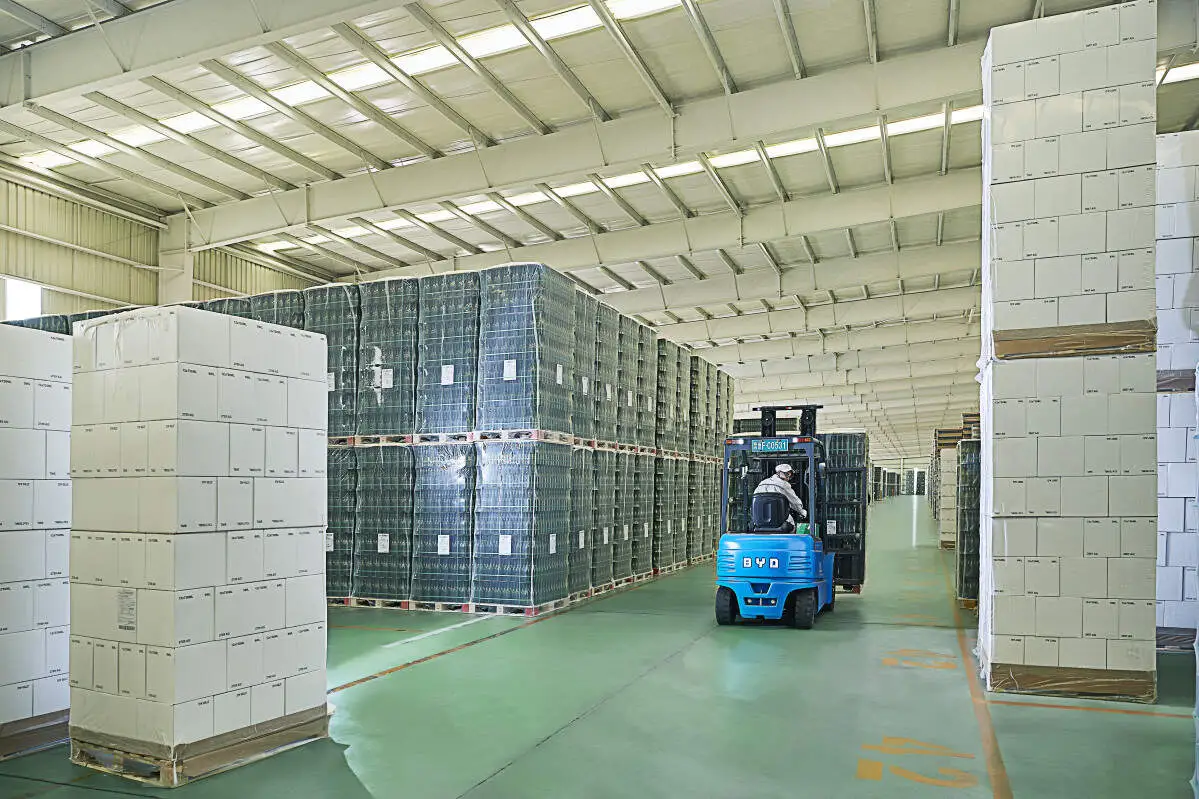
Manual light-duty forklift equipment is a practical material handling tool designed for small-scale load lifting and transport tasks. Unlike powered alternatives, it relies on human operation to maneuver and lift loads, making it suitable for environments where space is limited or electric power access is unavailable.
At its core, this type of forklift consists of key components including heavy-duty steel forks, a hydraulic lifting mechanism, an ergonomic operating handle, and durable casters. The steel forks are engineered to support loads within specified weight ranges, typically from 500 to 2000 kilograms, depending on the model. The hydraulic system, activated by manual pumping through the handle, allows users to smoothly lift loads to varying heights—usually up to 2 meters—facilitating easy stacking and retrieval of goods.
One of the primary benefits of manual light-duty forklifts is their compact size and flexible maneuverability. They can navigate narrow aisles, tight corners, and confined spaces in warehouses, retail backrooms, workshops, and small manufacturing facilities with ease. This makes them an ideal choice for businesses that need to move goods efficiently in limited areas without the need for large, powered equipment.
Operating a manual light-duty forklift requires minimal training, as the controls are intuitive. Users can quickly learn to pump the handle to lift loads, push or pull the handle to steer, and use the lowering lever to safely set loads down. This simplicity reduces the learning curve and allows staff to start using the equipment effectively in a short time.
Additionally, these forklifts are relatively low-maintenance. With fewer mechanical components compared to powered alternatives, routine maintenance mainly involves checking hydraulic fluid levels, ensuring casters are clean and functional, and inspecting forks for signs of wear. Regular upkeep helps extend the lifespan of the equipment and ensures consistent performance.
Manual light-duty forklifts are widely used across various industries. In retail settings, they assist with restocking shelves and moving inventory from storage areas to sales floors. In workshops, they help transport heavy parts and materials between workstations. In small warehouses, they support order picking and stacking operations, especially for lighter loads that do not require the power of electric or gas-powered forklifts.
Overall, manual light-duty forklift equipment offers a cost-effective, reliable solution for small-scale material handling needs. Its combination of compact design, easy operation, and low maintenance makes it a valuable asset for businesses looking to improve efficiency in confined spaces without investing in high-powered machinery.