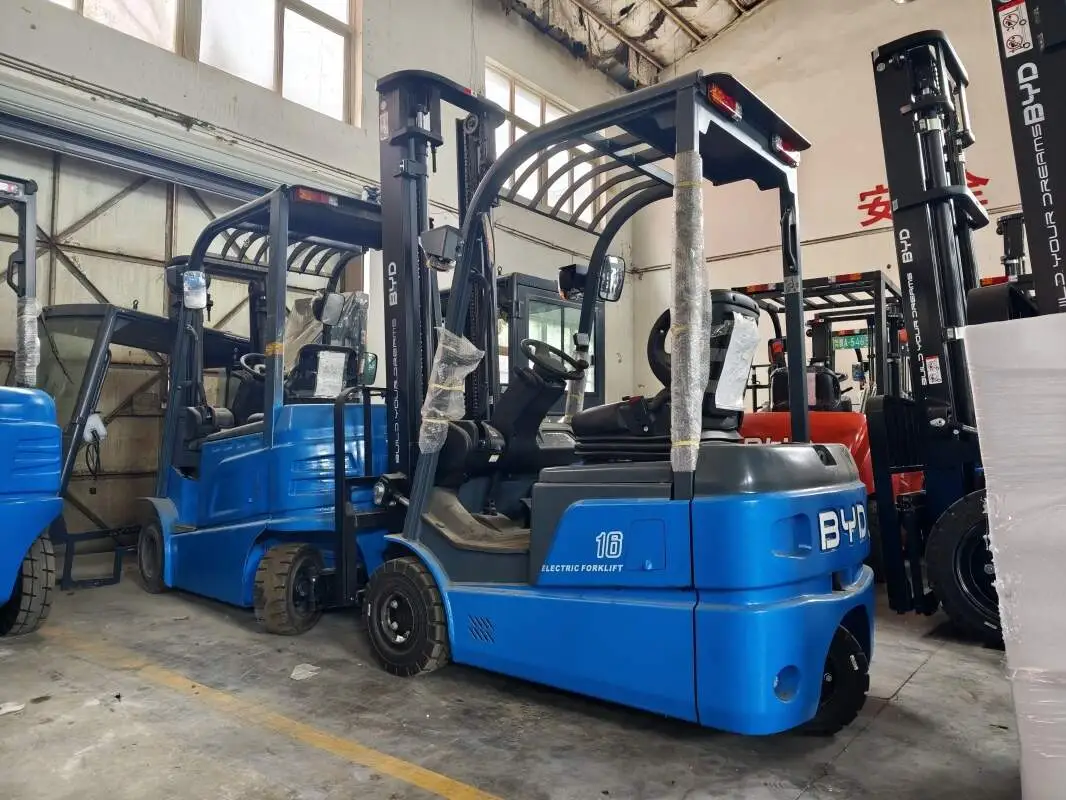
Operating RC-5500 stand-up forklifts in high-intensity industrial or warehouse environments puts consistent stress on key components, making proactive daily maintenance essential to sustain safety, efficiency, and equipment lifespan. Below is a structured guide to daily care tailored for high-use scenarios.
1. Pre-Shift Visual & Functional Checks
Before starting operations, allocate 5–10 minutes for a thorough inspection. Begin with visual checks: examine tires for sufficient tread depth, cracks, or improper inflation, as worn tires compromise stability and load handling. Inspect hydraulic hoses and reservoirs for leaks, and confirm fluid levels match recommended ranges. Check battery terminals for corrosion or loose connections, and inspect structural parts like forks, masts, and frames for dents or cracks that could weaken integrity.
Next, conduct functional tests: verify brake responsiveness by testing stopping power at low speeds, ensure steering operates smoothly without stiffness, and confirm mast lift/lower functions work as intended. Test safety features including horns, lights, and standing platform restraints to guarantee they’re fully operational.
2. Mid-Shift Quick Assessments
For high-intensity use involving 8+ hour shifts, perform 2–3 minute checks every 2–3 hours to catch issues early. Listen for unusual noises (grinding, squealing) or vibrations during operation, which may indicate worn bearings or hydraulic system issues. Monitor battery temperature to avoid overheating, and check for new hydraulic leaks that could signal impending hose failure. If any anomalies are detected, pause operations and report the issue to a trained technician immediately.
3. Post-Shift Comprehensive Maintenance
After completing daily operations, dedicate 15–20 minutes to deeper maintenance. Start by cleaning the forklift thoroughly: remove debris from the mast, forks, and undercarriage to prevent corrosion or component jams. Top off hydraulic fluid and coolant to recommended levels, taking care not to overfill. Clean battery terminals to prevent corrosion, and initiate proper charging based on usage duration. Lubricate moving parts such as mast chains and hinge points to reduce friction and wear. Finally, document all maintenance tasks and any observed issues to track long-term equipment health.
Consistent daily maintenance, carried out by trained personnel, minimizes unplanned downtime and ensures the RC-5500 stand-up forklift remains reliable even under high-intensity operational demands.