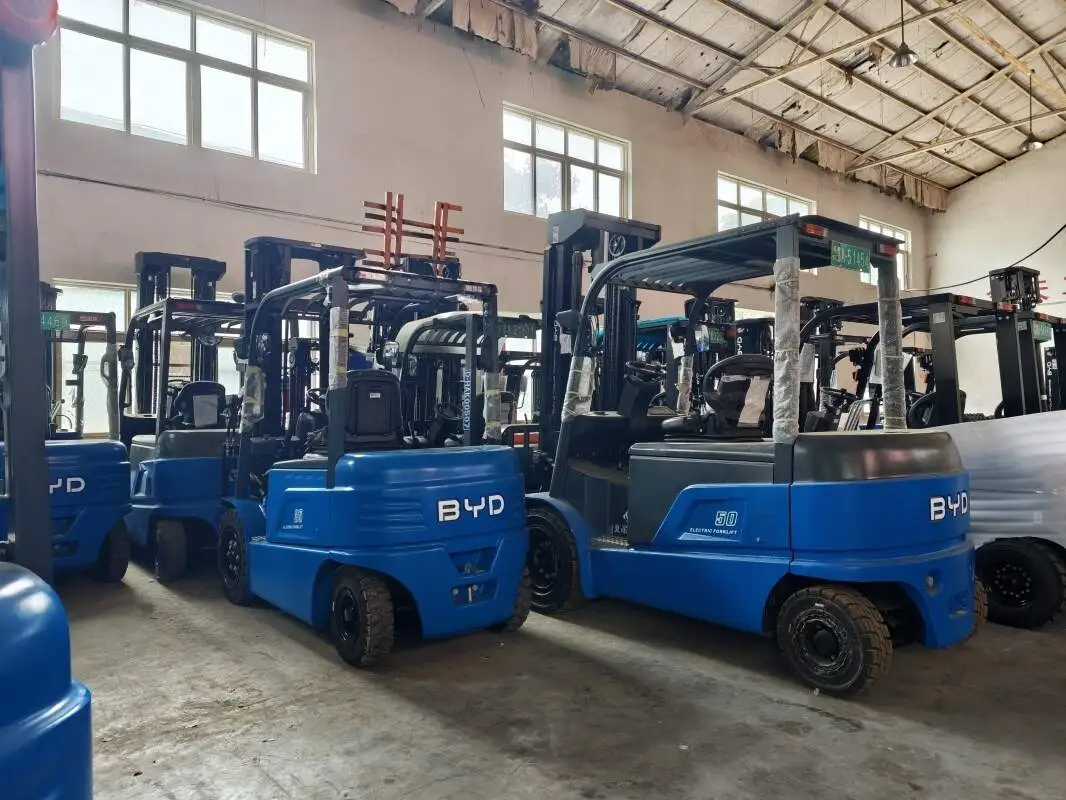
Before initiating any site operation with a rough terrain electric forklift, a thorough pre-operation safety check is critical to mitigate risks. Start by examining the battery system: verify the charge level meets operational requirements, inspect wiring connections for signs of corrosion or looseness, and ensure battery enclosures are securely fastened. Next, assess the tires and suspension components—check tire pressure against standard specifications, look for tread wear, cuts, or cracks that could compromise traction on uneven ground, and confirm suspension parts are free from excessive wear or damage.
Test the braking system thoroughly: engage the parking brake and attempt to move the forklift to confirm it holds, then test the foot brake for responsiveness during low-speed maneuvers. Don’t overlook lighting and warning devices: ensure headlights, turn signals, brake lights, and the horn are fully functional to maintain visibility and communicate with other site personnel. Finally, inspect the forks and carriage: check for bending, cracks, or excessive wear on fork tines, and confirm the carriage’s lifting mechanism operates smoothly without unusual noises.
During site operations, adhere to strict safety protocols to protect both the operator and surrounding personnel. Always maintain a slow, controlled speed when navigating rough terrain, including uneven surfaces, slopes, and loose gravel. Avoid sudden turns or braking, as these can cause the forklift to tip or lose control, especially when carrying loads. Never exceed the forklift’s rated load capacity, and ensure loads are properly balanced and secured to prevent shifting during movement.
Keep a clear line of sight at all times; if a load obstructs forward visibility, travel in reverse with caution. Maintain a safe distance from pedestrians, other vehicles, and site obstacles such as trenches or overhead structures. Under no circumstances should anyone ride on the forklift except the designated operator, and operators must remain seated with their seatbelt fastened during all operations.
Once operations are complete, conduct a post-operation inspection to ensure the forklift is prepared for its next use. Park the forklift on a flat, stable surface, engage the parking brake, and lower the forks to the ground. Turn off the power system and disconnect the battery if required for long-term storage. Inspect the forklift’s body for any new damage, such as dents or scratches, and check for leaks from the battery or hydraulic system. Clean debris from the forks, chassis, and battery compartment to prevent accumulation that could cause mechanical issues.
Document any abnormalities identified during pre-operation, in-operation, or post-operation checks, and report them to maintenance personnel promptly. For reliable rough terrain electric forklifts and professional guidance on safety practices, contact Jianshu New Energy at 17399989919@163.com.