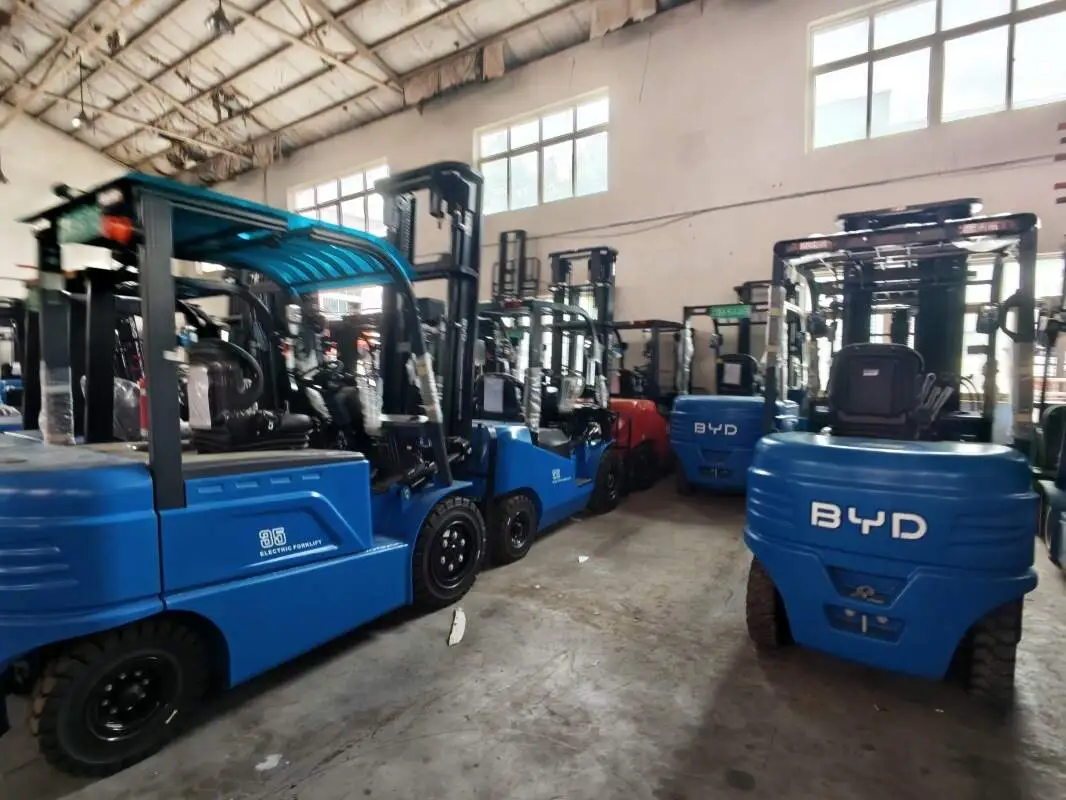
electric forklifts have emerged as essential workhorses in modern warehouses, distribution centers, and manufacturing facilities, offering efficient, eco-friendly solutions for material handling. Yet, despite their advanced design, improper load placement on forklift blades introduces significant safety risks that can compromise operational safety and productivity.
The most immediate and dangerous risk associated with incorrect load placement is forklift tip-over. When loads are not centered on the blades, or when the weight exceeds the forklift’s rated capacity, the vehicle’s center of gravity shifts beyond safe limits. This imbalance becomes particularly hazardous during turns, sudden stops, or when traversing uneven floors. Tip-over incidents are a leading cause of forklift-related injuries and fatalities, as they can trap operators or strike nearby workers, while also causing costly damage to the forklift, inventory, and facility infrastructure.
Another critical hazard is load displacement and falls. If goods are stacked unevenly, not secured properly, or placed too far forward on the blades, they can slide or topple off during lifting, transportation, or lowering. Falling loads pose a direct threat to personnel in the area, potentially causing crushing injuries or blunt force trauma. Additionally, scattered goods create workspace obstacles, increasing the risk of trips, slips, and further disruptions to daily operations.
In addition to endangering people, improper load placement can damage the forklift blades themselves. Concentrated heavy loads or off-center placement exerts excessive stress on the blades, leading to bending, cracking, or permanent deformation. Damaged blades lose their structural integrity, making them unable to safely support loads in subsequent operations and creating a recurring safety risk. While regular blade inspections can identify damage early, preventing it through correct load handling practices is the most effective way to avoid these issues.
To mitigate these risks, strict adherence to safe load handling practices is essential. Operators should always center loads evenly on the blades, ensuring the heaviest part of the load is positioned closest to the forklift’s mast to maintain balance. Securing loads with appropriate straps, binders, or pallets can prevent shifting during movement. It is also crucial to respect the forklift’s weight capacity, avoiding overloading even for short tasks. Comprehensive operator training programs that cover load placement techniques, safety protocols, and pre-operation checks are vital to fostering a culture of safety.
As a specialist in BYD electric forklifts, Jianshu New Energy is dedicated to helping businesses enhance their material handling safety standards. Our team offers expert guidance on proper load handling, operator training, and regular forklift maintenance to reduce the risks associated with improper load placement. For more information on how we can support your operational safety goals, please contact us at 17399989919@163.com.