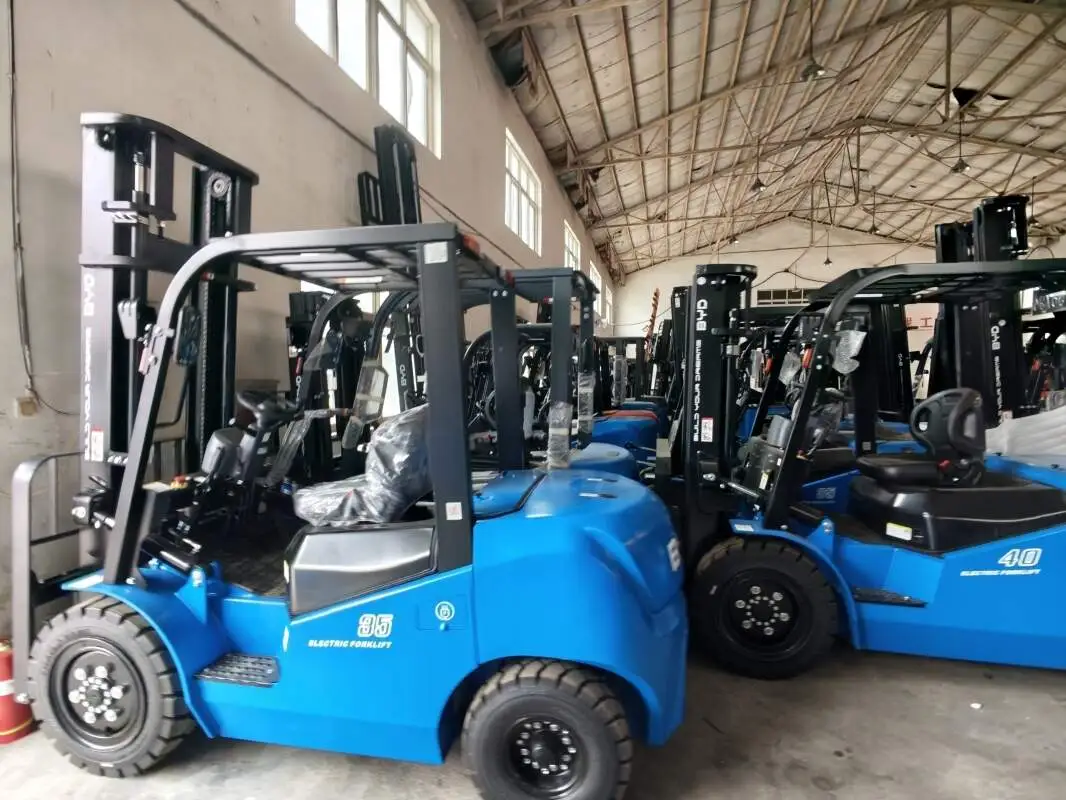
Tyne length is a critical factor that directly impacts a forklift’s operational safety, efficiency, and load stability, especially for electric forklifts where maneuverability and energy efficiency are key priorities. Choosing the wrong tyne length can lead to increased risk of tip-overs, cargo damage, reduced maneuverability, and unnecessary energy consumption. To avoid these issues, it’s essential to follow structured selection principles based on specific load profiles and operational environments.
For lightweight, high-frequency load scenarios—such as daily handling of small pallets with low-weight goods in warehouse picking operations—the optimal tyne length should extend just beyond the edge of the load, typically 10 to 15 centimeters longer than the pallet length. A longer tyne is unnecessary here; it would increase the forklift’s turning radius, making it harder to navigate narrow aisles and slowing down repetitive handling tasks. Additionally, excessive tyne length adds extra weight to the front of the forklift, reducing battery life for electric models by increasing energy demand during movement and turns.
When dealing with heavy, bulky loads like large industrial equipment, oversized pallets, or stacked heavy crates, tyne length must prioritize load stability and weight distribution. The tyne should cover at least two-thirds of the load’s length to ensure the center of gravity remains within the forklift’s safe operating range. This prevents the load from shifting or tipping off the tynes during lifting or transportation. It’s also important to align the tyne length with the forklift’s rated load capacity; even the correct tyne length won’t compensate for overloading, which can cause structural damage to the forklift and create safety hazards.
In confined space operations, such as working inside narrow warehouses, shipping containers, or crowded production floors, tyne length needs to balance load compatibility with maneuverability. The ideal length is just enough to fully insert into the pallet—usually 5 to 10 centimeters longer than the pallet. Shorter tynes reduce the forklift’s overall front-end length, allowing for tighter turns and easier navigation in limited spaces without risking collisions with walls, shelves, or other equipment. Operators must ensure the tynes still provide sufficient support for the load to avoid slippage, even with the reduced length.
Beyond load-specific principles, regular maintenance and operator training play key roles in effective tyne length management. Inspect tynes regularly for wear or bending, as damaged tynes can alter their effective length and compromise load stability. For forklifts with adjustable tynes, train operators to adjust length based on each load profile, rather than using a one-size-fits-all approach. Also, consider environmental factors like uneven ground; in such cases, slightly longer tynes may help distribute the load more evenly, but this should be balanced against maneuverability needs.
By adhering to these selection principles, businesses can enhance material handling safety, reduce operational costs, and extend the lifespan of their electric forklifts. Taking the time to match tyne length to specific load profiles ensures every operation is efficient, secure, and aligned with best practices in forklift management.