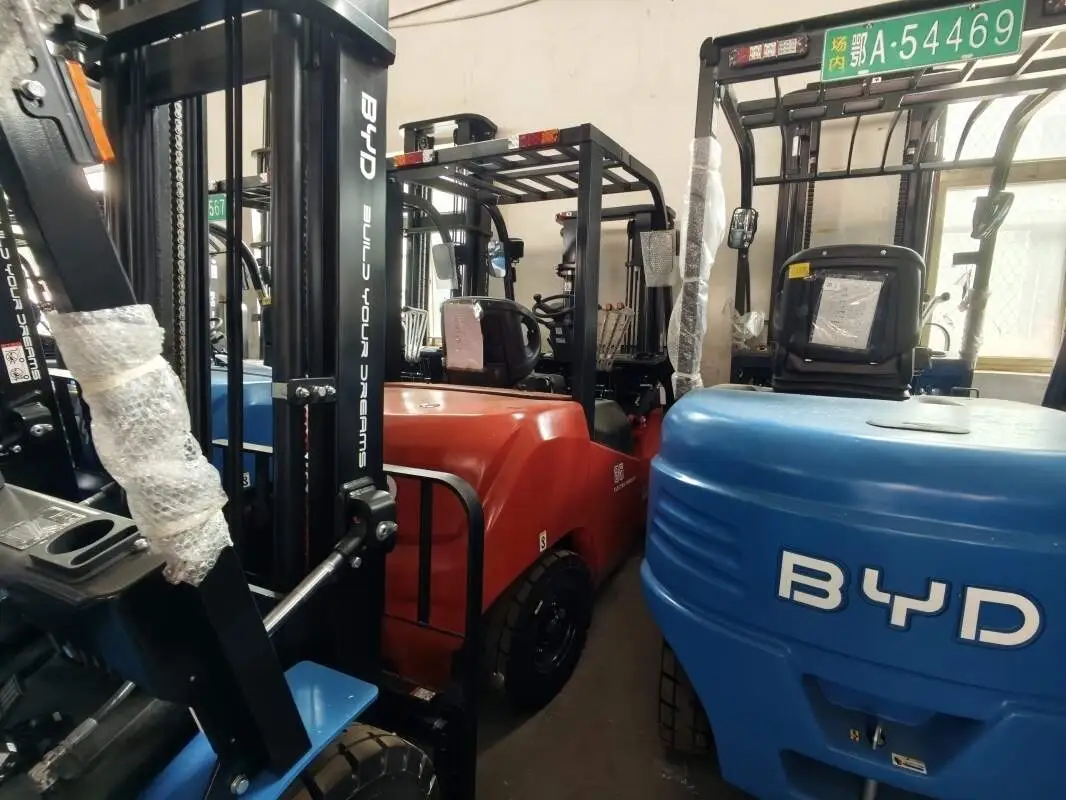
In today’s dynamic material-handling landscape, businesses frequently encounter challenges moving heavy loads through tight spaces, remote job sites, or areas inaccessible to traditional forklifts. This is where self-loading portable forklifts emerge as a practical solution—compact, versatile equipment engineered to tackle mobile material-handling tasks with efficiency and adaptability.
Unlike standard forklifts that rely on external machinery for loading, self-loading portable models integrate loading capabilities directly into their design. This eliminates the need for separate lifting tools, cutting down operational time and labor costs. Their compact footprint allows navigation through narrow warehouse aisles, crowded retail floors, and uneven outdoor terrain, making them suitable for both indoor and outdoor use. Weighing far less than full-sized forklifts, they can be easily transported via truck or trailer, ensuring readiness for deployment wherever the job demands.
These portable forklifts excel across diverse industries. In construction, they assist with moving building materials like lumber, bricks, and pipes across job sites where space is limited. For retail and warehouse operations, they streamline inventory management by shifting pallets and boxes between storage zones and delivery trucks without relying on large, fixed equipment. In agricultural settings, they prove valuable for transporting feed, tools, and harvested goods across fields and farmyards. Their ability to handle loads ranging from a few hundred to several thousand pounds adds to their versatility, adapting to varying task requirements.
Operational simplicity is another key advantage of self-loading portable forklifts. Most models feature intuitive controls that require minimal training, enabling workers to operate them effectively without extensive certification. Many also include adjustable forks and lifting heights, allowing them to accommodate different load sizes and reach storage shelves at various levels. Additionally, their rugged construction—with durable tires and sturdy frames—ensures they can withstand daily wear and tear in diverse environments, reducing long-term maintenance needs.
As businesses continue to seek flexible, cost-effective material-handling options, self-loading portable forklifts have become a reliable choice. Their compact design, self-loading functionality, and mobile nature address the unique challenges of on-the-go load management, making them a valuable asset for operations aiming to boost productivity and adapt to changing work environments. Whether managing a small warehouse, a construction site, or an agricultural facility, this equipment offers a practical way to handle material tasks without the limitations of traditional forklifts.