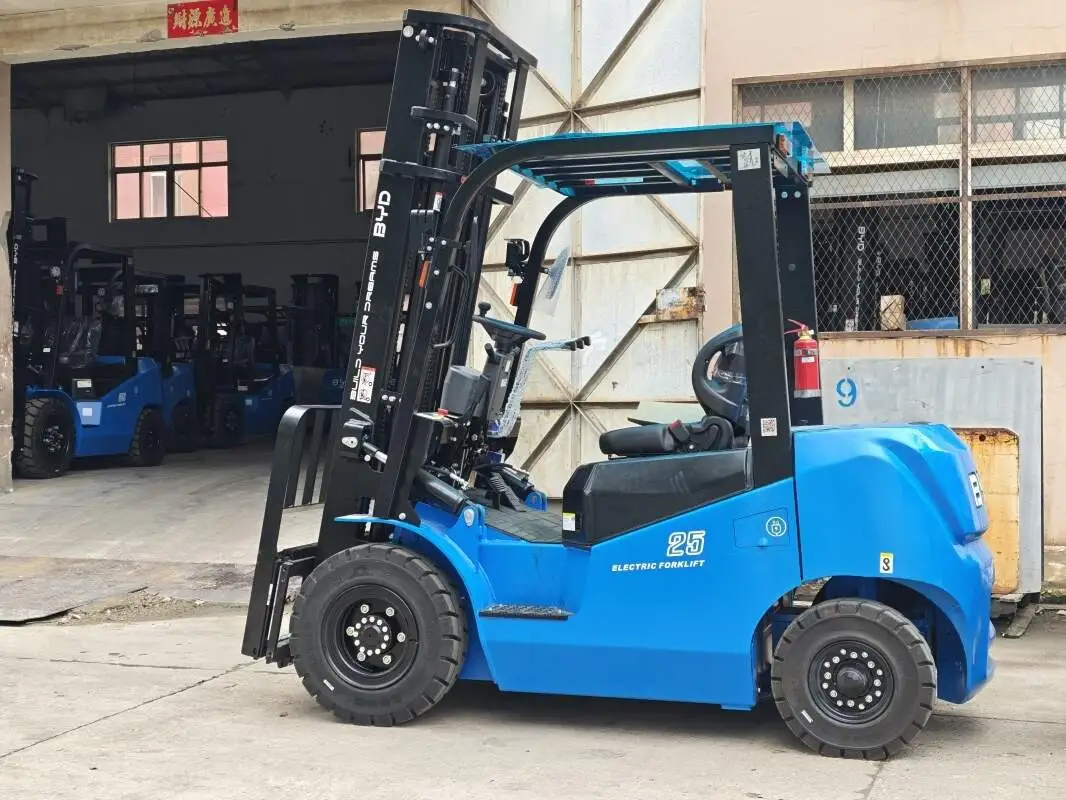
7 ton industrial forklifts are integral to heavy-duty material handling operations across diverse sectors, from manufacturing plants and construction sites to large distribution warehouses. Having a clear grasp of their core specifications is critical for aligning equipment capabilities with operational demands, ensuring workplace safety, and optimizing long-term efficiency.
Load Capacity and Lift Height
The primary specification defining a 7 ton industrial forklift is its rated load capacity of 7,000 kilograms, which applies under standard conditions—typically with the load centered at a specified distance from the forks’ face. This capacity may vary based on lift height; as the forks reach higher, the effective load capacity often decreases to maintain stability. Standard lift heights for these forklifts range from 3 meters to 5 meters, with customizable options available for operations requiring access to high storage racks or elevated work areas.
Power Source Specifications
7 ton industrial forklifts are available with three main power sources, each tailored to different operational environments. Diesel-powered models offer high torque and durability, making them ideal for outdoor, heavy-use scenarios where refueling is convenient. Electric variants, powered by lead-acid or lithium-ion batteries, produce zero emissions, making them suitable for indoor operations or facilities with strict environmental regulations. Liquefied petroleum gas (LPG) forklifts balance the power of diesel with lower emissions, providing flexibility for both indoor and outdoor use.
Dimensions and Operational Weight
Physical dimensions play a key role in determining a forklift’s suitability for a workspace. Typical overall lengths for 7 ton models range from 4.5 meters to 5.5 meters, depending on the fork length and mast design. Widths usually fall between 1.8 meters and 2.2 meters, which operators must consider when navigating narrow aisles or tight turns. The operational weight, including the forklift itself and any attached accessories, generally ranges from 8,000 kilograms to 10,000 kilograms, contributing to stability when carrying heavy loads but requiring proper floor load capacity assessments.
Mobility and Maneuverability
For efficient operations, understanding mobility specifications is essential. Travel speeds for 7 ton forklifts typically range from 18 km/h to 25 km/h on flat surfaces, with lower speeds for loaded travel to ensure safety. Climbing capacity, measured as a percentage, indicates the maximum incline the forklift can navigate while carrying a full load—most models offer a climbing capacity of 15% to 20%. Turning radius is another critical parameter, with standard models boasting a radius of 3 meters to 3.5 meters, enabling maneuverability in confined spaces.
By referencing these key specifications, businesses can make informed decisions when selecting a 7 ton industrial forklift, ensuring it meets their specific material handling requirements while upholding safety and efficiency standards. Regularly reviewing these parameters also aids in maintenance planning and operational optimization over the equipment’s lifespan.