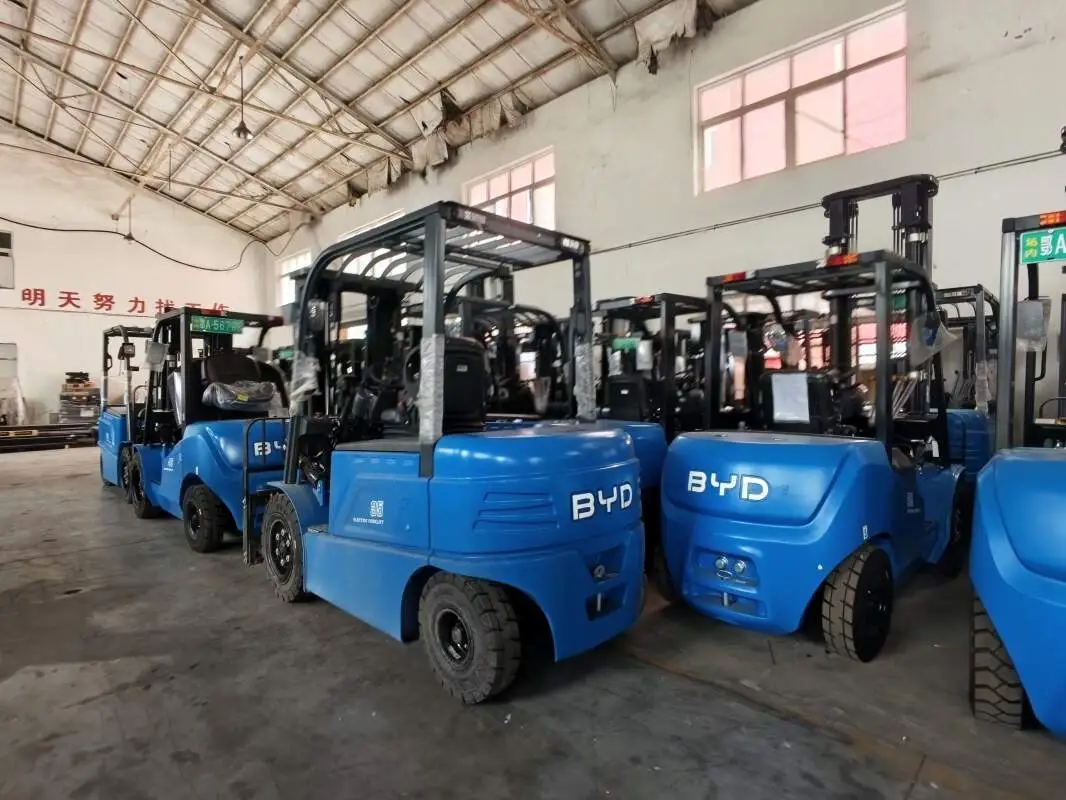
In the fast-paced world of modern warehouse logistics, efficient material handling is critical to meeting tight delivery schedules and optimizing operational costs. As businesses seek solutions to overcome the limitations of traditional forklift systems, lithium-ion forklifts have emerged as a reliable option tailored to the demands of contemporary warehouses.
One of the primary benefits of lithium-ion forklifts lies in their extended runtime and flexible charging capabilities. Unlike conventional battery-powered forklifts that require lengthy charging cycles and frequent battery swaps, lithium-ion models can operate continuously for longer periods on a single charge. For multi-shift warehouse operations, this translates to reduced downtime associated with battery management. Additionally, lithium-ion batteries support opportunity charging—operators can top up the battery during short breaks, eliminating the need for dedicated battery storage and swap stations. This flexibility ensures that forklifts remain in use for more hours each day, directly contributing to higher throughput.
Another key advantage is lower long-term maintenance requirements. Traditional lead-acid batteries demand regular maintenance tasks such as water refilling, terminal cleaning, and equalization charging to maintain performance. Lithium-ion batteries, by contrast, are virtually maintenance-free. They do not require these routine upkeep steps, reducing the time and labor spent on battery care. Furthermore, lithium-ion batteries have a longer lifespan compared to lead-acid alternatives, meaning businesses can delay replacement costs and reduce waste from discarded batteries.
Lithium-ion forklifts also deliver consistent performance across their operating cycle. Lead-acid batteries tend to lose power as their charge depletes, which can reduce lifting capacity and slow down operations towards the end of a shift. Lithium-ion batteries maintain a steady power output throughout the discharge process, ensuring that forklifts operate at full capacity from start to finish. This consistency is particularly valuable in warehouses with heavy lifting needs or narrow aisles, where precise and reliable performance is essential to avoid accidents and keep workflows smooth.
Eco-friendliness is another compelling benefit for modern warehouses. Lithium-ion forklifts produce zero emissions during operation, making them suitable for indoor use without compromising air quality for warehouse staff. This aligns with increasing regulatory requirements for sustainable operations and helps businesses reduce their carbon footprint. Additionally, the longer lifespan of lithium-ion batteries means fewer batteries end up in landfills, supporting circular economy principles.
For warehouses looking to optimize space, lithium-ion forklifts offer design advantages as well. Their compact battery packs allow for more streamlined forklift designs, enabling better maneuverability in tight spaces. This is especially beneficial in high-density storage facilities where maximizing every inch of space is a priority.
In summary, lithium-ion forklifts address many of the challenges faced by modern warehouse logistics operations. From improved efficiency and reduced maintenance to consistent performance and eco-friendly operation, these forklifts provide a robust solution that helps businesses stay competitive in an evolving supply chain landscape.