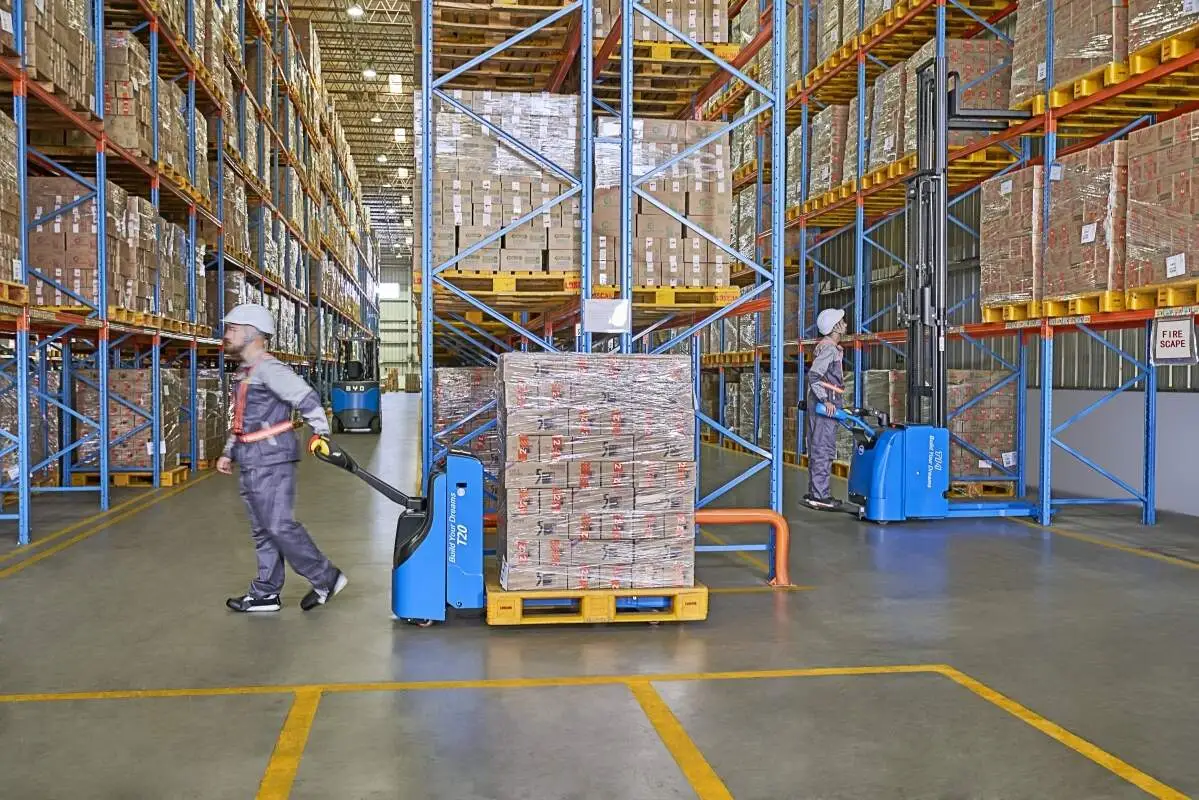
1. Pre-Evaluation Preparation
Before initiating any on-site forklift hazard evaluation, thorough preparation is critical. Assemble a cross-functional team consisting of forklift operators, safety officers, facility managers, and maintenance personnel. This diverse group brings firsthand insights into daily operations, safety protocols, and mechanical concerns. Collect existing documentation such as forklift maintenance logs, incident reports, and past safety audits to establish a baseline for current conditions. Define clear evaluation objectives, such as identifying operational risks, ensuring compliance with safety standards, and reducing accident potential.
2. On-Site Walkthrough and Observation
Conduct a systematic walkthrough of the entire work area where forklifts operate. Observe forklift movement patterns, including travel routes, loading/unloading zones, and storage areas. Pay close attention to environmental factors like uneven flooring, narrow aisles, low overhead clearances, and wet or slippery surfaces. Note how operators interact with other workers, pedestrians, and equipment during routine tasks. Document instances of improper operation, such as speeding, carrying loads beyond capacity, or failing to use seatbelts. This hands-on observation helps capture real-time hazards that may not appear in written records.
3. Hazard Identification and Documentation
Based on the on-site walkthrough, identify and categorize potential hazards. These can be grouped into three main categories: environmental hazards (e.g., poor lighting, obstructed pathways), equipment-related hazards (e.g., faulty brakes, worn tires), and human factors (e.g., lack of training, distracted operation). Use a standardized documentation process to record each hazard, including its location, frequency of occurrence, and potential impact. Take detailed notes or photographs to support findings, ensuring clarity for subsequent analysis and action planning.
4. Risk Analysis and Prioritization
Once all hazards are documented, conduct a risk analysis to assess the severity and likelihood of each hazard leading to an incident. Use a risk matrix to rank hazards from low to high priority. For example, a faulty forklift brake that operates in a busy pedestrian zone would rank as a high-priority risk, while a minor floor crack in a low-traffic area would be lower priority. This prioritization ensures that resources are allocated to address the most critical risks first, maximizing the effectiveness of safety improvements.
5. Develop and Implement Mitigation Measures
For each high-priority hazard, develop targeted mitigation measures. Environmental hazards can be addressed by improving lighting, widening narrow aisles, or installing anti-slip flooring. Equipment-related issues may require immediate maintenance or replacement of faulty components. Human factor risks can be mitigated through additional training programs, refresher courses for operators, and the implementation of stricter safety policies. Communicate these measures to all relevant personnel and establish a timeline for implementation, assigning clear responsibilities to ensure accountability.
6. Regular Review and Update
Forklift hazard evaluation is not a one-time task; it requires ongoing review and update. Schedule periodic re-evaluations, typically every six months or after significant changes to the work environment or equipment fleet. Incorporate feedback from operators and safety officers to identify new hazards that may arise over time. Update safety protocols and mitigation measures as needed to adapt to evolving operational conditions, ensuring continuous improvement in forklift safety.