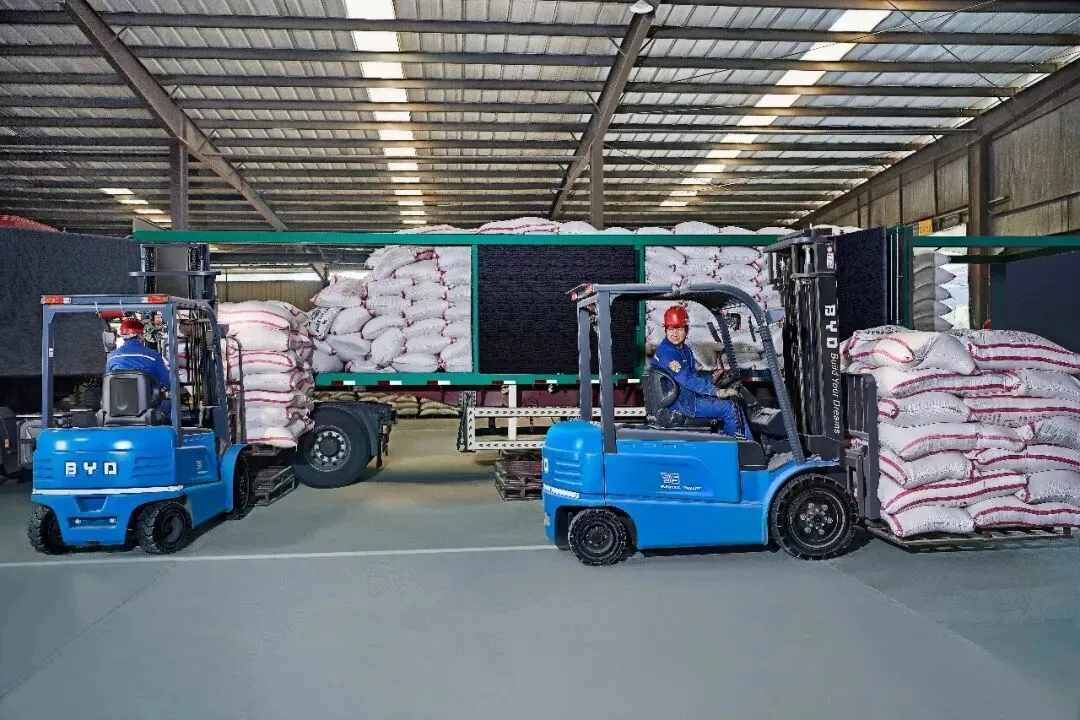
forklift steering mechanisms are critical components that determine the maneuverability and operational safety of industrial lifting equipment, especially electric forklifts used in warehouses, manufacturing facilities and logistics hubs. Unlike passenger vehicles, forklifts often operate in narrow spaces, requiring precise, responsive steering systems to navigate tight turns and crowded areas. Understanding the working principles of these mechanisms is essential for maintenance personnel, operators and industry professionals to ensure optimal performance and reduce downtime.
Many forklifts, including some electric models, rely on hydraulic-assisted steering systems. This mechanism consists of a steering wheel, steering column, hydraulic pump, control valve and steering cylinder. When the operator turns the steering wheel, the motion is transmitted through the steering column to the control valve, which regulates the flow of hydraulic fluid. The hydraulic pump, driven by the forklift’s power unit, generates pressure that pushes fluid into the steering cylinder. This fluid pressure moves the cylinder’s piston, which in turn adjusts the position of the forklift’s front wheels. The system uses feedback mechanisms to ensure the steering wheel responds accurately to the wheel movement, allowing the operator to maintain control with minimal physical effort.
As electric forklifts gain popularity, electric power steering (EPS) systems have become more prevalent due to their energy efficiency and precise control. EPS systems replace hydraulic components with electric motors, torque sensors and electronic control units (ECUs). When the operator turns the steering wheel, the torque sensor detects the amount of force applied and sends a signal to the ECU. The ECU then calculates the required assistance and activates the electric motor, which provides additional torque to the steering gear. This torque is transmitted to the wheel assembly, adjusting the wheel direction. Unlike hydraulic systems, EPS only consumes power when steering is in use, reducing overall energy consumption for electric forklifts. Additionally, the ECU can adjust the level of assistance based on the forklift’s speed, providing more assistance at low speeds for easy maneuvering in tight spaces and less assistance at higher speeds for improved stability.
Regardless of the type of steering mechanism, several key factors influence performance. Regular maintenance, including checking fluid levels for hydraulic systems or inspecting electrical connections for EPS, is crucial to prevent malfunctions. Proper calibration of the steering system ensures that the wheel movement aligns with the operator’s input, reducing the risk of accidents. Environmental factors, such as uneven terrain or heavy loads, can also affect steering responsiveness, making it important for operators to adjust their driving style accordingly.
In conclusion, forklift steering mechanisms are complex systems designed to balance maneuverability, efficiency and safety. Hydraulic-assisted systems offer reliable performance for heavy-duty applications, while electric power steering systems provide energy-efficient, precise control ideal for electric forklifts. By understanding these working principles, industry professionals can make informed decisions about maintenance, operation and equipment selection, ensuring forklifts operate optimally in various industrial environments.