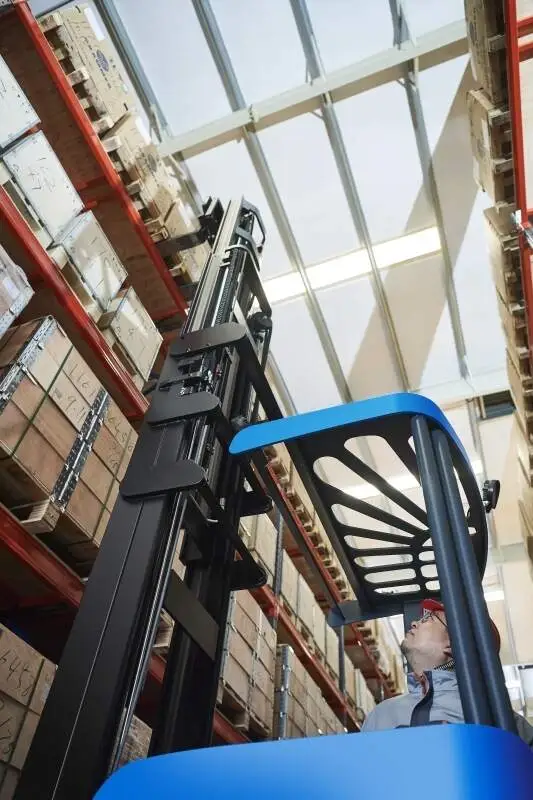
The forklift mast is a critical structural component that forms the backbone of a forklift’s load-handling capabilities. Without it, the vehicle would be unable to lift, position, and transport heavy loads efficiently across warehouse floors, construction sites, and industrial facilities. Understanding its structural composition and core functions is essential for operators, maintenance teams, and anyone working with lift trucks to ensure safe and optimal performance.
The outer mast, also known as the fixed mast, serves as the primary framework of the assembly. Made from heavy-duty steel beams, it is securely mounted to the forklift’s chassis, providing a stable base for all vertical lifting operations. Its parallel rails act as guides for the inner carriage, ensuring smooth, linear movement as loads are raised or lowered. The robustness of the outer mast directly contributes to the forklift’s overall load capacity, as it must withstand the weight of both the inner components and the cargo being lifted.
Nestled within the outer mast’s rails is the inner carriage, a movable structure that holds the fork carriage and other load-bearing components. Equipped with rollers or bearings that glide along the outer mast’s rails, the inner carriage enables vertical travel, allowing loads to be elevated to varying heights depending on operational needs. This component is designed to distribute the weight of the load evenly, reducing stress on individual parts and maintaining stability during lifting.
Lift cylinders, powered by the forklift’s hydraulic system, are the driving force behind the mast’s lifting action. Typically mounted either directly to the outer mast or chassis, these cylinders extend to push the inner carriage upward, contracting to lower it back down. Working in tandem with the lift cylinders are heavy-duty chain assemblies, which connect the lift cylinders to the inner carriage or fork carriage. The chains help distribute the lifting force evenly, ensuring that the load remains balanced throughout the entire lifting cycle, even when reaching maximum height.
The fork carriage, attached to the front of the inner carriage, is the component that holds the forklift’s forks. It features adjustable brackets that allow operators to modify the spacing between forks to accommodate different load sizes and shapes. Additionally, some fork carriages are equipped with side-shift mechanisms, enabling horizontal adjustment of the forks without moving the entire forklift, which enhances precision when positioning loads on shelves, pallets, or delivery trucks.
Beyond its structural components, the forklift mast serves several core functions vital to efficient material handling. First and foremost, it enables vertical load lifting, allowing operators to stack goods at high heights to maximize storage space in warehouses. It also provides stability during lifting operations, thanks to its rigid steel construction and guided movement, minimizing the risk of load tipping or structural failure. Furthermore, many mast designs prioritize operator visibility, ensuring clear lines of sight to the load and surrounding environment, which is crucial for safe maneuvering and accurate load placement.
Regular maintenance of mast components—such as lubricating rollers, inspecting chains for wear, and checking hydraulic fluid levels—is essential to preserve these functions and extend the lifespan of the forklift. Proper care ensures that the mast operates smoothly, reduces the likelihood of unexpected breakdowns, and maintains compliance with workplace safety standards.
In summary, the forklift mast is a complex yet essential assembly that combines robust structural elements with hydraulic and mechanical systems to enable safe, efficient load handling. Each component plays a unique role, from providing a stable framework to driving vertical movement, and together they form a system integral to the daily operations of countless industrial and logistics environments.