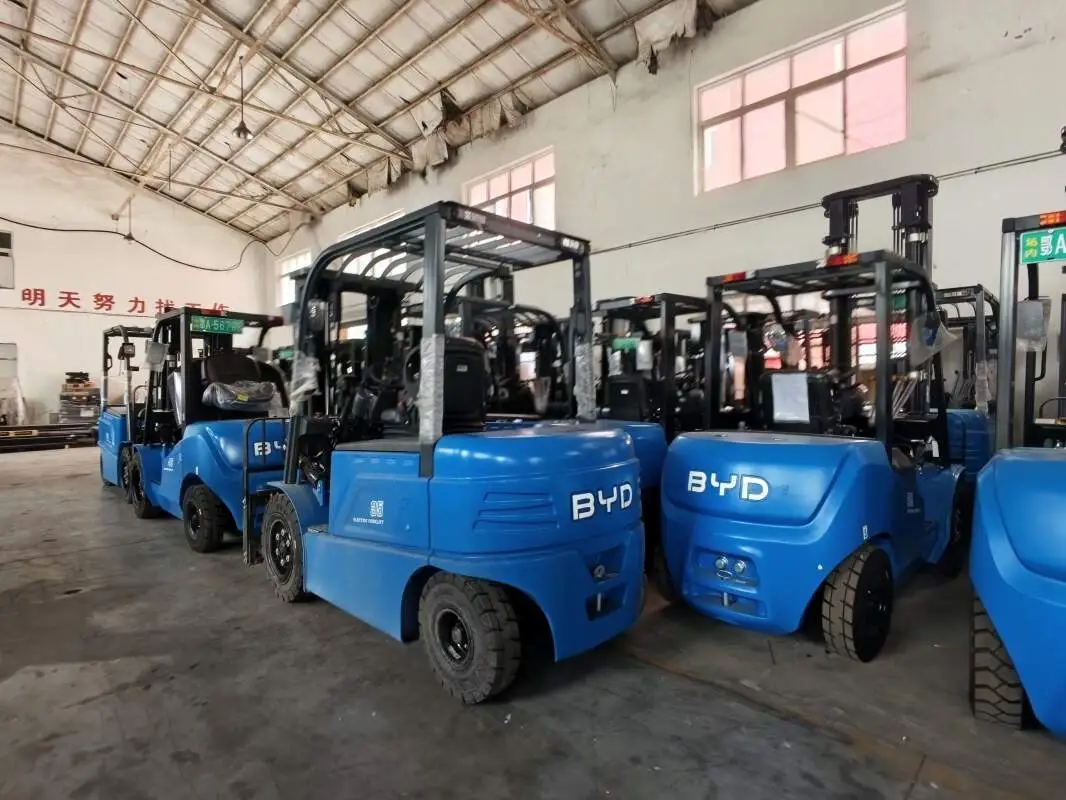
Fork truck forks are the core load-bearing components directly responsible for material handling operations, playing a critical role in ensuring operational safety and efficiency. Understanding their structural components and working principles is essential for operators and maintenance personnel alike.
The primary structural components of fork truck forks include tines, carriage, lift cylinders, and side shift mechanisms. Tines are the elongated, metal prongs that directly contact and support loads. Manufactured from high-strength steel, they are designed to withstand heavy weights without bending or breaking, with varying lengths to accommodate different load sizes. The carriage serves as the connecting structure between the tines and the forklift’s main body, providing a stable platform for attaching tines and facilitating vertical movement. Lift cylinders, powered by the forklift’s hydraulic system, generate the force needed to raise and lower the carriage and tines. Side shift mechanisms, often integrated with the carriage, allow horizontal adjustment of the tines, enabling precise alignment with cargo and reducing the need for repositioning the entire forklift.
The working principle of fork truck forks revolves around hydraulic power and mechanical load distribution. When an operator activates the lift control, the hydraulic pump draws fluid from a reservoir and pushes it into the lift cylinders. This fluid pressure drives the cylinder’s piston upward, lifting the carriage and tines along the forklift’s mast. To lower the forks, a control valve opens, allowing hydraulic fluid to flow back into the reservoir, and the weight of the carriage and load causes the forks to descend gradually. During load handling, the tines must be inserted fully under the cargo to distribute weight evenly, preventing load instability. The carriage’s structural design transfers the load’s weight to the forklift’s frame, maintaining the vehicle’s center of gravity and reducing the risk of tipping.
Regular inspection of fork components is vital for safe operation. Operators should check for signs of tine wear, hydraulic leaks, or loose connections before each use. Proper maintenance ensures that the forks function as intended, extending their service life and minimizing operational risks.