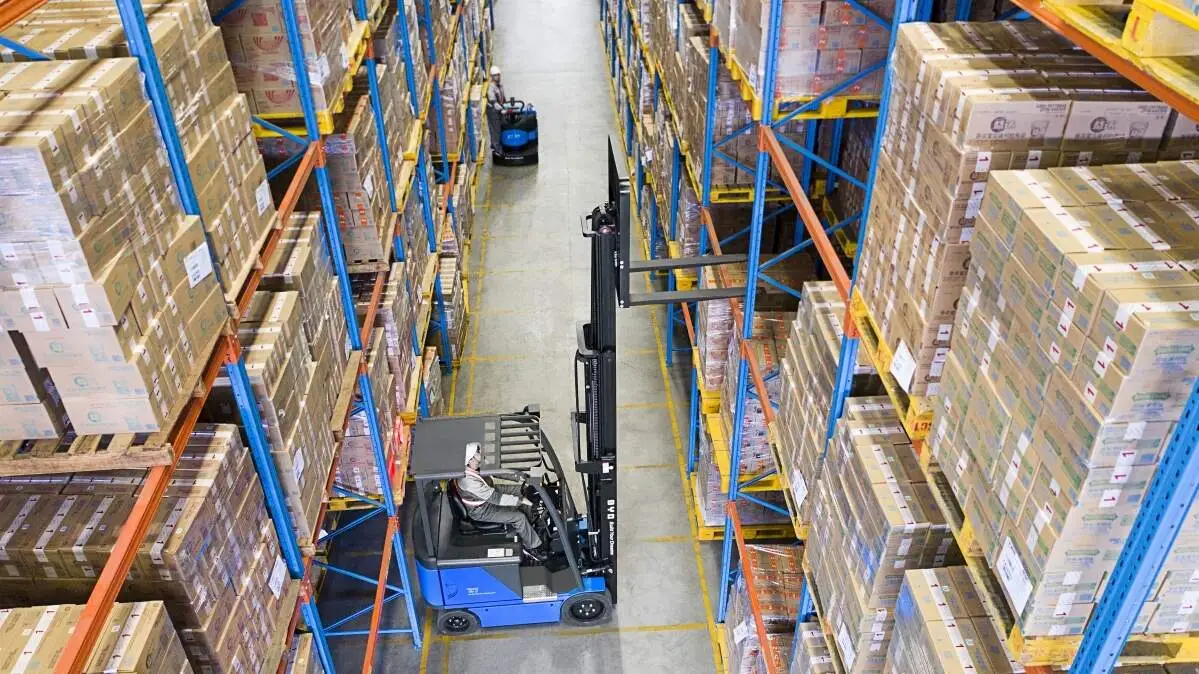
In modern warehouse and distribution environments, maximizing storage capacity while maintaining operational efficiency is a constant challenge, especially as facility spaces become more constrained. For operations dealing with narrow aisles, selecting the right material handling equipment is critical to overcoming spatial limitations without sacrificing productivity. Swing mast forklifts have emerged as a targeted solution for such scenarios, offering a range of functional benefits tailored to tight storage layouts.
One of the primary advantages of swing mast forklifts is their enhanced maneuverability in narrow aisles. Unlike standard forklifts that require significant space to turn, these models feature a mast that can rotate independently of the vehicle chassis. This design allows the forklift to navigate down narrow aisles while keeping the chassis aligned with the aisle path, and only rotating the mast to access pallet positions on either side. This eliminates the need for wide turning radii, enabling safe and efficient operation in aisles as narrow as 2 to 3 meters, depending on load size and forklift specifications.
Beyond maneuverability, swing mast forklifts support maximized space utilization within warehouses. By reducing the required aisle width, facilities can install additional storage racks or expand existing rack configurations, increasing overall storage density. This is particularly valuable for businesses operating in urban areas where real estate costs are high, or for e-commerce and retail warehouses that need to accommodate a wide range of SKUs with limited floor space. Compared to traditional forklift setups, swing mast models can help unlock more usable storage space, making them a cost-effective investment for space-constrained operations.
Operational efficiency is another key benefit of swing mast forklifts for narrow aisles. The ability to rotate the mast without repositioning the entire vehicle cuts down on the time spent adjusting forklift position during pallet retrieval or storage. Drivers can complete tasks with fewer movements, reducing cycle times and increasing the number of pallet moves per hour. This efficiency translates to lower labor costs and faster order fulfillment, which is essential for meeting tight delivery deadlines in fast-paced supply chains.
Safety is also prioritized in swing mast forklift design for narrow aisle operations. The reduced need for sharp turns and frequent vehicle repositioning minimizes the risk of collisions with racks, pallets, or other equipment. Many models are equipped with enhanced visibility features, such as wide-view masts and ergonomic operator cabins, which improve situational awareness for drivers. Additionally, the stable chassis design and controlled mast rotation help maintain load balance, reducing the likelihood of load damage or tip-over incidents in confined spaces.
Finally, swing mast forklifts offer versatile load handling capabilities that suit diverse warehouse needs. They can handle standard pallet loads as well as specialized cargo, with adjustable mast heights to reach upper storage levels. The swing function allows access to racks on both sides of the aisle without needing to reverse the vehicle, making them suitable for both single-deep and double-deep racking systems. This versatility ensures that businesses can use the same equipment for multiple storage configurations, reducing the need for specialized machinery.
For businesses looking to optimize narrow aisle operations, swing mast forklifts provide a balanced combination of maneuverability, space efficiency, operational speed, and safety. Their functional design addresses the core challenges of tight storage environments, making them a valuable addition to any warehouse seeking to enhance productivity while making the most of available space.