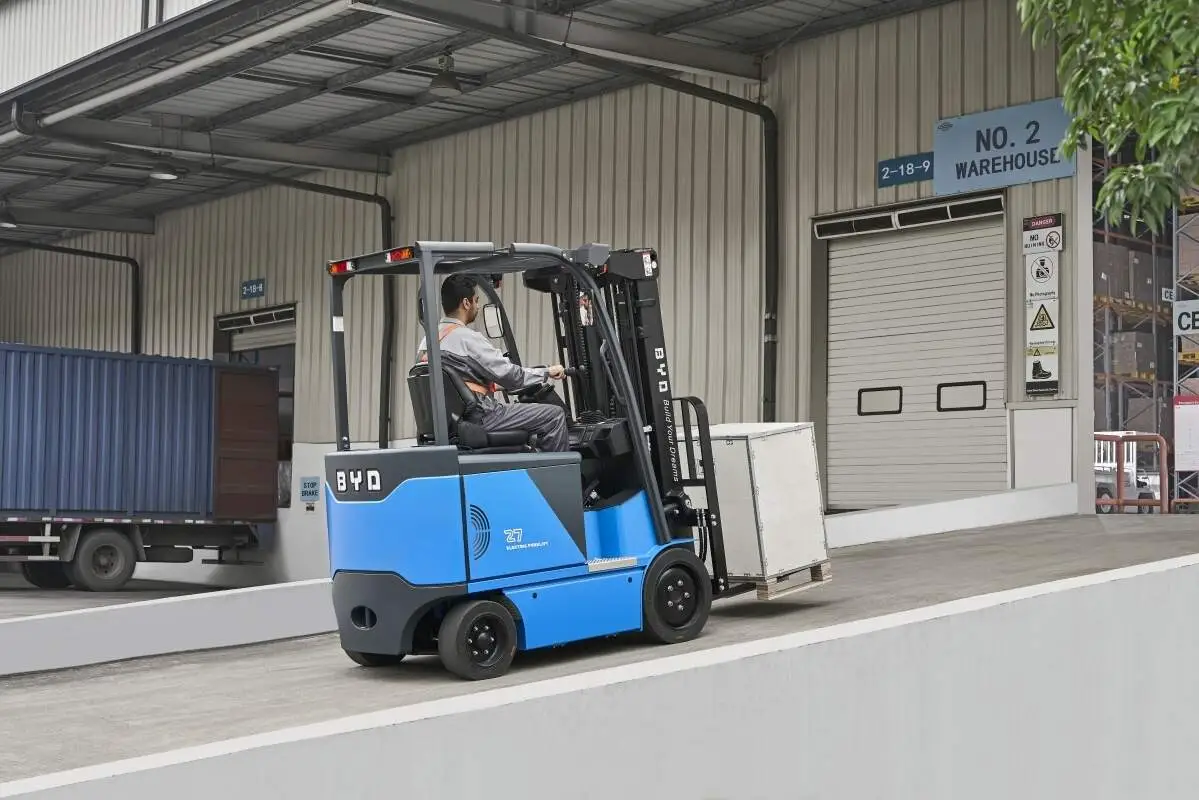
Operating an electric forklift efficiently and safely requires more than basic driving skills; it involves tailoring key operating parameters to the specific cargo being handled. Proper adjustments not only boost operational efficiency but also reduce the risk of accidents, protect the cargo, and extend the lifespan of the forklift. Jianshu New Energy, a specialist in BYD electric forklifts, shares essential tips to help operators make informed parameter adjustments based on different cargo scenarios.
Adjusting Parameters Based on Cargo Weight
The weight of the cargo is one of the most critical factors influencing parameter settings. For heavy loads, operators should adjust the forklift’s lifting speed to a lower level. A slower lifting speed prevents the forklift from tipping over and ensures stable handling of the heavy cargo. Additionally, adjusting the acceleration and deceleration rates to be gentler can reduce sudden jolts that might strain the forklift’s components or shift the cargo. For lighter loads, increasing the lifting speed moderately can improve work efficiency, but it’s important to maintain control to avoid damaging the cargo or the equipment.
Tailoring Settings for Cargo Size and Shape
Cargo with irregular shapes or large dimensions demands specific parameter adjustments. For tall, narrow cargo, operators should adjust the forklift’s mast tilt angle to a more upright position during transportation. This helps prevent the cargo from leaning or falling off the forks. Wide, bulky cargo may require adjusting the fork spacing to ensure even weight distribution. Moreover, reducing the turning radius sensitivity can make maneuvering with large cargo easier and safer, especially in confined spaces like warehouses.
Adapting to Cargo Type
Different cargo types call for unique parameter tweaks. For fragile items such as glassware or electronic products, operators should lower the lifting and traveling speeds significantly. Adjusting the forklift’s shock absorption settings (if available) can also minimize vibrations that might damage delicate cargo. For liquid cargo stored in containers, ensuring the mast is kept as level as possible and adjusting the braking sensitivity to avoid sudden stops can prevent spills. For palletized goods, optimizing the fork positioning parameters to align perfectly with pallet slots ensures secure lifting and transportation.
By following these tips, operators can enhance both safety and efficiency when handling various types of cargo with electric forklifts. If you’re looking for reliable BYD electric forklifts or need professional guidance on parameter adjustments, reach out to Jianshu New Energy at 17399989919@163.com. Our team of experts is ready to support you with tailored solutions to meet your material handling needs.