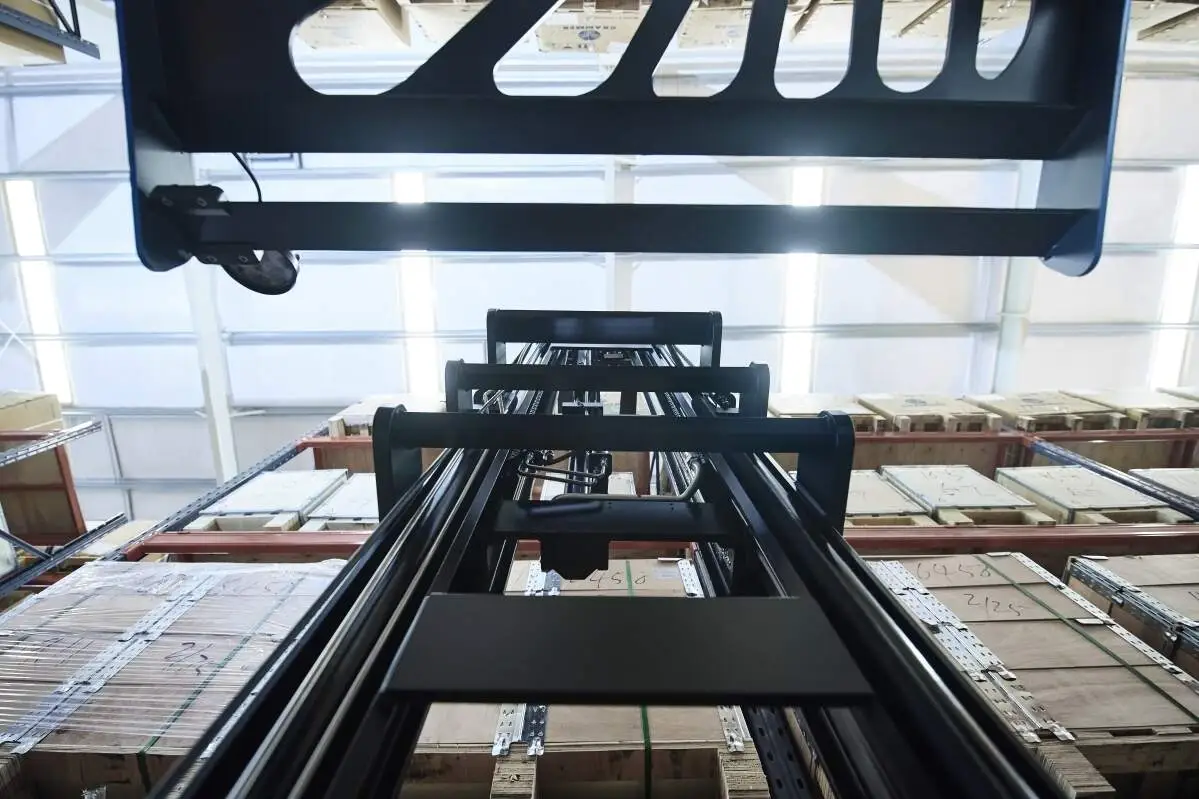
Forklifts are essential workhorses in material handling operations, and their lifting capabilities directly influence daily productivity. Among various mast configurations, the TT mast stands out for its flexible approach to adapting lifting heights to diverse work scenarios. Let’s break down how this specialized design modifies a forklift’s lifting range to meet different operational needs.
The TT mast, short for telescopic twin mast, features a nested dual-section structure that sets it apart from single-stage alternatives. Unlike fixed-height masts that limit operators to one maximum lifting range, the TT mast uses two interlocking sections that extend sequentially. For low-height tasks such as ground-level loading or navigating cramped warehouse aisles, only the inner section extends, ensuring stability and maneuverability in tight spaces. When taller lifting is required—like accessing high storage racks or loading shipping containers—the outer section telescopes upward, unlocking the mast’s full maximum lifting capacity. This dual-stage extension mechanism forms the core of its height-adjustable functionality.
To enable smooth height adjustments, the TT mast relies on a precision hydraulic system. Hydraulic cylinders drive the extension and retraction of each mast section, while control valves and sensors regulate fluid flow to ensure controlled, gradual movement. Operators can easily switch between lifting heights using the forklift’s control panel, adapting to tasks in real time without needing to swap equipment. For example, in a mixed-use warehouse where goods are stored at both ground level and 10-meter high racks, the TT mast allows the same forklift to handle both tasks efficiently, eliminating the need for multiple specialized machines.
Beyond adjustable height, the TT mast offers additional benefits that enhance operational versatility. Its telescopic design maintains clear visibility for the operator, even at full extension, compared to some multi-stage masts that can obstruct forward views. The dual-section structure also distributes load weight evenly across the mast, reducing stress on the forklift’s frame and minimizing the risk of load sway during lifting. This stability makes it suitable for handling both light and medium-weight loads across different height ranges, from small pallet loads to larger crates.
In summary, the TT mast’s telescopic twin-section design, paired with a responsive hydraulic system, empowers forklifts to adapt their lifting heights to a wide spectrum of material handling tasks. Whether navigating low-clearance outdoor areas or reaching high warehouse storage, this mast design ensures operators can adjust lifting capabilities on demand, boosting efficiency and adapting seamlessly to changing work requirements.