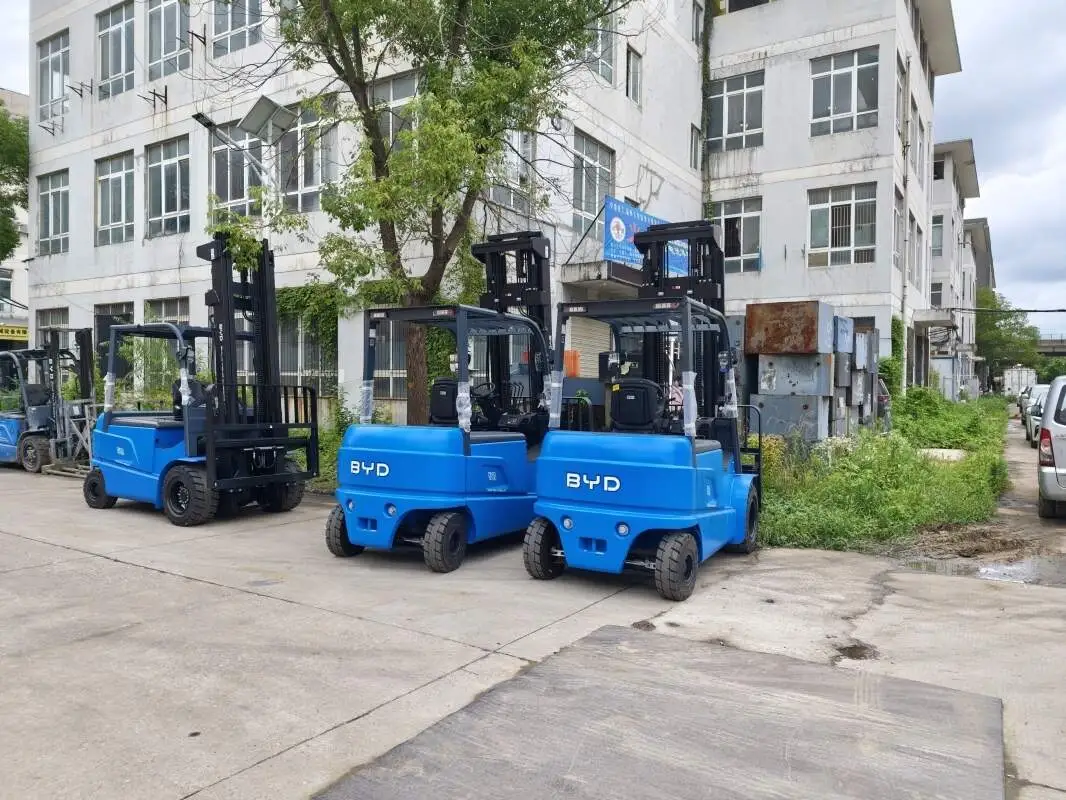
Industrial forklift trucks are integral components of modern material handling systems, designed to streamline the movement, lifting, and stacking of heavy loads across diverse industrial environments. Their versatility and adaptability make them indispensable in various sectors, where efficient logistics and load management directly impact operational productivity and workplace safety.
In warehouse and distribution centers, industrial forklifts play a pivotal role in daily operations. They are used to retrieve and store pallets of goods in high-rise storage racks, maximizing vertical space utilization to optimize storage capacity. Forklifts also facilitate the loading and unloading of delivery trucks, ensuring timely order fulfillment and reducing delays in supply chain workflows. During peak demand periods, such as holiday seasons or promotional sales, they help maintain smooth operations by minimizing manual labor requirements and lowering the risk of product damage during handling.
Within manufacturing facilities, forklifts support the entire production lifecycle. They transport raw materials from storage areas to production lines, ensuring a steady supply of components for continuous assembly processes. Completed products are then moved to packaging stations or finished goods warehouses, where forklifts stack and organize inventory for easy access. Additionally, forklifts assist maintenance teams in handling heavy machinery parts and equipment, enabling them to access hard-to-reach areas and perform repairs or replacements efficiently, minimizing downtime on production floors.
Construction sites present rugged and dynamic environments, where industrial forklifts are tasked with moving bulky construction materials such as steel beams, concrete blocks, and roofing supplies. Equipped with sturdy tires and robust lifting mechanisms, they navigate uneven terrain to deliver materials to different work zones, reducing the need for manual hauling and accelerating project timelines. Forklifts also aid in lifting and placing prefabricated structures, contributing to safer and more precise construction operations by eliminating the risk of manual lifting injuries.
At ports and cargo terminals, industrial forklifts are essential for managing containerized and bulk cargo. They load and unload shipping containers onto trucks and ships, as well as transfer cargo between storage yards and terminal facilities. Specialized forklift models with custom attachments handle oversized or irregularly shaped loads, ensuring efficient cargo handling even in high-traffic port environments. By streamlining cargo transfer processes, forklifts help reduce turnaround times for vessels and trucks, supporting the smooth flow of global trade operations.
Each application scenario demands specific forklift features, such as load capacity, maneuverability, and terrain adaptability. By understanding these typical use cases, businesses can select the right industrial forklift configuration to optimize their material handling processes, enhance workplace safety, and boost overall operational efficiency across their operations.