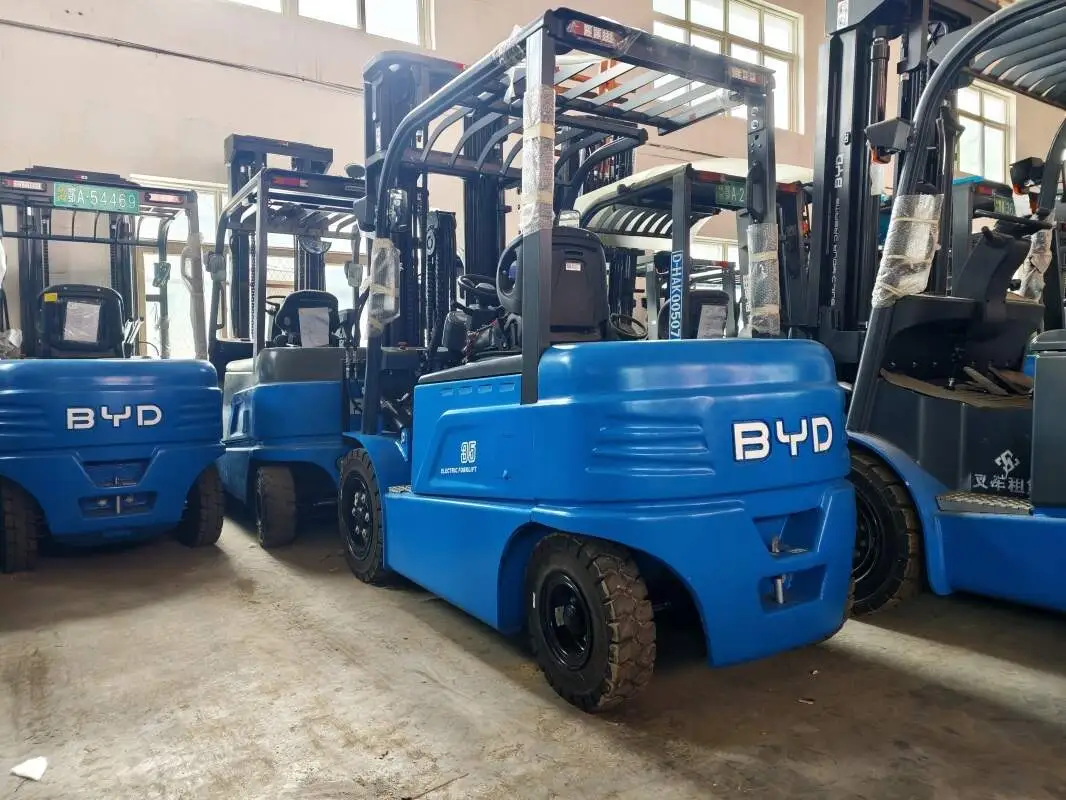
In the realm of industrial material handling, electric forklifts are indispensable tools for moving heavy loads efficiently. However, their utility comes with inherent risks, particularly when operated beyond safe capacity limits. Overloading is one of the leading causes of forklift accidents, including tipping, structural damage, and worker injuries. For this reason, mastering the forklift capacity formula is a non-negotiable skill for every operator and workplace safety manager.
At its core, the forklift capacity formula adjusts the manufacturer’s rated capacity for real-world conditions: Adjusted Capacity = Rated Capacity × (Standard Load Center ÷ Actual Load Center). Rated capacity is the maximum weight a forklift can safely lift at the standard load center—usually 24 inches from the face of the forks, as specified on the forklift’s data plate. The actual load center is the distance from the fork face to the load’s center of gravity; exceeding the standard reduces stable lifting capacity and raises the risk of tipping.
Beyond load center positioning, other key factors impact forklift capacity. Attachments like side shifters, clamp tools, or fork extensions add extra weight to the forklift and can shift the load’s center of gravity. Operators must subtract the weight of these attachments from the rated capacity and adjust the load center calculation accordingly. Additionally, operating on uneven terrain, lifting loads to significant heights, or working in extreme temperatures further reduces safe capacity, as these conditions compromise the forklift’s stability.
To apply the formula effectively, follow these steps: Locate the forklift’s data plate to find rated capacity and standard load center; measure the actual load center by identifying the midpoint of the load’s weight distribution; calculate adjusted capacity using the formula; account for attachments or environmental factors that reduce capacity; and never exceed the adjusted capacity before initiating a lift.
Adhering to the forklift capacity formula is more than a compliance measure—it is a critical component of a safe material handling strategy. Regular training should reinforce understanding of the formula and real-world applications, ensuring operators can accurately assess loads and make safe decisions. By prioritizing this knowledge, workplaces minimize accident risks, protect equipment and inventory, and foster a safer environment for all personnel.