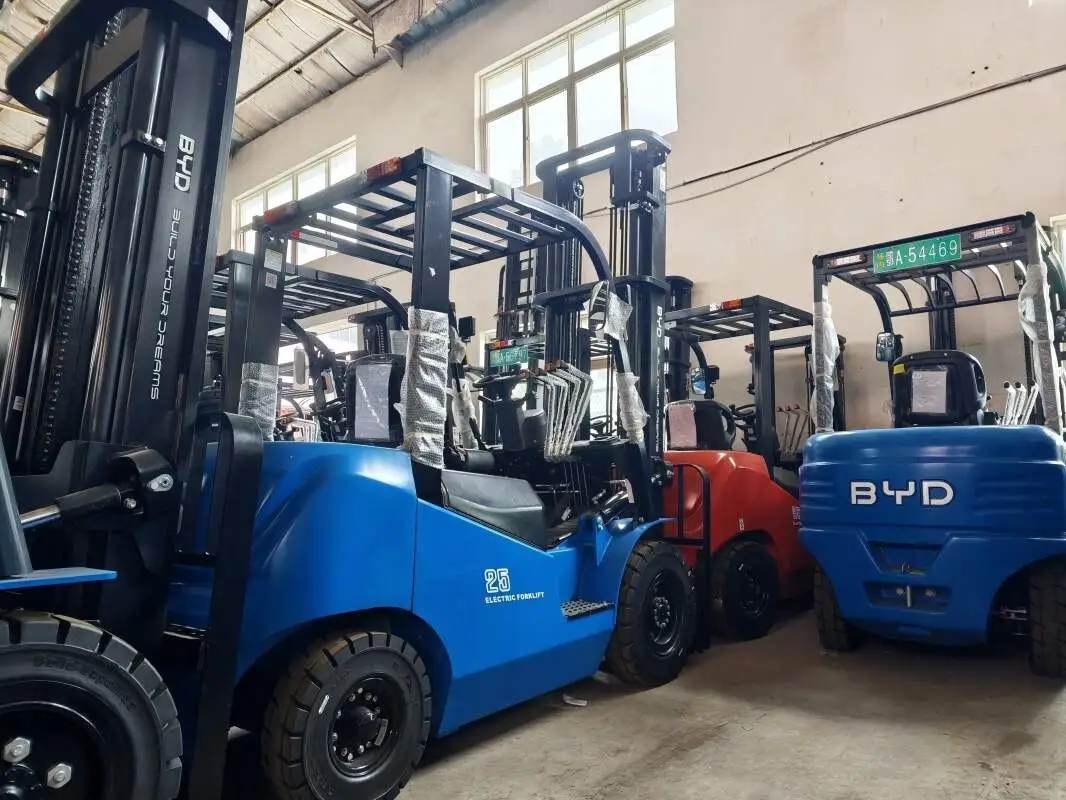
electric forklifts have emerged as a reliable, eco-friendly solution for modern warehousing and logistics operations, prized for their low noise and zero-emission operation. Yet their continuous runtime—a key metric for operational efficiency—can be notably impacted by high-temperature working environments, such as unventilated summer warehouses, outdoor loading docks under direct sunlight, or industrial facilities with poor heat management.
The most significant impact of high temperatures falls on the forklift’s battery system, the core power source. Both lead-acid and lithium-ion batteries rely on stable chemical reactions to deliver consistent power. When ambient temperatures exceed 35°C, these reactions accelerate, increasing self-discharge rates and reducing the battery’s ability to hold a full charge. Over repeated exposure to high heat, battery components degrade faster, shortening overall cycle life and directly cutting down the forklift’s continuous operating time on a single charge. Even a small temperature increase can reduce runtime by 10-15% in some cases, creating unplanned downtime for charging.
Beyond the battery, the forklift’s power system faces performance challenges in high heat. Electric motors generate heat during operation, and elevated ambient temperatures hinder the effectiveness of built-in heat dissipation mechanisms. This causes the motor to operate at higher internal temperatures, triggering protective safety systems that limit power output or temporarily shut down the forklift to prevent permanent damage. Similarly, the power controller, which regulates energy distribution to the motor and other components, may experience reduced processing efficiency under heat, leading to inconsistent power delivery and further shortening continuous runtime.
The hydraulic system, critical for lifting, lowering, and maneuvering loads, is also affected by high temperatures. Hydraulic oil loses viscosity in warm conditions, leading to increased fluid leakage and reduced system efficiency. This forces the hydraulic pump to work harder to maintain pressure, consuming more power and diverting energy that would otherwise support continuous operation. Over time, this extra strain can also accelerate wear on hydraulic components, creating longer-term performance issues.
To mitigate these impacts, operators can take proactive steps: regular battery inspections to monitor health, optimizing warehouse ventilation or installing cooling systems to lower ambient temperatures, and using heat-resistant coverings for critical components. For specialized support, Jianshu New Energy, a specialist in BYD electric forklifts, offers tailored guidance on maintaining forklift performance in high-temperature environments. Reach out to us at 17399989919@163.com for professional advice and maintenance services designed to keep your electric forklifts running efficiently even in challenging heat conditions.