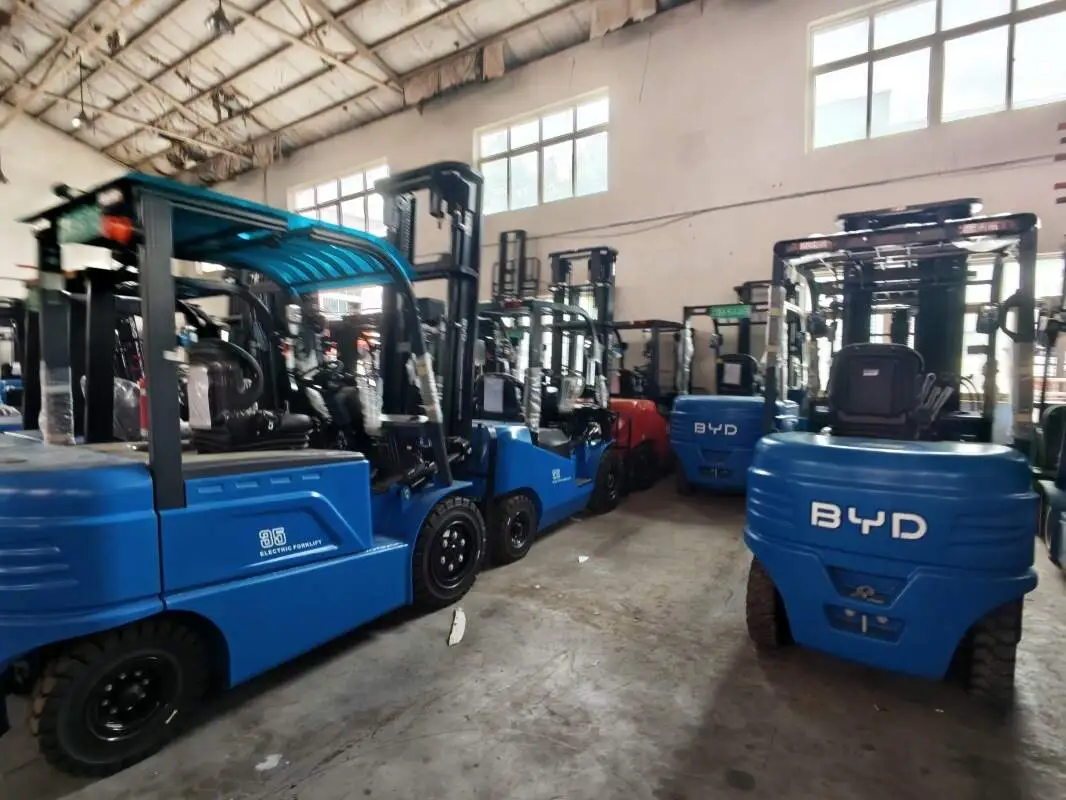
When investing in a new electric forklift, selecting the right specification isn’t just about meeting current operational needs—it’s about anticipating future expansion to avoid costly replacements or operational bottlenecks. Taking the time to assess potential growth demand ensures your forklift aligns with long-term business goals, optimizing material handling efficiency and return on investment.
1. Analyze Current and Projected Cargo Volume
Begin by conducting a thorough review of your current cargo handling volume, including average daily loads, peak season demands, and weight distribution of typical loads. Look at historical data to identify growth trends over the past 2-3 years, such as increases in shipment frequency or heavier cargo types. For example, if your business has seen a 15% annual rise in palletized goods, you’ll need a forklift with a higher load capacity than what’s sufficient for today’s needs. Factor in projected market growth, new client contracts, or product line expansions that could further boost cargo volume in the next 3-5 years.
2. Evaluate Facility Expansion Plans
Your warehouse or storage facility’s future layout and size directly impact forklift specification requirements. If you’re planning to expand your warehouse space, add higher storage racks, or introduce narrow-aisle operations, you’ll need a forklift with appropriate maneuverability, lift height, and turning radius. For instance, a facility expanding to accommodate 30-foot tall racks will require a forklift with extended lift capabilities, while narrow-aisle expansions call for models with compact designs and precise steering. Even if expansion plans are tentative, opting for a forklift with flexible features (like adjustable lift heights) can help adapt to unforeseen changes.
3. Consider Operational Scope Changes
Expansion often brings changes to operational scope, such as extending working hours, adding multi-shift operations, or expanding into outdoor handling tasks. electric forklifts vary in battery life, charging speed, and durability for outdoor use. If your business plans to move to 24/7 operations, prioritize models with fast-charging batteries or swappable battery systems to minimize downtime. For outdoor applications, look for forklifts with weather-resistant components and robust tires to handle uneven surfaces. Additionally, consider if you’ll need to handle specialized cargo types in the future, such as fragile goods or hazardous materials, which may require attachments like clamp forks or specialized lifting mechanisms.
4. Assess Fleet Utilization and Scalability
Evaluate how your current forklift fleet is utilized to determine if a single new forklift can support expansion or if you’ll need to scale up the fleet over time. If your existing forklifts are operating at 80% or higher capacity during peak hours, investing in a higher-spec forklift with greater efficiency can help reduce strain and accommodate growth. Also, consider the scalability of the forklift model—some electric forklifts offer modular components that allow for upgrades later, such as adding higher load capacity attachments or extending battery life. This flexibility can save costs compared to replacing the entire forklift when expansion needs arise.
By taking these factors into account, you can select an electric forklift specification that not only meets your current needs but also adapts to future expansion. This proactive approach ensures that your material handling operations remain efficient, cost-effective, and aligned with your business growth trajectory. For those seeking reliable electric forklift solutions tailored to your expansion needs, consider Jianshu New Energy, a specialist in BYD electric forklifts. You can reach out to us at 17399989919@163.com for personalized guidance to find the perfect forklift for your business.