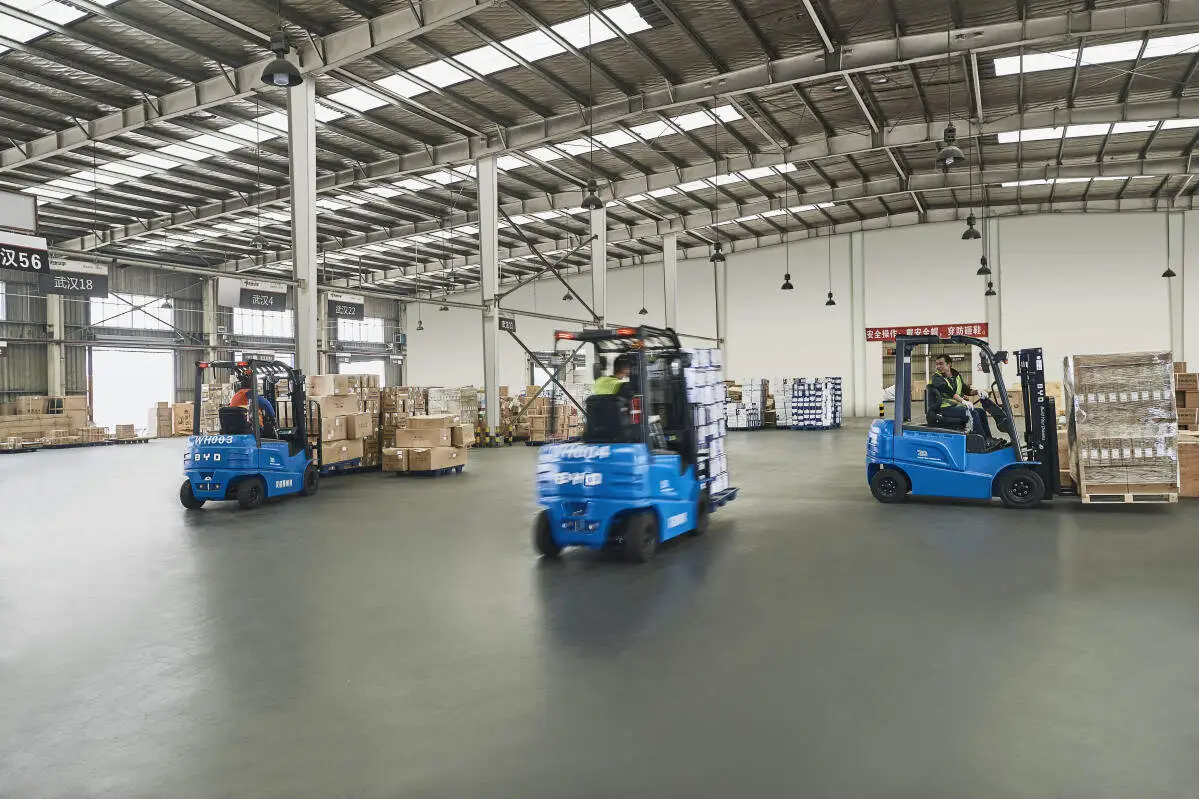
electric forklifts have emerged as a reliable, eco-friendly backbone of modern warehouse and logistics operations, outperforming traditional internal combustion models with lower operational costs and zero tailpipe emissions. At the core of their consistent performance lies the battery system, and one often overlooked but critical factor that directly shapes their service time is the battery’s depth-of-discharge (DOD). Grasping this relationship is key to maximizing fleet uptime and extending battery lifespan for long-term cost efficiency.
Depth-of-discharge refers to the percentage of a battery’s total capacity that has been consumed before initiating a recharge. For instance, if a 100 kWh battery is drained to 25 kWh remaining, its DOD stands at 75%. While it may seem logical to use as much of the battery’s capacity as possible to stretch single-shift service time, this approach can carry significant long-term tradeoffs for both battery health and forklift operational consistency.
High DOD levels, typically exceeding 80%, can accelerate battery degradation. Each deep discharge places extra stress on the battery’s internal components, causing gradual wear that reduces its overall capacity over time. In the short term, a forklift might deliver extended service time with deep discharges, but as months pass, the battery’s ability to hold a full charge diminishes. This leads to shorter service intervals, more frequent recharges, and unexpected downtime that disrupts daily operations. Conversely, maintaining a moderate DOD range (between 50% and 70%) slows this degradation process, preserving the battery’s capacity and ensuring steady, reliable service time throughout its lifespan.
In daily fleet management, implementing practical strategies can help optimize DOD and extend electric forklift service time. First, establish structured charging schedules that avoid deep discharges—this could include opportunity charging during employee breaks or scheduled recharges when the battery reaches a predefined DOD threshold. Second, train operators to monitor battery level indicators and avoid overusing the forklift beyond recommended limits. Additionally, routine battery maintenance, such as keeping terminals clean, ensuring proper ventilation around charging stations, and maintaining optimal operating temperatures, can further enhance battery performance and service time consistency.
If you’re aiming to optimize your electric forklift fleet’s performance and battery lifespan, Jianshu New Energy specializes in BYD electric forklifts, offering tailored solutions to support your operational needs. Our team of experts can provide guidance on battery maintenance best practices, charging protocol optimization, and fleet management strategies tailored to your workflow. For more information, feel free to reach out to us at 17399989919@163.com.