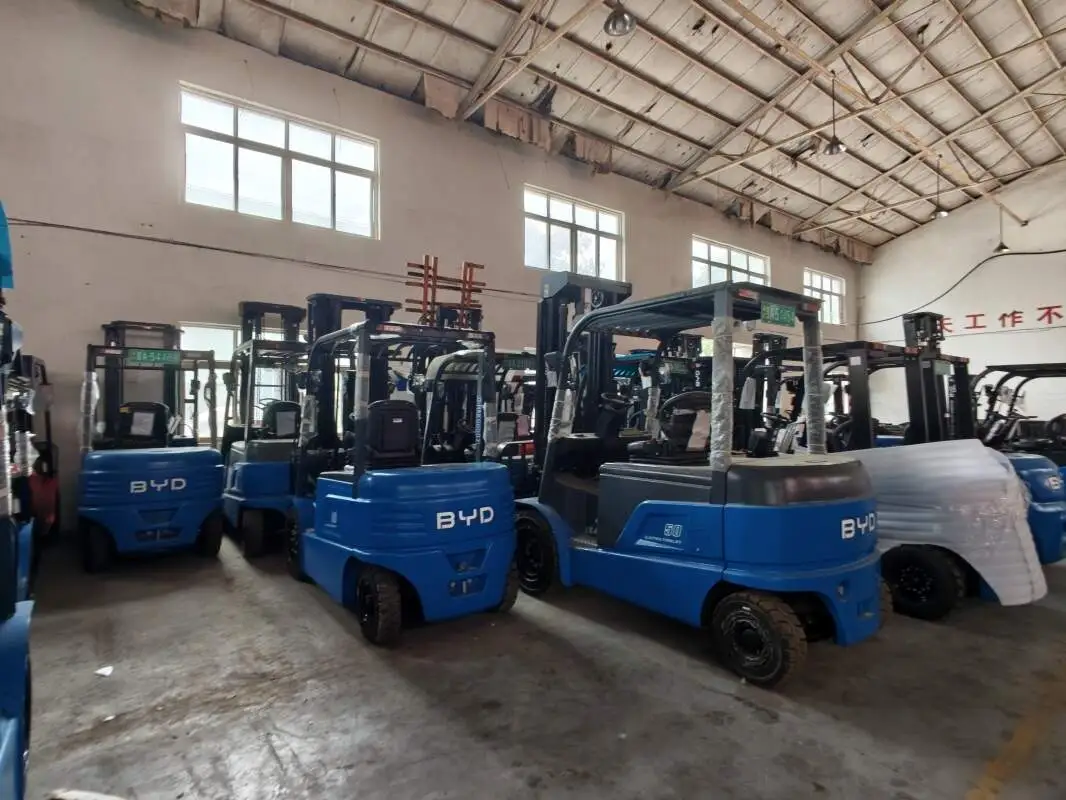
In today’s fast-paced supply chain landscape, warehouses face growing pressure to streamline operations, cut unnecessary costs, and meet evolving customer demands. Warehouse automation has become a critical strategy to address these challenges, and automated guided forklifts (AGFs) stand out as a foundational component of effective automation solutions, reshaping how materials are moved and managed within facility boundaries.
Unlike traditional forklifts dependent on human operators, automated guided forklifts utilize advanced navigation technologies—such as laser guidance, magnetic tape, or vision-based systems—to navigate warehouse spaces autonomously. They can be programmed to execute a range of tasks, from transporting pallets between storage zones and loading docks to stacking goods at varying heights with consistent precision. This autonomy eliminates the need for constant human oversight for routine material handling tasks, allowing warehouse staff to redirect their focus to high-value activities like inventory optimization, quality control, and complex order coordination.
A key benefit of integrating automated guided forklifts into warehouse automation solutions is heightened operational efficiency. AGFs operate with steady speed and accuracy, reducing delays caused by human error or fatigue. They can also run continuously, 24 hours a day, 7 days a week, with only minimal downtime for scheduled maintenance, ensuring uninterrupted material flow even during off-peak hours. This reliability helps warehouses increase throughput, shorten order fulfillment cycles, and adapt more effectively to fluctuating demand patterns.
Safety is another significant advantage of AGFs. These systems are equipped with built-in sensors and collision avoidance mechanisms that detect obstacles, pedestrians, and other equipment in their path, automatically adjusting speed or stopping to prevent accidents. This reduces the risk of workplace injuries and damage to goods or infrastructure, creating a safer environment for both employees and warehouse assets.
When implementing automated guided forklifts as part of warehouse automation solutions, careful planning is essential. Warehouses must first assess their layout, material handling requirements, and existing infrastructure to determine the optimal number and type of AGFs needed. Integration with warehouse management systems (WMS) is also critical, as it enables seamless coordination between AGFs and other automated systems like conveyor belts or automated storage and retrieval systems (AS/RS). Additionally, staff training plays a vital role in ensuring employees can monitor AGF operations and step in for troubleshooting when necessary, fostering a smooth transition to automated workflows.
In conclusion, automated guided forklifts are a powerful tool for modern warehouses seeking to enhance their automation strategies. By improving efficiency, safety, and scalability, these systems help warehouses maintain competitiveness in an increasingly demanding supply chain. As technology continues to advance, automated guided forklifts are expected to gain greater versatility, offering new capabilities that further streamline warehouse operations and support long-term business growth.