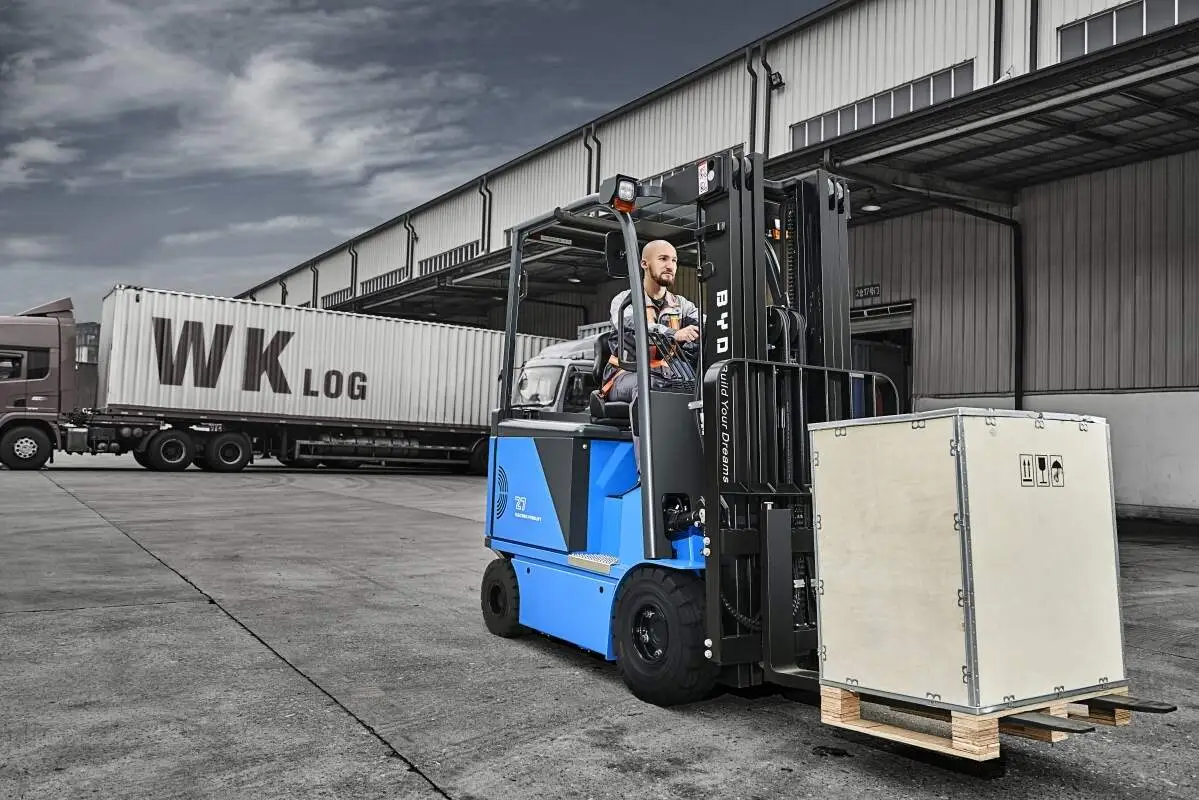
Warehouse operations rely on a diverse range of equipment to streamline material handling, enhance efficiency, and maintain safety standards. Among these tools, forklifts are ubiquitous, serving as workhorses for moving heavy loads across storage floors and stacking items on high shelves. Yet a common question lingers among warehouse managers, safety officers, and equipment operators: does a forklift qualify as lifting equipment?
To address this question, it is first essential to define what constitutes lifting equipment. Generally, lifting equipment refers to machinery designed primarily to raise, lower, or suspend loads vertically. This category typically includes cranes, hoists, elevators, and overhead lifting systems, where the core function focuses on vertical load movement with minimal horizontal travel. Regulatory bodies often emphasize that lifting equipment must be engineered to handle suspended loads, with specific safety features to prevent falls or structural failures during lifting operations.
Forklifts, by contrast, are designed with a broader set of functionalities. While they do have the ability to lift loads vertically—often to heights of several meters—their primary purpose is to transport loads horizontally across warehouse spaces. Unlike traditional lifting equipment, forklifts carry loads on forks or attachments that remain in direct contact with the load rather than suspending it. This key distinction is central to classification debates. Additionally, forklifts are equipped with stabilizing features like counterweights to maintain balance during movement, a trait not always required for dedicated lifting equipment.
Regulatory classifications further complicate the matter, as standards vary across regions. In some jurisdictions, forklifts are categorized under material handling equipment rather than lifting equipment, due to their primary focus on transporting loads. These regulations often highlight that lifting equipment requires specific certifications for operation, while forklifts fall under separate training and compliance frameworks. However, in other areas, any equipment capable of lifting loads above a certain weight may be partially classified as lifting equipment, requiring additional safety checks and operator qualifications.
For warehouse operators, understanding this classification is critical for ensuring compliance with local safety regulations. Misclassifying forklifts can lead to incorrect training protocols, inadequate safety inspections, or potential legal liabilities. Regardless of how they are categorized, forklifts require proper maintenance, operator training, and adherence to load capacity limits to prevent accidents. Even if not formally labeled as lifting equipment, their lifting capabilities demand careful attention to safety practices, such as avoiding overloading, securing loads properly, and maintaining clear visibility during lifting operations.
In conclusion, whether a forklift qualifies as lifting equipment depends on the specific definition used and regional regulatory standards. While forklifts possess lifting capabilities, their primary function as material transport tools often sets them apart from dedicated lifting equipment. Warehouse operators should consult local regulatory guidelines to determine the appropriate classification, and prioritize safety training and equipment maintenance to ensure safe and efficient material handling operations.