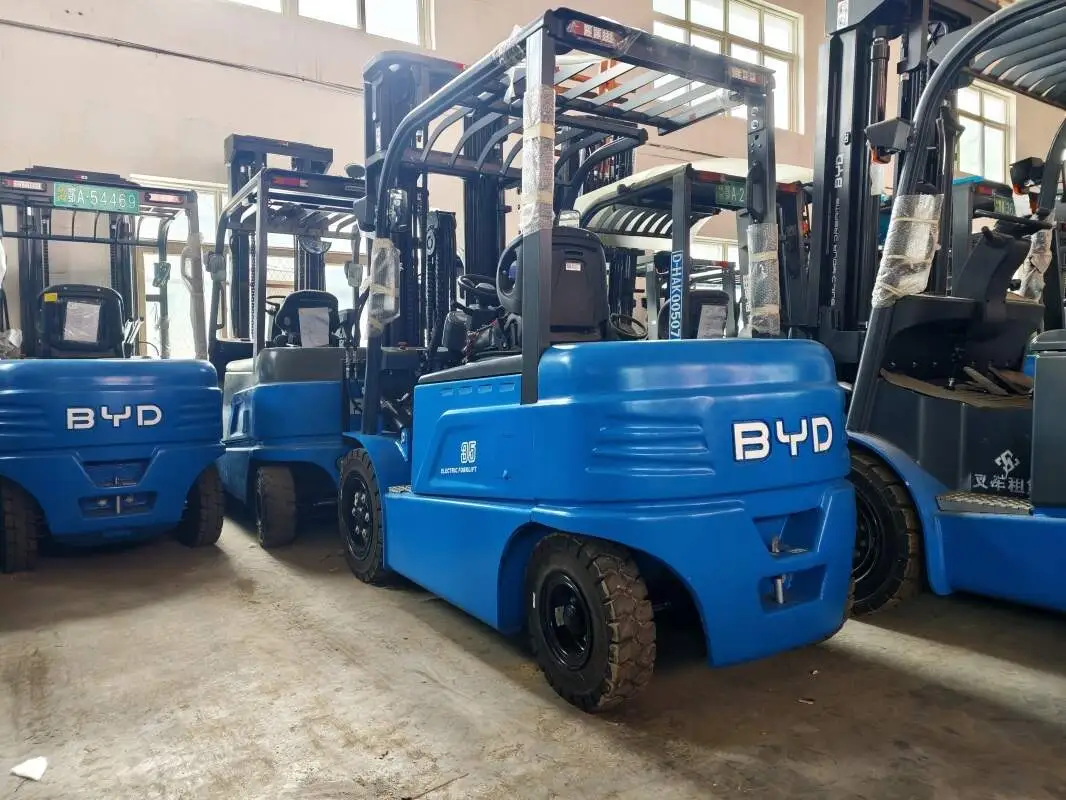
Swing carriage forklifts are a valuable asset for warehouses aiming to maximize space utilization and handle tight storage environments. Unlike standard forklifts, their ability to rotate the carriage and forks independently of the mast allows for greater maneuverability, making them ideal for narrow aisles and high-density storage. However, to unlock their full potential, warehouses need a tailored layout that aligns with the forklift’s unique capabilities. Below are practical, compliance-focused layout suggestions to enhance efficiency, safety, and operational workflow.
Narrow Aisle Optimization
The primary advantage of swing carriage forklifts is their ability to operate in narrower aisles compared to traditional models. When designing aisle widths, start by assessing the forklift’s turning radius and swing carriage range. Aisle widths should be sufficient to allow the carriage to rotate fully without scraping against racking or adjacent equipment, while still minimizing wasted space. As a general guideline, aisle widths can be reduced by up to 30% compared to standard forklift requirements, but always prioritize safe maneuvering over extreme space savings. Mark aisle boundaries clearly with floor tape or painted lines to guide operators and prevent collisions.
Racking Configuration & Clearance
Racking design plays a critical role in supporting swing carriage forklift operations. Opt for selective or narrow-aisle racking systems that accommodate the forklift’s vertical reach and side-swing capabilities. Ensure there is adequate horizontal clearance between racking rows to allow the carriage to swing and position forks accurately when retrieving or placing loads. For high-level storage, adjust racking heights to match the forklift’s maximum lift capacity, avoiding overloading or reaching beyond safe operational limits. Additionally, consider installing rack protectors at the base of each rack to absorb accidental impacts and extend rack lifespan.
Traffic Flow & Safety Zones
Efficient traffic flow is essential to prevent bottlenecks and reduce accident risks. Design a one-way traffic system in narrow aisles to eliminate head-on collisions between forklifts and pedestrian traffic. Separate pedestrian walkways from forklift operating zones using physical barriers or clearly marked lines, ensuring workers have safe access to storage areas without entering active forklift paths. Designate dedicated turning zones at the end of aisles to allow swing carriage forklifts to rotate and reposition without blocking adjacent traffic. Install convex mirrors at blind corners to improve visibility for operators, reducing the chance of collisions with unseen obstacles or personnel.
Storage Zone Segmentation
Segmenting storage zones based on product turnover and size can streamline swing carriage forklift operations. Place fast-moving items in easily accessible, lower-level storage zones closer to loading docks, minimizing travel time and reducing the need for frequent vertical lifts. Reserve higher-level racking for slow-moving or bulk items, leveraging the forklift’s vertical reach capabilities. Group similar-sized products together to reduce the need for constant adjustment of the swing carriage, optimizing loading and unloading speed. Ensure each zone is clearly labeled with product categories and storage locations to help operators quickly locate items, improving overall workflow efficiency.
Loading/Unloading Area Design
The loading and unloading area is a high-traffic zone that requires careful layout to support swing carriage forklift operations. Allocate sufficient space for forklifts to maneuver, swing the carriage, and position loads onto trucks or pallets without obstruction. Design the area with clear turning radii to allow the forklift to rotate fully, avoiding tight spaces that could limit the carriage’s movement. Install overhead lighting in loading zones to improve visibility during early morning or evening shifts, ensuring operators can safely position loads. Additionally, designate a staging area for incoming and outgoing goods to prevent congestion in the loading dock, keeping forklift operations smooth and uninterrupted.
By implementing these tailored layout suggestions, warehouses can maximize the benefits of swing carriage forklifts, improving space utilization, operational efficiency, and workplace safety. Always prioritize operator training and regular equipment inspections to ensure compliance with safety standards, as even the best layout cannot compensate for improper operation. With careful planning, swing carriage forklifts can transform warehouse storage and logistics, creating a more productive and sustainable operational environment.