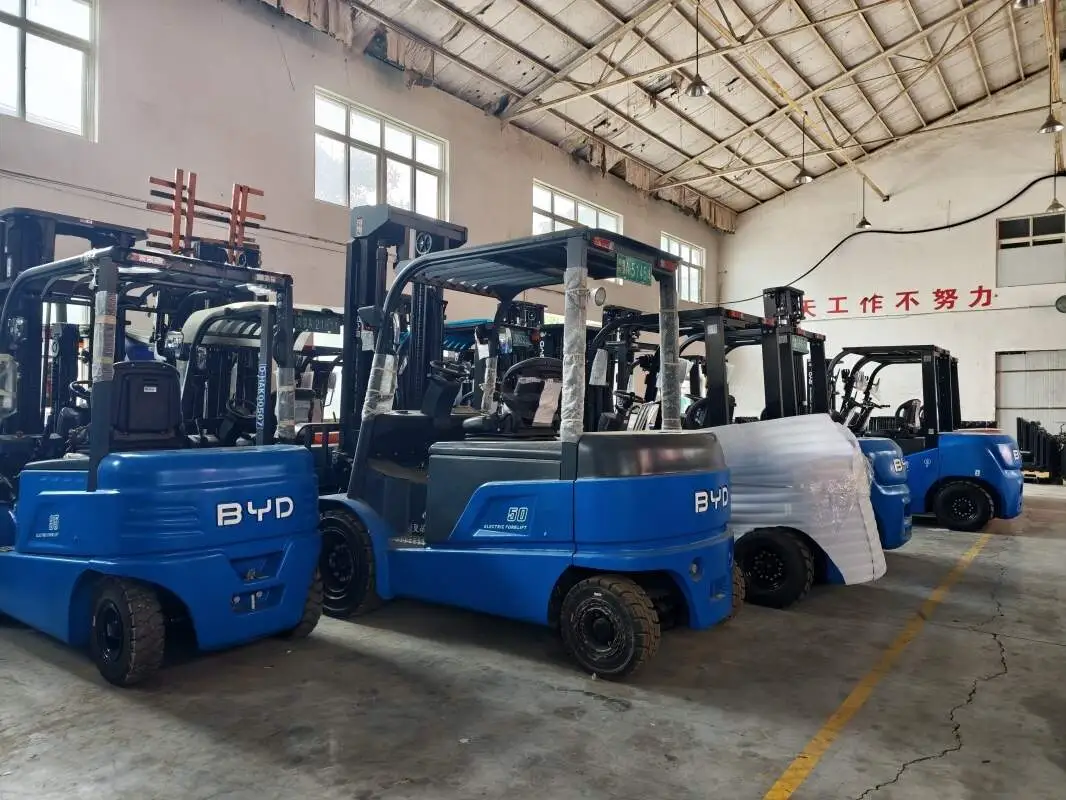
When evaluating a second-hand electric forklift, start with a thorough visual inspection of the exterior. Look for excessive rust on the frame, especially around load-bearing areas like the mast and chassis. Small surface rust may be cosmetic, but deep corrosion can weaken structural integrity, posing safety risks during heavy lifting. Cracks in the body or mast components are another red flag—these can indicate past accidents or overloading, which may lead to catastrophic failure under stress.
The battery is the core of an electric forklift, so pay close attention to its condition. Check for leakage signs, such as dried electrolyte stains around terminals or casing. Leaking electrolyte can damage nearby components and signals a compromised battery seal. Bulging or warped battery cells are also warnings; this usually stems from overcharging or internal damage, reducing lifespan and charging efficiency. Request maintenance records to verify service frequency and past replacements if possible.
Next, inspect mechanical components, starting with tires. Uneven tread wear or rubber cracks can signal misalignment, improper load distribution, or steering system wear. Test brakes at varying speeds—spongy brakes or delayed stopping power indicate worn pads or hydraulic issues. Listen for unusual noises like grinding or squealing when operating the mast or lifting loads; these sounds may point to worn gears, chains, or hydraulic pumps that need costly repairs.
Carefully examine the electrical system for wear or damage. Frayed or cracked wiring, especially around battery terminals and the control panel, can cause short circuits or failures. Ensure all lights, horn, and control functions work properly—faulty electronics may indicate neglected maintenance or underlying electrical problems. Note the forklift’s startup process; slow or inconsistent startup can signal a weak battery or faulty charger.
Finally, conduct a hands-on operational test. Drive the forklift in a clear area to assess steering responsiveness—loose or unresponsive steering is a safety hazard. Test mast lifting and lowering functions for smooth operation without jerks or delays. Monitor battery performance during use; if the forklift loses power quickly or struggles with light loads, it may require a new battery, a significant additional cost.
By recognizing these warning signs during evaluation, you can avoid purchasing a second-hand electric forklift with hidden issues, ensuring a safer and more cost-effective investment. Always prioritize comprehensive inspections, and consider hiring a professional technician if unsure about any components.