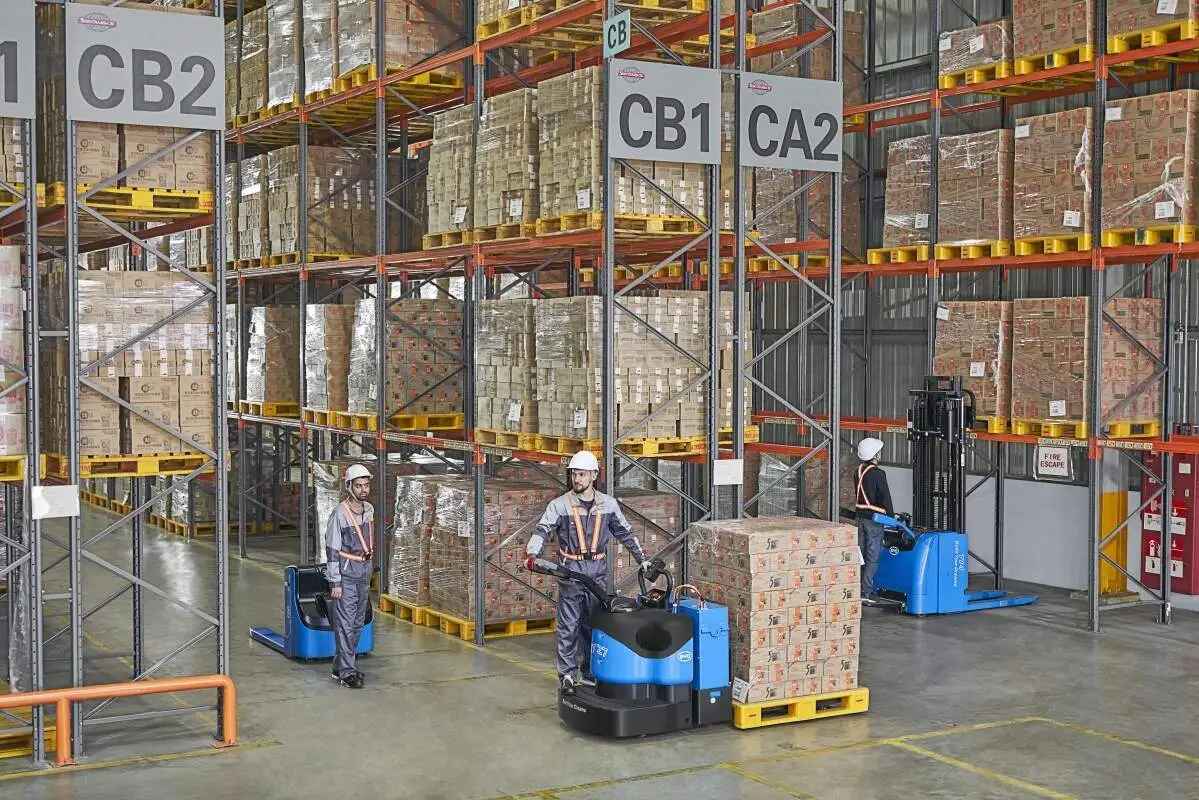
In busy industrial and warehouse environments, forklifts play a critical role in streamlining material handling operations. However, their size, maneuverability limitations, and frequent movement between narrow aisles and crowded areas create inherent safety risks, especially during reversing maneuvers. This is where forklift reverse horn systems emerge as a simple yet effective safety component that significantly enhances on-site workplace safety.
One of the primary benefits of reverse horn systems is their ability to alert pedestrians and nearby workers to a forklift’s movement. In busy facilities, employees often focus on their tasks, such as inventory checks or packaging, and may not notice an approaching reversing forklift. The distinct, audible signal emitted by the reverse horn cuts through ambient noise, drawing immediate attention to the forklift’s presence. This early warning gives workers time to move to a safe area, reducing the risk of accidental collisions that can lead to injuries or property damage.
Beyond alerting pedestrians, reverse horn systems help mitigate the risks posed by forklift blind spots. Even with mirrors and camera systems, forklifts have areas around the vehicle that operators cannot see clearly, particularly when reversing. The horn acts as an auditory complement to visual safety tools, ensuring that anyone in the blind spot is aware of the forklift’s movement. This dual-layered approach—visual and auditory—creates a safer environment by addressing gaps in the operator’s field of vision.
Reverse horn systems also play a key role in supporting regulatory compliance. Many occupational safety authorities mandate that industrial vehicles like forklifts be equipped with audible warning devices for reversing operations. Installing and maintaining a functional reverse horn ensures that businesses adhere to these regulations, avoiding potential fines and demonstrating a commitment to employee safety. Compliance with such standards not only protects workers but also helps organizations build a reputation for prioritizing workplace well-being.
Additionally, these systems contribute to fostering a safety-focused culture within the workplace. When employees consistently hear reverse horns during forklift operations, it reinforces the importance of staying vigilant and aware of their surroundings. It encourages both forklift operators and other workers to take proactive safety measures, such as checking their surroundings before moving or yielding to reversing vehicles. Over time, this collective awareness reduces the likelihood of accidents and creates a more secure work environment for everyone.
In conclusion, forklift reverse horn systems are a low-cost, high-impact solution for enhancing on-site workplace safety. By alerting pedestrians, mitigating blind spot risks, supporting regulatory compliance, and promoting a safety-first mindset, these systems play an essential role in preventing accidents and protecting both workers and valuable equipment. For any organization relying on forklifts for daily operations, investing in a reliable reverse horn system is a fundamental step toward maintaining a safe and efficient workplace.