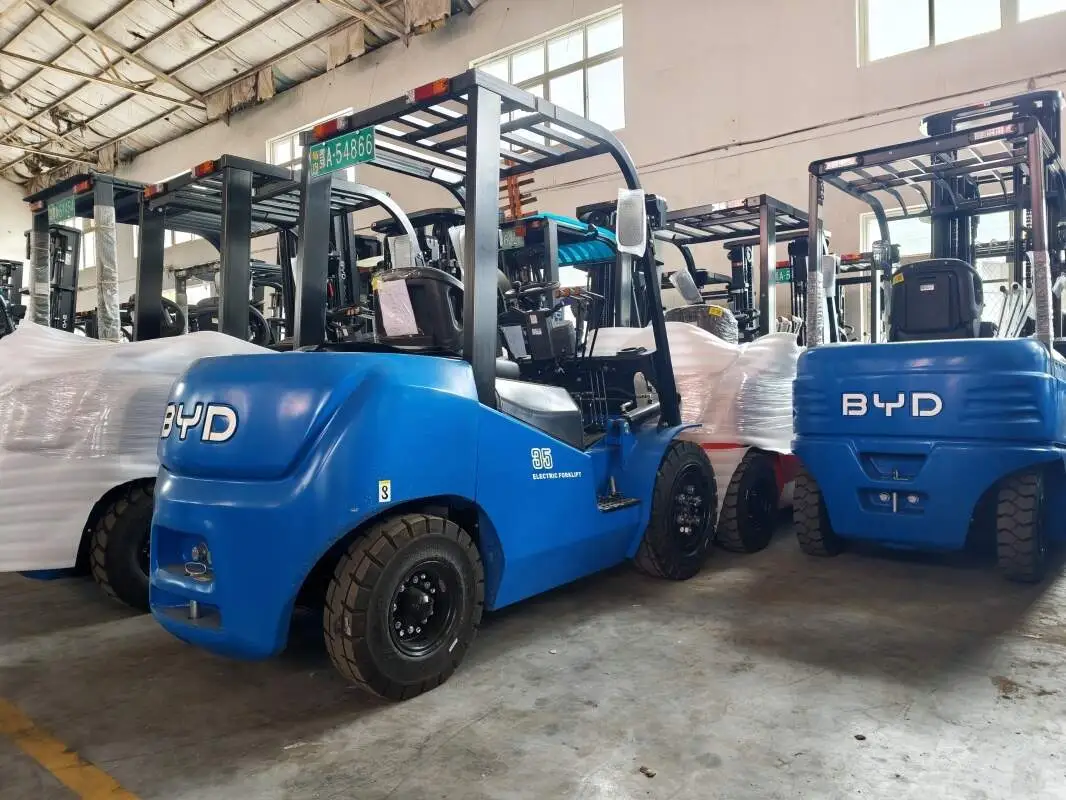
The forklift mast assembly is the core structural component that enables electric forklifts to lift, lower and position loads efficiently, playing a critical role in material handling operations across warehouses, distribution centers and industrial sites. Understanding its working principle is essential for operators and maintenance personnel to ensure safe and optimal performance.
At its core, the mast assembly consists of several key components working in tandem. The outer mast is a fixed vertical structure attached to the forklift’s front frame, providing a stable guide for the inner mast. The inner mast slides along the outer mast’s rails, supporting the carriage and fork assembly. Hydraulic cylinders, including lift cylinders and tilt cylinders, supply the necessary force for movement, while heavy-duty chains transfer this force between components to lift the load-bearing carriage.
The lifting operation relies on a hydraulic system-driven mechanism. When the operator activates the lift control, the hydraulic pump draws oil from the reservoir and directs it into the lift cylinders. As pressure builds, the lift cylinders extend, pushing the inner mast upward. Connected via chains to the carriage, the upward movement of the inner mast pulls the carriage and attached forks upward, raising the load to the desired height. To lower the load, the operator operates the control valve to release hydraulic oil from the lift cylinders, allowing the inner mast, carriage and load to descend under their own weight, with the hydraulic system regulating the speed to ensure smooth, controlled movement.
Beyond lifting, the mast assembly also enables tilting functionality to enhance load stability and handling. Tilt cylinders, mounted between the outer mast and the forklift frame, control the forward and backward tilt of the entire mast structure. Tilting the mast backward helps secure loads during transportation, preventing them from sliding off the forks. Tilting forward allows operators to easily position forks under pallets or release loads onto shelves. The hydraulic system regulates the tilt angle within safe limits, typically ranging from a few degrees forward to around 15-20 degrees backward, to avoid over-tilting that could compromise forklift balance.
Safety is integrated into every aspect of the mast assembly’s design. Built-in pressure relief valves prevent the hydraulic system from exceeding safe load limits, protecting both the mast components and the operator. Guide rails on the outer mast ensure smooth, stable movement of the inner mast, reducing the risk of jolts or misalignment. Regular maintenance, including checking chain tension, hydraulic fluid levels and cylinder seals, is necessary to keep the mast assembly operating reliably and safely over time, minimizing downtime and ensuring consistent performance in daily material handling tasks.