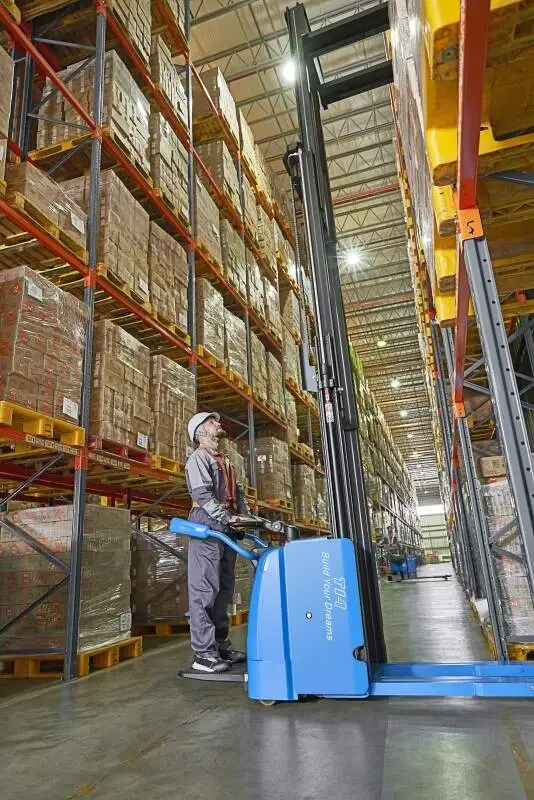
forklift seat sensors are critical safety components designed to protect operators and prevent workplace accidents in material handling environments. Unlike basic seat cushions, these sensors integrate advanced detection technology to monitor whether a forklift’s operator is properly seated, forming the foundation of multiple safety protocols.
At the core of a forklift seat sensor’s functionality is operator presence detection. Two primary technologies are commonly used for this purpose: pressure-sensitive sensors and capacitive sensors. Pressure sensors consist of a flexible pad installed beneath the seat cushion. When an operator sits down, the weight applied compresses the pad, altering its electrical resistance. This resistance change generates an electrical signal that confirms the operator’s presence. Capacitive sensors, on the other hand, rely on the electrical capacitance of the human body. These sensors are embedded in the seat and detect the change in electrostatic field when a person sits down, sending a corresponding signal to the forklift’s control system.
Once the sensor detects an operator, it transmits the signal to the forklift’s central control module. This module acts as the brain of the safety system, interpreting the signal to trigger or enable essential forklift functions. For example, many forklifts are programmed to prevent engine startup or hydraulic operation unless the sensor confirms an operator is seated. Additionally, if the operator stands up or leaves the seat while the forklift is in motion, the sensor will send an alert signal, prompting the control module to activate safety measures such as reducing speed, engaging the parking brake, or shutting off non-essential functions to mitigate collision risks.
Accurate calibration is vital to ensure the seat sensor operates reliably. Over time, factors like wear and tear on the seat cushion, dirt accumulation, or minor component shifts can affect the sensor’s sensitivity. Regular calibration involves adjusting the sensor’s threshold to account for these changes, ensuring it only triggers when a valid operator is seated and avoids false alerts. Routine maintenance also includes inspecting the sensor’s wiring connections to prevent loose or damaged cables from interfering with signal transmission.
In summary, forklift seat sensors play a pivotal role in enhancing workplace safety by linking operator presence to critical forklift functions. Their working principle combines precise detection technology with intelligent control systems to create a layered safety net, reducing the risk of accidents caused by unauthorized operation or operator inattention. By understanding how these sensors work, businesses can ensure proper maintenance and maximize their protective benefits in material handling operations.