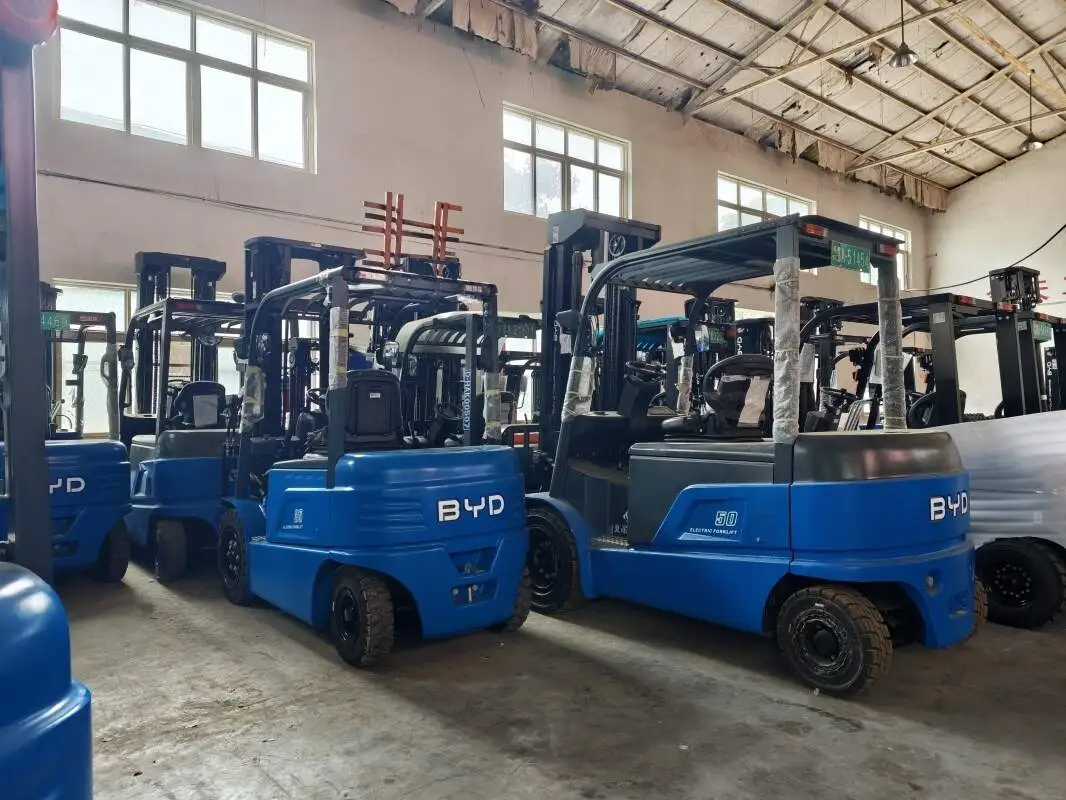
A zoom boom forklift, a versatile material handling tool, is widely used in construction sites, warehouses, and industrial facilities for accessing high or distant loads. Its distinctive extendable telescopic boom sets it apart from standard forklifts, offering enhanced flexibility for lifting, moving, and placing materials.
Working Principles
The functionality of a zoom boom forklift relies on three interconnected core systems:
First, the hydraulic system powers all critical operations using pressurized fluid. It drives the extension and retraction of the telescopic boom, controls the fork’s tilting and swiveling motions, and activates the stabilizer mechanisms. This system ensures smooth, precise movements even when handling heavy loads.
Second, the telescopic boom consists of nested steel sections that slide in and out to adjust reach. When extended, it boosts the forklift’s vertical and horizontal range, enabling access to upper storage shelves or hard-to-reach construction zones. When retracted, it reduces the machine’s footprint, making it easier to maneuver in tight spaces.
Third, stabilizers deploy to create a stable base during lifting tasks, especially when the boom is fully extended or carrying heavy loads. By distributing the forklift’s weight across a wider area, stabilizers prevent tipping and maintain operational safety.
Capacity Reference
The load capacity of a zoom boom forklift is not fixed, as it varies based on key operational factors:
Boom extension length is a primary influencer: as the boom extends further, the load capacity decreases. This is because the extended boom increases the distance between the load and the forklift’s center of gravity, reducing overall stability. Similarly, boom angle affects capacity—lifting loads at a more vertical angle typically allows for greater weight tolerance than lifting at a shallow, horizontal angle.
Load distribution also plays a role: unevenly balanced loads can strain the forklift’s structure and lower safe capacity limits. Operators must ensure loads are centered on the forks and securely fastened before lifting.
Always consult the manufacturer-provided load guidelines, which outline safe capacity limits for different boom positions and angles. These guidelines are tailored to the machine’s design and must be strictly followed to avoid operational risks.
Essential Operation Tips
To ensure safe and efficient use, operators should complete specialized training to understand the forklift’s capabilities and limitations. Before each use, conduct a pre-operation inspection to check hydraulic fluid levels, boom integrity, stabilizer functionality, and tire condition. Never exceed the rated load capacity for any boom position, and avoid sudden movements that could disrupt balance. When working on uneven terrain, deploy stabilizers to stabilize the machine before lifting loads.
By mastering the working principles and capacity references of a zoom boom forklift, operators can leverage its versatility while minimizing risks, supporting smooth material handling operations across various work environments.