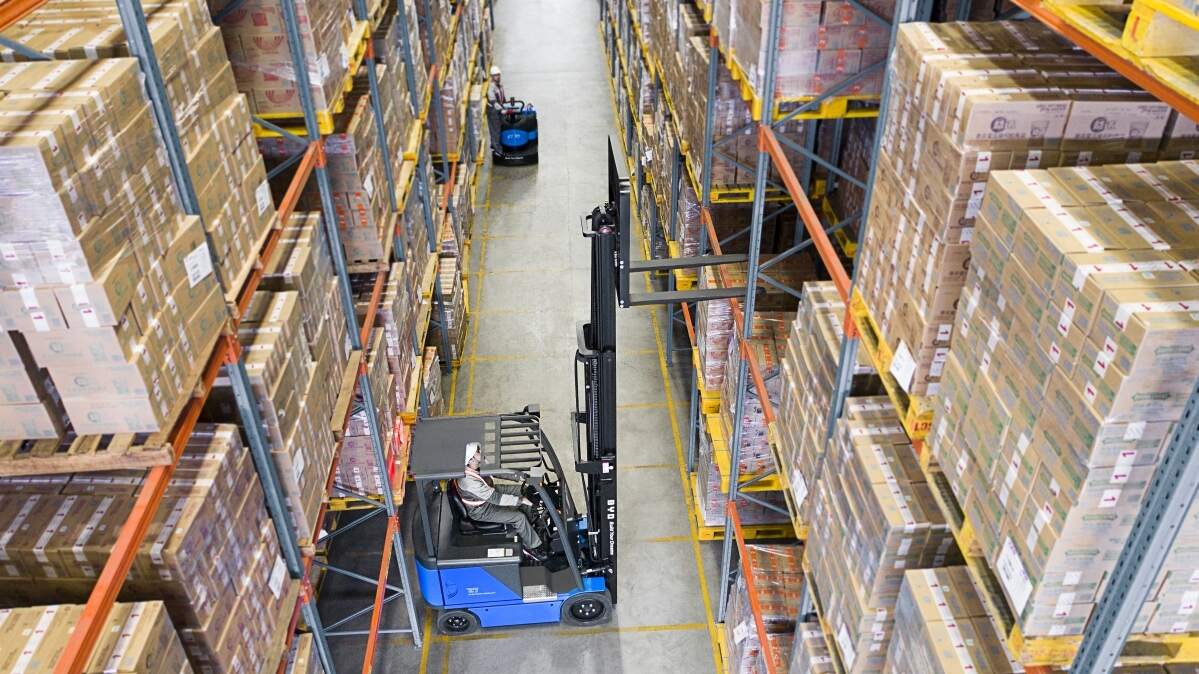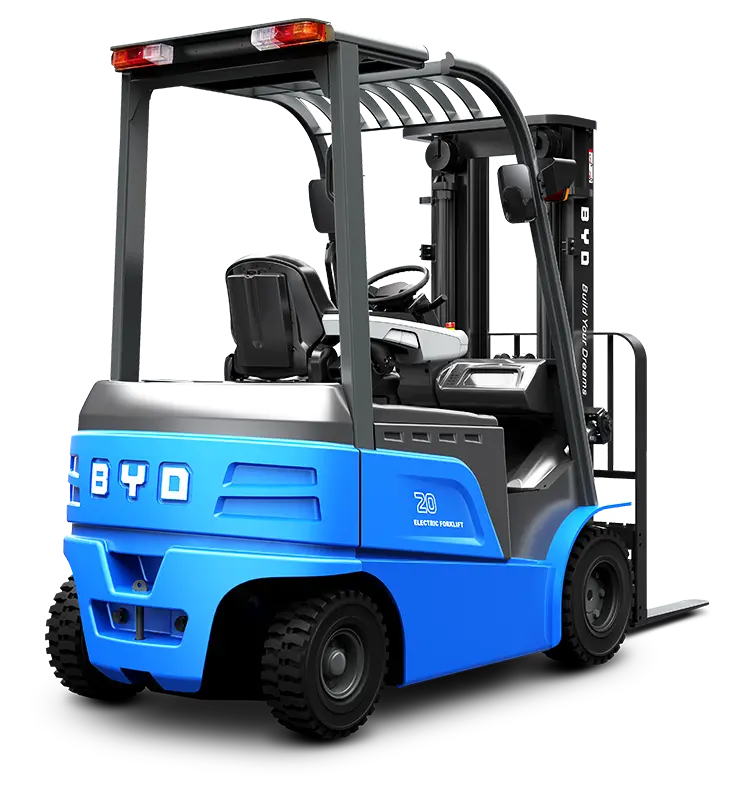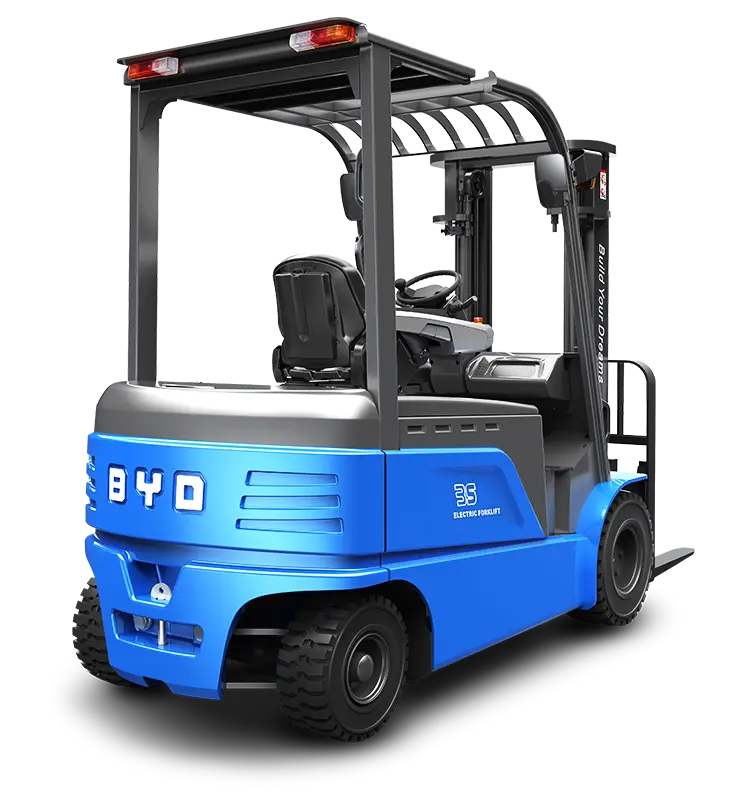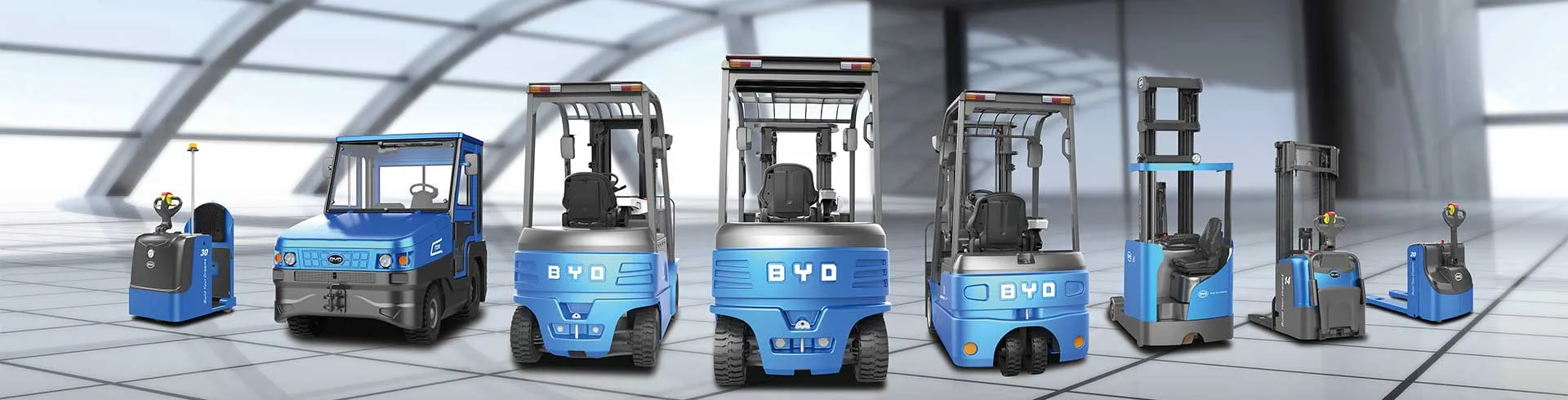
When operating an electric forklift in daily warehouse or industrial logistics scenarios, mastering the risk factors that may lead to lateral tip-over is the core prerequisite to ensure operation safety. We, as Jianshu New Energy, specialize in BYD electric forklifts, and we have summarized three most common improper actions that will directly trigger the forklift to tip over sideways based on years of front-line operation service experience.
The first improper action is making sharp steering at high driving speed without pre-deceleration. Many operators tend to rush to complete handling tasks during peak logistics periods, when there are sudden obstacles or passing workers on the driving route, they will turn the steering wheel sharply in a very short time instead of slowing down in advance. The electric forklift has a relatively high center of gravity structure design, and the lateral centrifugal force generated by sharp steering under high speed will instantly exceed the side stability threshold of the vehicle, even if the vehicle is not in full load state, it is very likely to lose balance and tip over sideways.
The second improper action is making large-angle steering when carrying unbalanced offset loads. Some operators omit the standard pre-operation check of load centering for the sake of saving time, the heavy goods are placed on one side of the fork arm, and they still turn at a normal driving speed directly. At this time, the load on the single side of the forklift body increases sharply, the lateral gravity center quickly shifts to the overweight side, which will break the original stable balance structure of the whole vehicle and cause lateral tip-over easily.
The third improper action is driving laterally on the sloped ground with a tilt degree exceeding the safe threshold, while the fork arms are lifted to a high position. In some temporary storage areas of the factory, there are unmarked small slopes on the ground, some operators do not follow the operation specification to drive up and down along the slope, but choose to move across the slope laterally. At this time, the overall center of gravity of the vehicle and the high-lifted goods will keep shifting to the downhill side, once the tilt angle exceeds the safe lateral tilt range designed for the forklift, the vehicle will lose its support balance completely and tip over sideways.
In daily operation process, avoiding the above three improper actions can effectively reduce the probability of lateral tip-over accidents. We will continue to provide targeted operation guidance and maintenance services for all users to help the logistics operation work be carried out in a safe and orderly manner.